Order to Cash
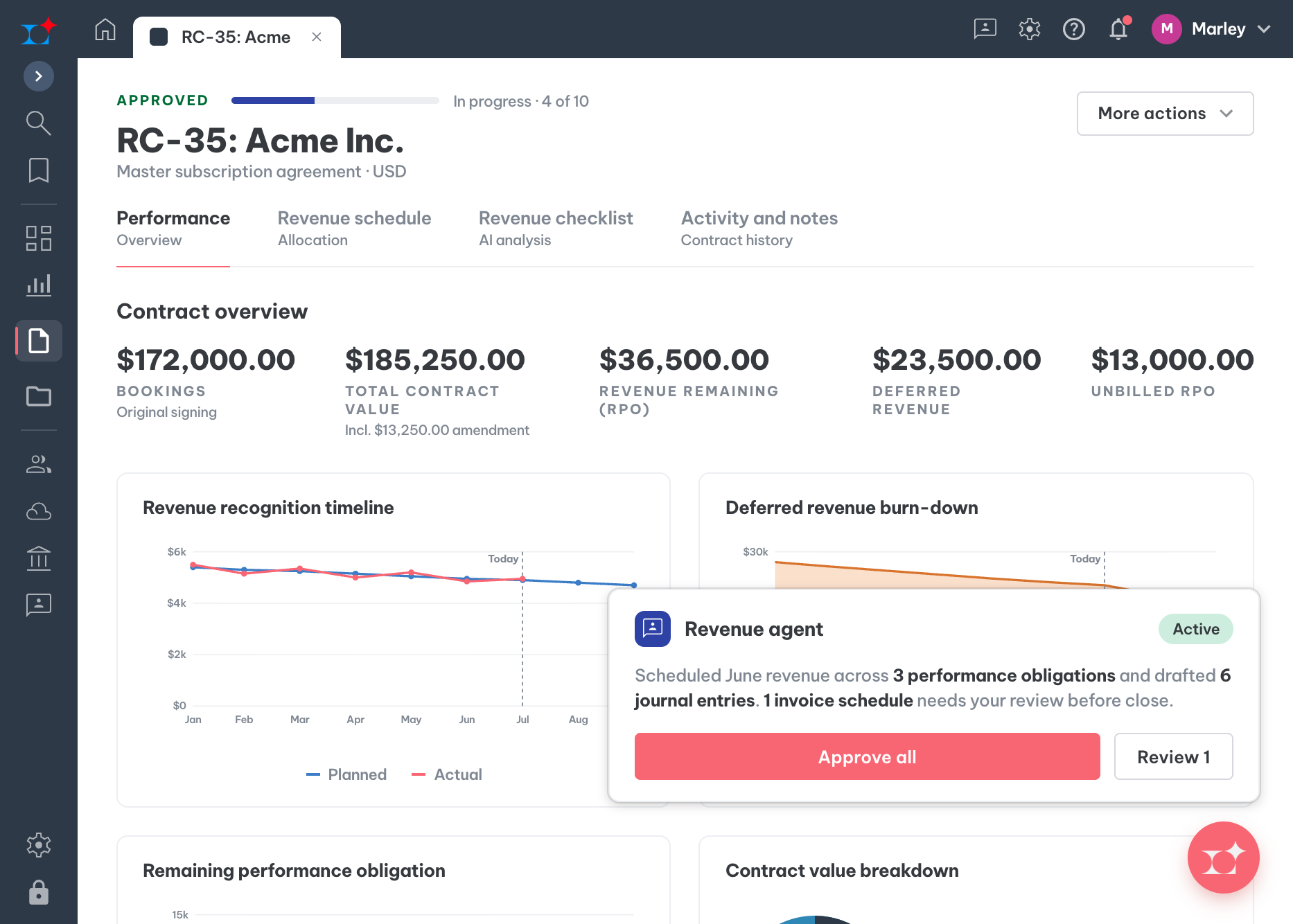
Order creation through invoicing and revenue recognition, linked directly to the general ledger.
Solution Partner · Formerly Everest Systems

Pricing models evolve. Revenue structures grow more complex. Companies expand globally. Lensing is the AI-native ERP and app-gen platform built for finance organizations that outgrew legacy systems.
Why Lensing
It recognizes all revenue. It reports on everything you care about. And it is approachable to business users — not only consultants.
Order creation through invoicing and revenue recognition, linked directly to the general ledger.
Multi-book, multi-entity, multi-currency consolidation with real-time, drill-down reporting.
ASC 606-compliant schedules, contract mapping, modifications, and deferred revenue with audit trail.
Map infrastructure and SaaS spend to products and customers — catch margin issues early.
Build agents in plain English and simulate ERP changes in a realistic sandbox before publish.
Lifecycle tracking, depreciation, and audit-ready reporting inside the ERP — no bolt-on tools.
01
Subscription, recurring, usage, commit-with-overage, and contract modifications — native revenue types with ASC 606 / IFRS 15 discipline.
02
Multi-entity, multibook, intercompany, tax, FX, headcount, cloud spend, and fixed assets in one system of record.

03
Inventory, finance, HR, procurement, and PSA together — people, cloud, and COGS costs in the GL with board-level reporting from a single screen.
04
Live Sandbox, AI agents, chat with financials, variance detection, and plain-English app generation — without waiting on IT.

AiSpecify
Lensing’s AI suite is a full software development lifecycle — business users go from specification to launch, while engineers can refactor legacy code at Fortune 500 scale.
Describe the capability in plain English — ship production-ready ERP apps.
Collapse point solutions into the core platform without fragile custom code.
Live Sandbox validates workflows before anything hits production.
Outcomes
Replace fragmented stacks with an end-to-end finance and accounting suite on a unified platform.
Up-to-date reports across entities, currencies, and books — without offline spreadsheet lag.
Built-in audit trails, traceable journals, and AI variance explanations for cleaner audits.
Intercompany balances auto-matched and validated during posting.
Live Sandboxing lets teams stage unlimited, cost-effective ERP changes before go-live.
Latest insights

Why the team dropped the Everest code name and what Lensing means for finance leaders.
Read article →
What finance leaders wish they knew before the next ERP transformation.
Read article →
M&A is fun until systems integration — how teams decide consolidate, integrate, or defer.
Read article →
Why CFOs will demand AI that is embedded in the operating system — not bolted on.
Read article →
What teams that integrate dozens of ERPs every year actually know.
Read article →308 matches found across the intellectual infrastructure.

Not a Gartner Magic Quadrant. A CFO practitioner guide — what the implementation actually costs in time and pain, how…
View Result → The Systems CFO Model
Executive Summary The equity bridge connects the negotiated enterprise value of a business to the equity check a…
View Result → For PE and VC-Backed CFOs
Executive Summary Key metrics in private equity do far more than fill quarterly reports. TVPI, DPI, IRR, MOIC,…
View Result →
This module shows how the chief financial officer grows from finance leader into enterprise leader and trusted partner of the…
View Result →
This module gives the chief financial officer a practical view of enterprise risk. It covers risk appetite, the risk register,…
View Result →
This module connects finance to strategy by asking how a company actually makes money. It explains revenue models, unit economics,…
View Result → The Systems CFO Model
Executive Summary ERP cash flow forecasting promises a single source of liquidity truth, yet many finance teams still…
View Result → The Systems CFO Model
Executive Summary Strategic metrics shape what leaders see, reward, and believe about the business. In a multi-entity enterprise,…
View Result → The Systems CFO Model
Executive Summary An ERP implementation looks like an IT project on the surface: systems configuration, data migration, workflow…
View Result → The Systems CFO Model
Executive Summary A digital CFO tech stack is not a matter of licensing more software. It is about…
View Result →
Nonprofits operate under a distinct financial architecture governed by GAAP for not-for-profit entities (ASC 958) and the stewardship obligations of…
View Result → The Systems CFO Model
Executive Summary Performance indicators decide whether a multi-divisional enterprise speaks with one voice or with six. The CFO…
View Result → The Systems CFO Model
Executive Summary A well-built customer experience strategy treats every touchpoint as a financial lever, not a marketing courtesy.…
View Result →
Enterprise risk management in banking encompasses the full spectrum of risks that threaten the institution's safety and soundness — credit…
View Result →
Distinguishes existential-magnitude risks from routine operational ones, arguing that a comprehensive risk register treating every risk with equal weight has…
View Result →
The CFO's ultimate obligation is not the next quarter's results — it is the financial resilience of the enterprise across…
View Result →
The finance technology stack is not an IT decision — it is a financial governance decision that determines the quality,…
View Result →
Enterprise risk management is the discipline of identifying, assessing, and governing the risks that could prevent the company from achieving…
View Result →
This opening module reframes the CFO role from financial officer to architect of enterprise value — a leader who commands…
View Result →
This toolkit is a CFO-focused crisis-management guide built around a case study (Caldwell Specialty Foods, a food manufacturer that survived…
View Result →
Morriston Precision Manufacturing suffered a fire causing a $52M claim, but only recovered $14.2M — a $37.8M gap from four…
View Result →
This is a corporate training module for CFOs arguing that enterprise valuation should be a standing, quarterly-maintained capability the CFO…
View Result →
This is a 36-page CFO executive-education module arguing that cost reduction programs typically fail long-term because they treat cost as…
View Result →
This is where the twenty modules converge. Crossfield Industries — a $1.4 billion company under siege — faces eight simultaneous…
View Result →
Risk registers are where risks go to be documented and ignored. Module 8 introduces the SHIELD Framework for enterprise resilience:…
View Result →
Most executives manage dashboards. The best ones manage the invisible connections between dashboards — the feedback loops, delays, and reinforcing…
View Result →
Control and assurance is the verification layer that confirms every process in the prior modules is working as designed. Part…
View Result →
Systems and data are the infrastructure that every process in Parts Two and Three depends on. Part Four addresses three…
View Result →
The foundation determines whether the finance function operates as a system or as a collection of tasks performed by individuals.…
View Result →
The Enterprise Risk Maturity Diagnostic is the EfuturesCFO self-assessment that scores whether risk is identified, priced, and managed continuously or…
View Result →
The Enterprise Risk Architecture is the EfuturesCFO framework for identifying, quantifying, mitigating, and monitoring the risks that threaten strategic objectives.…
View Result →
This diagnostic evaluates the financial architecture that enables organizations to manage multiple legal entities across jurisdictions — assessing global ERP…
View Result →
This diagnostic assesses whether the ERP investment is delivering its promised returns — evaluating feature utilization rates, process improvement opportunities…
View Result →
This diagnostic evaluates the organization's readiness to select and implement an enterprise resource planning system — assessing business case rigor,…
View Result →
Risk universe identification across strategic, operational, financial, and compliance domains. Likelihood and impact scoring methodology, risk appetite and tolerance statement…
View Result →
Business requirements gathering and gap analysis, vendor selection and contract negotiation, chart of accounts redesign, master data cleansing and migration,…
View Result →
Enterprise & B2B Revenue Planner — executive decision framework for Telecommunication CFOs.
View Result → AI Governance
By Hindol Datta Artificial intelligence is no longer a peripheral experiment sitting in a data science lab, waiting…
View Result →
This is Part 18 (final part) of an 18-part manufacturing accounting masterclass, covering ERP systems, MES/IoT integration, AI/ML applications, RPA,…
View Result →
A strategic comparison of Caterpillar and Komatsu, revealing how dealer networks, manufacturing excellence, autonomous technology, and lifecycle services define leadership…
View Result → The Systems CFO Model
Executive Summary A strong investor relations strategy is no longer a reporting obligation confined to earnings calls and…
View Result →
A CFO-focused framework for assessing ERP architecture, identifying system weaknesses, and building a scalable, integrated, and data-driven enterprise.
View Result →
A CFO-focused framework for connecting operational performance to enterprise value and prioritizing the drivers that maximize long-term valuation.
View Result → The Systems CFO Model
Executive Summary Strategic alignment is not a philosophical construct. It is a quantified advantage that determines whether an…
View Result → Video
A basic ERP implementation leaves most of the value on the table. Learn how revenue recognition extensions, commission management tools,…
View Result → Video
Spending $500K on an ERP without designing the enterprise architecture first guarantees silos and chaos. Learn how to map current…
View Result → Video
SAP costs $2 million and takes two years. NetSuite costs $200K and takes six months. A new AI-powered ERP promises…
View Result → Video
A three-week month-end close and inventory tracked across spreadsheets are signs you have outgrown your systems. Learn when ERP implementation…
View Result →
The strategy layer that converts AI potential into enterprise value. Covers the use case trap (integration spaghetti, governance inconsistency, capability…
View Result →
The data infrastructure that AI systems require and that most enterprises do not yet have. The part covers data quality…
View Result →
The Intelligent Enterprise Architecture, Systems CFO Evolution, and the 36-Part Synthesis
View Result →
Agentic Finance Architecture, Model Context Protocol, Autonomous Controls, and the CFO Governance Framework
View Result →
Generative AI in Finance, Autonomous Close, AI-Driven FP&A;, and the Intelligent Finance Operating Model
View Result →
Platform Architecture, Graduation Triggers, Financial Controls Depth, and When to Scale
View Result →
Platform Architecture, Financial Governance Depth, Migration Economics, and the Enterprise ERP Decision
View Result →
Platform Architectures, Financial Governance Depth, Selection Framework, and Total Cost of Ownership
View Result →
Financial Governance of Transformation, Organizational Readiness, Adoption Economics, and the CFO as Change Leader
View Result →
Failure Patterns, Financial Risk Quantification, Recovery Architectures, and the Prevention Framework
View Result →
IAM Governance, SOX IT Controls, Cybersecurity Economics, Zero Trust, and the Financial Controls Architecture
View Result →
Data Governance Architecture, Golden Record Design, Data Quality Economics, and MDM Platforms
View Result →
Integration Patterns, API Governance, iPaaS Platforms, Financial Data Flows, and the Connected Enterprise
View Result →
Master Data, Semantic Consistency, the Enterprise Truth Layer, and AI Readiness
View Result →
Transaction Costs, Throughput, Working Capital, and System-Driven Margin Expansion
View Result →
Lead-to-Cash, Procure-to-Pay, Record-to-Report, Hire-to-Retire — and the Economics of Workflow Design
View Result →
Complex Adaptive Systems, Emergence, Feedback Loops, and Operational Resilience
View Result →
Six Decades of Architectural Change — and the Implications for the Systems CFO Today
View Result →
Beyond Accounting — The Operational Nervous System of the Modern Enterprise
View Result →
Technical milestones, IP portfolios, valuation methodologies, and the CFO's role in shaping the value creation narrative
View Result →
The Technology Integration Roadmap for Finance ERP strategy options, systems inventory, migration sequencing, the consolidation platform decision, and the data…
View Result →
Credit assessment, country risk frameworks, credit insurance, and the management of cross-border credit exposure
View Result →
The ERP decision is the most consequential finance technology decision a CFO ever makes, and it is almost always made…
View Result →
Limit Frameworks, ISDA/CSA, CVA/DVA, and Managing Bank Credit Risk in a Multi-Bank World
View Result →
Clusters 2 through 6 have developed the core dimensions of strategic CFO work: value creation, operating system, people and organization,…
View Result →
Cluster 2 established the value creation engine: what drives enterprise value, how capital is allocated, unit economics as foundation, growth…
View Result →
Parts 1 through 5 established the strategic CFO's identity, partnership with the CEO, holistic thinking, integrated pillar framework, and mental…
View Result →
Key Employee Retention Plans and their court approval requirements, KEIP structures, balancing management incentives against creditor committees, and equity compensation…
View Result →
This practitioner's reference outlines 50 AI use cases for Enterprise Resource Planning (ERP) across eight functional lifecycle areas. Each case…
View Result → Video
Most ERP implementations fail because companies configure new systems to match old broken processes. Learn why CFO strategy demands fixing…
View Result →
Modern ERP for growth companies: composable models, API-first architecture, and distinguishing genuine AI from vendor marketing.
View Result →
How the quality of your financial systems determines the quality of your financial decision-making — and what the CFO's role…
View Result →
The diagnostic for the three technology domains with the highest CFO exposure — artificial intelligence governance, cybersecurity risk management, and…
View Result →
A 20-question diagnostic to audit your risk register, map risks to insurance transfer mechanisms, and ensure policy limits (D&O, Cyber,…
View Result →
A 20-question diagnostic to document your end-to-end processes and quantify current-state pain points before inviting vendor demos, ensuring your next…
View Result →
A 20-question diagnostic to connect your operational metrics to investor valuation, identifying the specific drivers that expand or compress your…
View Result →
A 20-question diagnostic to assess if your technology stack functions as an integrated nervous system or a collection of isolated…
View Result →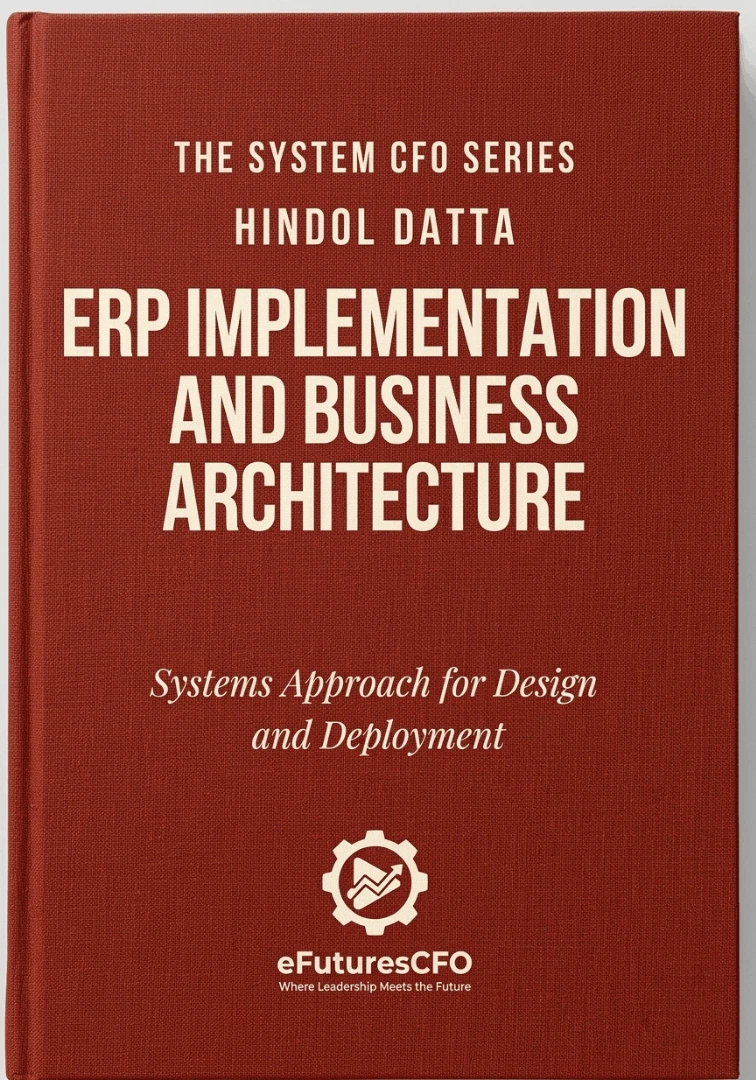 Book
This volume addresses why most ERP implementations fail at the architecture level rather than the software level. It…
View Result → The Systems CFO Model
Executive Summary A quiet revolution is taking place inside the enterprise, not in marketing slogans but in how…
View Result → For Founders Scaling from $10M to $100M
Executive Summary In the financial architecture of a modern enterprise, few decisions bear more consequence than how revenue…
View Result → The Systems CFO Model
Executive Summary In three decades of working with companies across software as a service, freight logistics, education technology,…
View Result → The Systems CFO Model
The CFO’s role has gone through one of the biggest transformations in modern business. Once defined by reporting,…
View Result → The Systems CFO Model
I have been actively involved in implementing systems across different organizations for much of my career, and my…
View Result →
Sixty journals ranked, annotated, and scored for CFO relevance — the intellectual infrastructure of the finance profession, from landmark academic…
View Result →
Six categories. Ten professors each. Every entry scored on Academic Prestige and CFO Utility — how directly the research shapes…
View Result →
Six categories. Ten associations each. Ranked by Prestige Score and CFO Utility Score — with verified membership numbers, annual fees,…
View Result →
Ranked through the lens of CFO career development — not just academic prestige. Which programs actually produce systems-thinking finance leaders.
View Result →
The definitive practitioner guide to executive search — who to call, when to call them, and which firm fits your…
View Result →
Ranked and annotated by specialization — what each firm actually invests in, what CFO roles look like inside their portfolio…
View Result →
This is not a PE fund performance ranking. It is a CFO practitioner guide — which sponsors hire what kind…
View Result → For PE and VC-Backed CFOs
Executive Summary The signs that a business is failing rarely arrive as a single dramatic event. They gather…
View Result → For Founders Scaling from $10M to $100M
Executive Summary Venture capital metrics change shape as a company moves from Series A to Series E. Founders…
View Result → The Systems CFO Model
Executive Summary Data integrity in reporting is the quiet foundation beneath every forecast, board packet, and capital decision…
View Result → For PE and VC-Backed CFOs
Executive Summary Anyone asking what does VC stand for in business will hear a quick answer, which is…
View Result → For PE and VC-Backed CFOs
Executive Summary A VC term sheet may look like a short legal document full of boilerplate, yet it…
View Result → For PE and VC-Backed CFOs
Executive Summary Portfolio company reporting decides whether an investor partnership stays aligned or slowly drifts apart. Capital moves…
View Result → The Systems CFO Model
Executive Summary Fund managers decide portfolio construction in private equity during the investment period. In this finite window,…
View Result → For PE and VC-Backed CFOs
Executive Summary An investment memorandum is the document that speaks for a deal after the meeting ends. It…
View Result → For PE and VC-Backed CFOs
Executive Summary A management presentation compresses an entire company into roughly 90 minutes before bidders who are judging…
View Result → For PE and VC-Backed CFOs
Executive Summary The leverage ratio sits at the center of nearly every private equity deal, yet few metrics…
View Result → For PE and VC-Backed CFOs
Executive Summary Portfolio monitoring in private equity rarely earns headlines, yet it often separates repeatable returns from lucky…
View Result → For PE and VC-Backed CFOs
Executive Summary Carried interest sits at the center of private equity economics and remains hotly debated. Supporters see…
View Result → For PE and VC-Backed CFOs
Executive Summary The LP vs GP relationship sits at the center of private equity, yet many still read…
View Result → The Systems CFO Model
Executive Summary Many leaders reduce the meaning of finance transformation to a systems upgrade or an accounting team…
View Result → For PE and VC-Backed CFOs
Executive Summary Private equity fundraising has never been only about capital, because limited partners underwrite a thesis, a…
View Result → The Systems CFO Model
Executive Summary Most operational improvement initiatives fail to move the needle because leaders design them for optics rather…
View Result → For PE and VC-Backed CFOs
Executive Summary Boards often view business expansion through add-on acquisitions as simple arithmetic, where one revenue line plus…
View Result → For PE and VC-Backed CFOs
Executive Summary Rollover equity tax treatment decides whether a founder’s rollover becomes a tax-deferred bridge or an unexpected…
View Result → For PE and VC-Backed CFOs
Executive Summary A management incentive plan is one of the most misunderstood tools a CFO controls. Companies often…
View Result → For PE and VC-Backed CFOs
Executive Summary A platform investment is the architecture that decides whether an industry roll-up compounds or collapses. Many…
View Result → For PE and VC-Backed CFOs
Executive Summary A leveraged buyout acquires a company using modest equity and a large amount of debt. The…
View Result → For PE and VC-Backed CFOs
Executive Summary EBITDA multiples in a buy-and-build strategy carry two different meanings. A platform price reflects what the…
View Result → For PE and VC-Backed CFOs
Executive Summary Multiple expansion is the most coveted and least understood source of value in private equity. Deal…
View Result → The Systems CFO Model
Executive Summary Many leaders treat cost accounting as a back-office sorting exercise. Yet it shapes how a growing…
View Result → For PE and VC-Backed CFOs
Executive Summary IRR in private equity measures more than profit, because it also measures when that profit arrives.…
View Result → For PE and VC-Backed CFOs
Executive Summary Many investors treat value as something found through mispriced assets and clever arbitrage. Durable PE value…
View Result → For PE and VC-Backed CFOs
Executive Summary Every investment committee hears the phrase “investment thesis,” yet few teams interrogate what the thesis really…
View Result → For PE and VC-Backed CFOs
Executive Summary A management buyout is the moment when the people who run a business decide they should…
View Result → For PE and VC-Backed CFOs
Executive Summary Portfolio company value creation rarely follows the logic of a standalone business. A private equity sponsor…
View Result → For Boards and Audit Committees
Executive Summary Board reporting is among the most misunderstood disciplines in corporate governance. Most board reports recite operating…
View Result → Uncategorized
Executive Summary Board reporting is among the most misunderstood disciplines in corporate governance. Most board reports recite operating…
View Result → The Systems CFO Model
Executive Summary Accounting and memory share a tighter bond than most finance teams admit. A ledger does not…
View Result → The Systems CFO Model
Executive Summary The role of cost accounting reaches far beyond compliance. How a company measures its costs can…
View Result → The Systems CFO Model
Executive Summary Liquidity management has returned to the center of financial leadership, because cash is the one number…
View Result → The Systems CFO Model
Executive Summary A strong CFO and CEO partnership is often the deciding factor in whether a business transformation…
View Result → The Systems CFO Model
Executive Summary Cohort financial analysis gives a CFO what consolidated metrics cannot, which is a view of how…
View Result → The Systems CFO Model
Executive Summary Throughput for CFOs is less about adding capacity everywhere and more about finding the one constraint…
View Result → The Systems CFO Model
Executive Summary Machine learning in finance is changing what financial truth looks like on a CFO’s desk. Spreadsheet…
View Result → The Systems CFO Model
Executive Summary The financial close process often runs as routine compliance. Transactions lock, ledgers reconcile, and the calendar…
View Result → For Boards and Audit Committees
Executive Summary Value added internal audit moves the function away from procedural inspection and toward strategic insight, treating…
View Result → The Systems CFO Model
Executive Summary Anyone asking what are the two types of financial benchmarking will find a tidy answer: internal…
View Result → The Systems CFO Model
Executive Summary Product profitability analysis changes character once the question shifts from whether a product made money to…
View Result → The Systems CFO Model
Executive Summary Strategic partnership KPIs often decide whether an alliance creates value or quietly unravels. Many partnerships begin…
View Result → The Systems CFO Model
Executive Summary Many companies treat talent management and financial accountability as separate disciplines. Finance builds capital plans and…
View Result → The Systems CFO Model
Executive Summary ESG accounting has moved from the margins of ethical investing to the center of capital access.…
View Result → For Boards and Audit Committees
Executive Summary Finance automation tools promise speed, but their deeper value lies in coherence at speed. Every day…
View Result → The Systems CFO Model
Executive Summary A quarterly forecast is more than a number handed to the market each earnings season. Built…
View Result → The Systems CFO Model
Executive Summary Executive dashboard design is no longer a matter of polish. The systems a CFO explains to…
View Result → The Systems CFO Model
Executive Summary Strong CEO financial reporting does more than show the gap between forecast and actual results. Every…
View Result → The Systems CFO Model
Executive Summary A dynamic scorecard gives corporate vision the structure it often lacks. Many vision statements promise transformation…
View Result → The Systems CFO Model
Executive Summary Every earnings release, capital decision, and budget change sends financial signals that stakeholders read through their…
View Result → The Systems CFO Model
Executive Summary Scenario planning earns its value when a company’s road bends and the belief that tomorrow will…
View Result → The Systems CFO Model
Executive Summary Financial crisis management rarely fails for lack of a plan. It fails because crises never arrive…
View Result → The Systems CFO Model
Executive Summary CFO influence on strategy reaches further than most organizations admit. Many companies assign vision and mission…
View Result → The Systems CFO Model
Executive Summary A forecasting accountability framework turns projections from polite estimates into commitments that guide strategic execution. Most…
View Result → The Systems CFO Model
Executive Summary Capital allocation during a strategic pivot is the clearest statement a company makes about its future.…
View Result → The Systems CFO Model
Executive Summary Success metrics decide whether capital moves toward a company or away from it. That capital may…
View Result → The Systems CFO Model
Executive Summary Financial data quality management decides whether a forecast earns belief or invites doubt. Once a board…
View Result → The Systems CFO Model
Executive Summary Operating leverage is the quiet force that decides whether growth turns into value or merely into…
View Result → The Systems CFO Model
Executive Summary Vendors often sell FP&A automation as a technology project, complete with cloud platforms, dashboards, and data…
View Result → For Boards and Audit Committees
Executive Summary Board presentation best practices start with a simple truth: directors want meaning, not just numbers. In…
View Result → The Systems CFO Model
Executive Summary Variance analysis is often treated as a monthly ritual of explaining why actuals missed the budget.…
View Result → The Systems CFO Model
Executive Summary ESG compliance has moved from a reporting exercise to a core test of capital expenditure. A…
View Result → The Systems CFO Model
Executive Summary Many companies treat budget variance analysis as a monthly chore that ends with an apology and…
View Result → For Founders Scaling from $10M to $100M
Executive Summary Startup financial metrics shape far more than board decks. In the early days, instinct often drowns…
View Result → The Systems CFO Model
Executive Summary Driver-based forecasting links financial projections to the operational variables that actually move a business, such as…
View Result → The Systems CFO Model
Executive Summary Organizational culture in finance is the set of beliefs, norms, and incentives that shapes how a…
View Result → The Systems CFO Model
Executive Summary Behavioral scoring gives credit management a sharper lens than bureau scores and balance sheets can offer…
View Result → The Systems CFO Model
Executive Summary Finance AI is moving into the oldest corner of finance: the controls behind reconciliations, approvals, and…
View Result → The Systems CFO Model
Executive Summary What is ARR in finance, and why does it matter so much to subscription businesses? Annual…
View Result → The Systems CFO Model
Executive Summary The CFO’s role in disruptive innovation is less about predicting the future. It is about preparing…
View Result → The Systems CFO Model
Executive Summary Decision models matter most when the future refuses to behave. Historical data no longer predicts demand…
View Result → The Systems CFO Model
Executive Summary RPA in finance rarely arrives with fanfare or dramatic announcements. Software bots take over invoice matching,…
View Result → The Systems CFO Model
Executive Summary A capital allocation framework is often treated as a technical tool for ranking investments and setting…
View Result → The Systems CFO Model
Executive Summary Capital forecasting does more than predict whether a company can afford its plans. It shows whether…
View Result → The Systems CFO Model
Executive Summary Operating leverage measures how sharply profit responds to a change in revenue. It is set by…
View Result → The Systems CFO Model
Executive Summary Every company that wants to invent its future must first learn how to improve cash flow…
View Result → The Systems CFO Model
Executive Summary Every leadership development framework claims to shape judgment, yet the strongest teacher in most companies sits…
View Result → The Systems CFO Model
Executive Summary Learning how to measure stakeholder engagement starts with the performance indicators a company chooses to track…
View Result → The Systems CFO Model
Executive Summary A rolling forecast replaces the fixed annual plan with a continuously updated view of the next…
View Result → For Boards and Audit Committees
Executive Summary Many leaders describe corporate governance as a culture or a set of values posted on a…
View Result → The Systems CFO Model
Executive Summary Many executives treat the ROI of branding as unknowable, so finance leaders either avoid brand spending…
View Result → The Systems CFO Model
Executive Summary Most performance management strategies reward the sprint and forget the marathon. Quarterly targets become gospel, dashboards…
View Result → The Systems CFO Model
Executive Summary Textbooks define an optimal capital structure as the debt and equity mix that minimizes the weighted…
View Result → The Systems CFO Model
Executive Summary A brand positioning map shows where a company stands in the minds of customers, usually plotted…
View Result → The Systems CFO Model
Executive Summary Capital allocation reveals more about executive leadership than any mission statement or brand campaign. Every funding…
View Result → The Systems CFO Model
Executive Summary A stakeholder engagement strategy for finance leaders rests on more than accurate numbers. Boards, investors, partners…
View Result → The Systems CFO Model
Executive Summary Lasting EBITDA improvement starts with understanding cost, not simply cutting it. EBITDA isolates the operating engine…
View Result → The Systems CFO Model
Executive Summary Forecast discipline determines whether a global enterprise sees one coherent future or a collection of conflicting…
View Result → The Systems CFO Model
Executive Summary Many leaders cast talent management and cost intelligence as opposing forces. Finance guards the budget, and…
View Result → The Systems CFO Model
Executive Summary Effective investor relations turns each earnings cycle from a scripted ritual into a lasting source of…
View Result → The Systems CFO Model
Executive Summary Covenant management is often treated as a legal chore, a set of thresholds that finance teams…
View Result → The Systems CFO Model
Executive Summary Driver-based forecasting gives market expansion the structure it needs to move from ambition to disciplined action.…
View Result → For PE and VC-Backed CFOs
Executive Summary Many companies treat financial due diligence as a defensive exercise, yet in experienced hands it becomes…
View Result → The Systems CFO Model
Executive Summary Return on invested capital changes how leaders see growth. The question shifts from how much a…
View Result → The Systems CFO Model
Executive Summary Sustainability reporting has moved from a back-page gesture to a signal that investors, lenders, and customers…
View Result → The Systems CFO Model
Executive Summary Financial transparency is one of the most powerful and least used levers for building a strong…
View Result → The Systems CFO Model
Executive Summary Financial leadership means placing analytics at the center of strategy instead of using them to defend…
View Result → The Systems CFO Model
Executive Summary A strategy review should help leadership learn, yet many turn into polished performances that report results…
View Result → The Systems CFO Model
Executive Summary A sound market penetration strategy begins with a simple recognition: visibility is not victory. Growth without…
View Result → The Systems CFO Model
Executive Summary Annual planning in many companies has become a ritual of incremental adjustment. Teams extend last year’s…
View Result → The Systems CFO Model
Executive Summary Many companies treat intercompany transfer pricing as a compliance exercise. Yet it shapes how value, incentives,…
View Result → For Founders Scaling from $10M to $100M
Executive Summary Capital expenditure in a scale-up is more than a line item; it is a commitment that…
View Result → The Systems CFO Model
Executive Summary Innovation is often framed as a creative act that lives far from the finance function. A…
View Result → The Systems CFO Model
Executive Summary A strong CFO change management strategy turns finance from a guardian of the past into a…
View Result → The Systems CFO Model
Executive Summary Strategic alliances have long belonged to dealmakers, with finance approving funding and checking the accounting afterward.…
View Result → The Systems CFO Model
Executive Summary Most companies treat the month end close process as a compliance ritual. They see it as…
View Result → The Systems CFO Model
Executive Summary KPI management is one of the few disciplines that lets finance shape behavior across every function.…
View Result → The Systems CFO Model
Executive Summary Predictive signals in reporting help finance teams see what is forming before the quarter closes, not…
View Result → The Systems CFO Model
Executive Summary The most consequential executive decisions rarely arrive with clean information. A decision-making tree gives CFOs a…
View Result → The Systems CFO Model
Executive Summary Zero-based budgeting asks every dollar to earn its place again instead of inheriting last year’s allocation.…
View Result → The Systems CFO Model
Executive Summary Real-time risk analytics changes risk management from a backward-looking report into a forward-looking discipline. Quarterly reviews…
View Result → The Systems CFO Model
Executive Summary Business model innovation rarely fails because the underlying idea is weak. It fails when systems built…
View Result → The Systems CFO Model
Executive Summary Business development teams that develop business acumen stop chasing volume and start compounding value. Without financial…
View Result → For Boards and Audit Committees
Executive Summary Data does not create value simply by existing. People have to understand it, trust it, and…
View Result → The Systems CFO Model
Executive Summary Financial consolidation automation has become one of the most consequential investments a finance organization can make,…
View Result → The Systems CFO Model
Executive Summary A Monte Carlo simulation replaces the single-point forecast with a full range of possible outcomes, and…
View Result → The Systems CFO Model
Executive Summary Margin expansion rarely comes from cutting alone, since durable gains grow out of strategic choices about…
View Result → For Boards and Audit Committees
Executive Summary A strong board communication strategy gives directors more than accurate numbers. It offers meaning, context, and…
View Result → The Systems CFO Model
Executive Summary Forecasting accuracy depends less on smarter models than most people assume. FP&A organizational design matters more.…
View Result → The Systems CFO Model
Executive Summary Sustainability accounting brings environmental, social, and governance impact into the same language of rigor that has…
View Result → The Systems CFO Model
Executive Summary Strategic innovation is often described as inspiration, yet in practice it behaves more like a system…
View Result → The Systems CFO Model
Executive Summary Disruption rarely announces itself with a single dramatic event anymore. It moves in through shifting customer…
View Result → The Systems CFO Model
Executive Summary International tax planning has moved out of the back office and into the center of corporate…
View Result → The Systems CFO Model
Executive Summary Profit is arithmetic at its simplest. It is revenue minus cost. A cost to serve model…
View Result → For Boards and Audit Committees
Executive Summary An internal audit maturity model lets a CFO ask a harder question than whether controls held.…
View Result → For Boards and Audit Committees
Executive Summary Forecast credibility is the quiet currency of the boardroom, and it is earned through judgment more…
View Result → For PE and VC-Backed CFOs
Executive Summary M&A integration is where the value promised in a deal is either realized or quietly lost.…
View Result → The Systems CFO Model
Executive Summary Predictive financial reporting extends the traditional ledger into a forward-looking discipline. It combines financial forecasting, machine…
View Result → The Systems CFO Model
Executive Summary Budget variance is often treated as a footnote. It becomes a red or green number filed…
View Result → The Systems CFO Model
Executive Summary Forecast narratives determine whether investors read a set of numbers as conviction or as guesswork. A…
View Result → The Systems CFO Model
Executive Summary The COVID-19 crisis exposed vulnerabilities in liquidity, capital structure, cash governance, and stakeholder trust that had…
View Result → The Systems CFO Model
Executive Summary Financial stewardship is not enforced from above. It becomes a shared organizational instinct that values long-term…
View Result → The Systems CFO Model
Executive Summary Strategic treasury management turns cash from a passive reserve into an active lever of competitive advantage.…
View Result → The Systems CFO Model
Executive Summary Strategic partnerships have become one of the most powerful levers for margin expansion. They lift both…
View Result → The Systems CFO Model
Executive Summary Foreign exchange risk touches every company with a global footprint. It shows up in a supply…
View Result → The Systems CFO Model
Executive Summary Most executive performance metrics reward momentum rather than mastery. Executives often treat EBITDA, revenue growth, and…
View Result → The Systems CFO Model
Executive Summary Financial close automation is not about closing the books faster for its own sake. It is…
View Result → The Systems CFO Model
Executive Summary The ROI of leadership development depends on whether leaders can read, defend, and act on return…
View Result → The Systems CFO Model
Executive Summary Strategic resilience is the capacity to adapt quickly, absorb shocks, and seize opportunities that appear during…
View Result → The Systems CFO Model
Executive Summary Multi entity consolidation is more than the aggregation of trial balances. It determines whether a group…
View Result → The Systems CFO Model
Executive Summary Revenue forecasting has moved from a quarterly clerical exercise to a consequential finance discipline. Forecast quality…
View Result → The Systems CFO Model
Executive Summary Operating leverage measures how much of each extra revenue dollar reaches operating income. The answer depends…
View Result → The Systems CFO Model
Executive Summary The real question behind how companies use debt to fund innovation is not whether debt is…
View Result → The Systems CFO Model
Executive Summary A strategic partnership looks simple at the signing stage. A press release goes out, a revenue…
View Result → The Systems CFO Model
Executive Summary Subscription profitability analysis is the discipline that tells a SaaS company whether its recurring revenue is…
View Result → The Systems CFO Model
Executive Summary A capital expenditure review determines whether an innovation bet ever gets funded at all. Most companies…
View Result → The Systems CFO Model
Executive Summary Working capital management is often treated as a technical exercise buried inside the balance sheet, yet…
View Result → For PE and VC-Backed CFOs
Executive Summary Financial due diligence in M&A is rarely about catching fraud. It is about separating durable value…
View Result → The Systems CFO Model
Executive Summary Financial consolidation often starts as a single ledger and quietly turns into a constellation. New entities…
View Result → The Systems CFO Model
Executive Summary Every quarter, a forecast becomes a test of credibility, and the test rarely announces itself as…
View Result → The Systems CFO Model
Executive Summary Stakeholder management is the discipline of aligning the expectations of investors, employees, boards, customers, and partners.…
View Result → The Systems CFO Model
Executive Summary A piece of code gets written in one country. It is refined in another, licensed in…
View Result → The Systems CFO Model
Executive Summary A Key Performance Indicator looks simple on a dashboard. A number moves, a dot turns green,…
View Result → The Systems CFO Model
Executive Summary In most organizations, the strategic roadmap is treated as a communication artifact. It gets built once,…
View Result → The Systems CFO Model
Executive Summary Most finance functions still treat cost accounting metrics as a compliance artifact, something produced for the…
View Result → The Systems CFO Model
Executive Summary Digital transformation in financial controls is no longer a back-office upgrade cycle. One finance function finds…
View Result → The Systems CFO Model
Executive Summary Data-driven budget planning does not mean building the most detailed spreadsheet possible. A budget can be…
View Result → The Systems CFO Model
Executive Summary IR in business is too often treated as a back-office reporting duty that only matters during…
View Result → The Systems CFO Model
Executive Summary Companies that leverage metrics well do not just report clean books. They translate operational signals into…
View Result → The Systems CFO Model
Executive Summary Options valuation is not a static number set once and forgotten. Every funding round, 409A refresh,…
View Result → For Founders Scaling from $10M to $100M
Executive Summary Most first-time founders treat a startup cap table as a spreadsheet to update after a financing…
View Result → For Boards and Audit Committees
Executive Summary Board control vs cap table control is one of the most misunderstood distinctions in startup governance.…
View Result → For Founders Scaling from $10M to $100M
Executive Summary Pre-money vs post-money valuation is the most misunderstood pair of terms in early-stage financing, and getting…
View Result → For Founders Scaling from $10M to $100M
Executive Summary Pricing is rarely just arithmetic for a fractional CFO. It is positioning, psychology, and long-term strategy…
View Result → For Founders Scaling from $10M to $100M
Executive Summary A fractional CFO does not sell hours. A fractional chief financial officer sells judgment, and judgment…
View Result → The Systems CFO Model
Executive Summary The signing ceremony ends and the real accounting work begins. Goodwill impairment is the discipline that…
View Result → For Founders Scaling from $10M to $100M
Executive Summary The first 30 days of a fractional CFO engagement tend to decide whether the relationship lasts…
View Result → The Systems CFO Model
Executive Summary In the fractional CFO services market, how an offering is packaged often matters as much as…
View Result → The Systems CFO Model
Executive Summary Post-acquisition integration tends to draw attention toward financial systems, headcount decisions, and product roadmaps, while the…
View Result → The Systems CFO Model
Executive Summary Hedge accounting rarely makes the board deck when a transaction is being pitched. Yet for any…
View Result → For Founders Scaling from $10M to $100M
Executive Summary Change-in-control provisions rarely draw attention until a deal closes. At that point, they can reshape the…
View Result → For PE and VC-Backed CFOs
Executive Summary Working capital is often treated as a routine measure of operational efficiency. It is the line…
View Result → The Systems CFO Model
Executive Summary A control premium isn’t a courtesy sellers extend to the buyer with the deepest pockets. It’s…
View Result → For PE and VC-Backed CFOs
Executive Summary Valuation multiples are the language buyers and sellers use to translate a business into a single…
View Result → The Systems CFO Model
Executive Summary Subsidiary risk management is not a legal formality tucked into the corporate secretary’s calendar. Subsidiary discipline…
View Result → For Boards and Audit Committees
Executive Summary Cultural integration is the variable that most often decides whether an M&A deal creates value or…
View Result → For PE and VC-Backed CFOs
Executive Summary An earnout is one of the most useful instruments for bridging a valuation gap in mergers…
View Result → The Systems CFO Model
Executive Summary Every multinational finance function eventually confronts the same repatriation question. Should cash move from a subsidiary…
View Result → For PE and VC-Backed CFOs
Executive Summary Every acquisition carries a second negotiation that rarely makes the press release: the net working capital…
View Result → The Systems CFO Model
Executive Summary Reps and warranties insurance has moved from a niche instrument to a standard fixture on the…
View Result → For PE and VC-Backed CFOs
Executive Summary Every acquisition produces a purchase price, and the buyer must allocate that price across the assets…
View Result → For PE and VC-Backed CFOs
Executive Summary Reps and warranties are the seller’s contractual assurances about the state of a business at signing.…
View Result → The Systems CFO Model
Executive Summary The most persistent myth in dealmaking is that integration begins after signatures dry. In practice, disciplined…
View Result → For PE and VC-Backed CFOs
Executive Summary Much of the hard negotiation in a transaction does not end at closing. It moves downstream…
View Result → The Systems CFO Model
Executive Summary Fair value measurement sits at the intersection of accounting rule and market judgment. Few line items…
View Result → For PE and VC-Backed CFOs
Executive Summary Tax due diligence is frequently treated as a compliance checklist. In practice, it determines whether a…
View Result → The Systems CFO Model
Executive summary ASC 740-10, once known as FIN 48, governs how companies recognize, measure, and disclose uncertain tax…
View Result → For PE and VC-Backed CFOs
Executive Summary Mergers and acquisitions examples rarely fit neatly into a single category. The four dominant structures, horizontal,…
View Result → For PE and VC-Backed CFOs
Executive Summary Every acquisition begins with a price. Months later, it ends with a structure that determines whether…
View Result → For PE and VC-Backed CFOs
Executive Summary Finance teams frequently model cross-border M&A as a financial exercise, and it frequently fails as one.…
View Result → The Systems CFO Model
Executive Summary A workable Pillar Two tax strategy no longer starts with U.S. adoption of the OECD’s global…
View Result → The Systems CFO Model
Executive Summary Foreign subsidiary sale tax planning rarely begins where it should, which is months before a term…
View Result → The Systems CFO Model
Executive Summary Double taxation is one of the most expensive problems a finance team can fail to solve.…
View Result → The Systems CFO Model
Executive Summary There is a moment in almost every scaling company when intellectual property has to move. At…
View Result → The Systems CFO Model
Executive Summary Intercompany accounting best practices rarely make it onto a board agenda until something has already gone…
View Result → The Systems CFO Model
Executive Summary Global compliance management is the discipline that separates genuine international operators from address-only global companies. Real…
View Result → The Systems CFO Model
Executive Summary For any company building revenue across borders, learning how to avoid permanent establishment risk is not…
View Result → The Systems CFO Model
Executive Summary What is withholding tax, in plain terms. It is the portion of a payment that a…
View Result → The Systems CFO Model
Executive Summary The arm’s length principle sounds simple in a textbook. In practice, it gets complicated fast. A…
View Result → The Systems CFO Model
Executive Summary Every CFO eventually faces a moment like this. A large foreign currency contract lands on the…
View Result → The Systems CFO Model
Executive Summary A check-the-box election is one of the few moments in international tax where a single form…
View Result → The Systems CFO Model
Executive Summary Goodwill impairment rarely makes headlines until a write-down forces the conversation. For finance leaders managing acquisitions,…
View Result → The Systems CFO Model
Executive Summary CFOs often treat the going concern concept in accounting as a checkbox buried in the footnotes.…
View Result → The Systems CFO Model
Executive Summary Companies often treat segment reporting under ASC 280 as a disclosure checklist. It is something the…
View Result → The Systems CFO Model
Executive Summary Fractional CFO services are not purchased the way a company buys software or office supplies. A…
View Result →Lensing empowers finance and operations leaders to drive faster growth, smarter decisions, and stronger margins.