What Your AI Risk Data Is Not Telling You: A Lesson from Abraham Wald By Hindol Datta, CPA, CIA (Certified Internal Auditor) | Fractional CFO | AI Governance Advisor byadminMay 13, 2026
Your AI Is No Longer Insured. By Hindol Datta, CPA | Fractional CFO Trustmodel. AI | AI Governance Advisor byadminMay 7, 2026
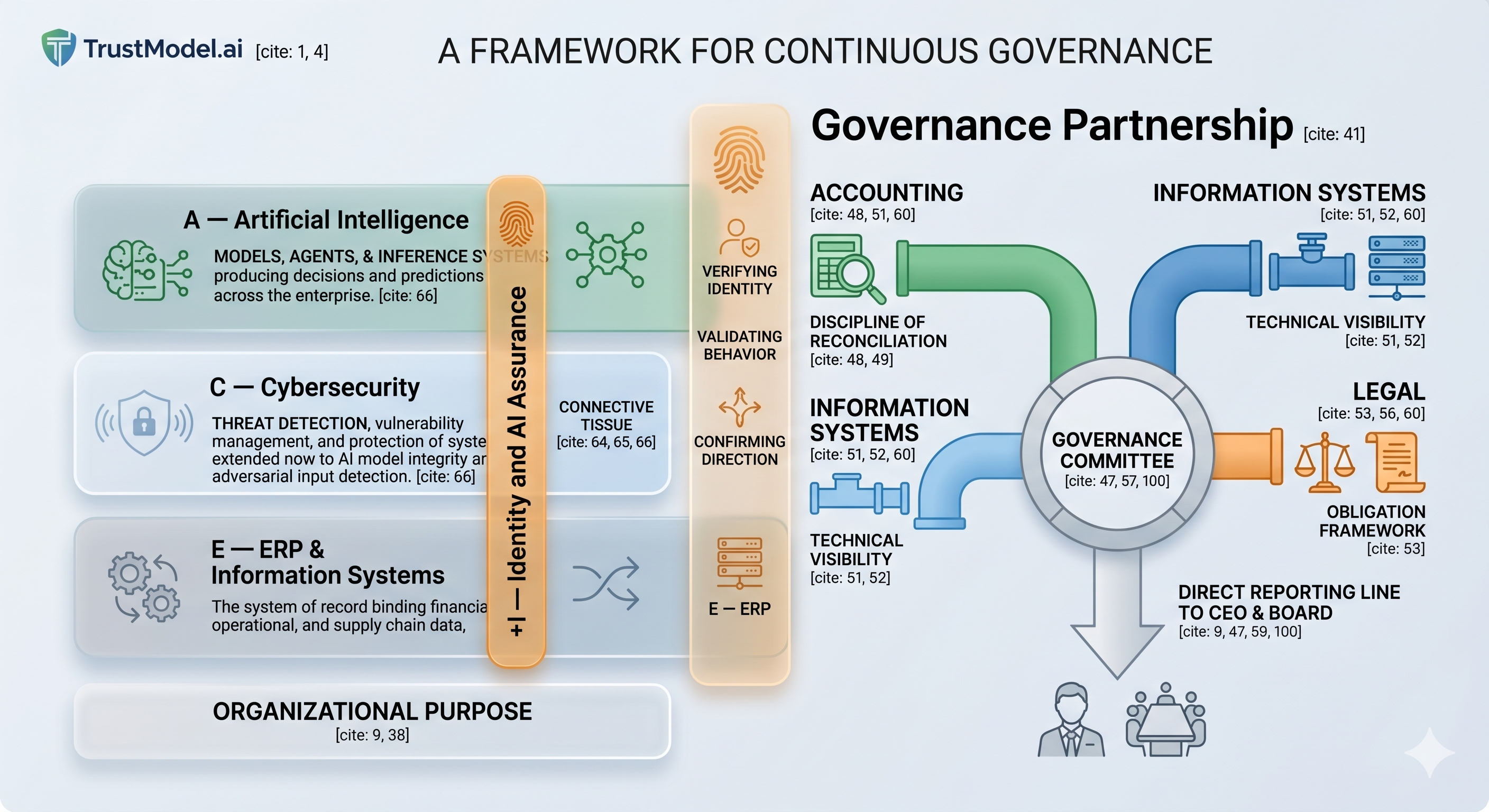
Against Drift: The Case for IAM and AI Assurance as Organizational Imperatives A Framework for Continuous Governance Across AI, Cybersecurity, and ERP byadminMay 7, 2026
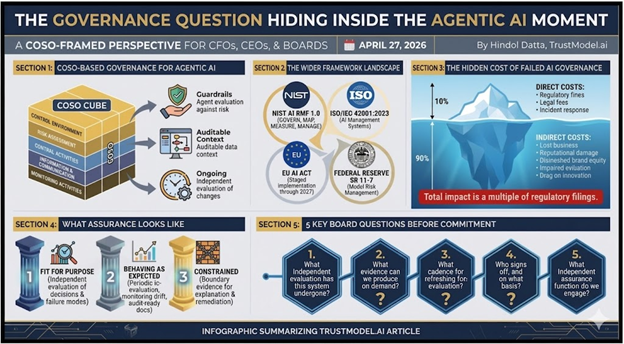
The Governance Question Hiding Inside the Agentic AI Moment A COSO-framed perspective for CFOs, CEOs, and Boards, as Google Cloud Next 2026 puts autonomous systems on center stage byadminMay 4, 2026
Professional ServicesFebruary 9, 2026 The Importance of Early Insurance for Startups I have seen many founders learn about insurance the hard way. Not because they lacked intelligence or discipline, but because they assumed that insurance is a product you buy when a specific risk becomes obvious. Like smoke alarms or backup generators, they considered insurance a just-in-time tool. That mindset, while common, is dangerous. And it reveals a deeper misunderstanding: most startup leaders view insurance as a transactional necessity rather than a strategic asset. They see it as a fixed cost, not a form of dynamic protection. The difference between buying insurance before the fire and after one breaks out is more than just pricing. It is a matter of leverage, process, and control. Insurers assess risk based on both timing and narrative. A company that purchases coverage after a scare, or worse, after an actual event, walks into the negotiation with diminished leverage. Underwriters become wary. Policy exclusions multiply. Premiums rise. Claims get scrutinized with microscopic skepticism. Throughout my experience overseeing finance and strategy across organizations from BeyondID to managing global finance for a $120 million organization at Lifestyle Solutions, I have learned to act preemptively in that liminal space where risk is not yet realized but already latent. Buying insurance while the house is still standing is not just good judgment. It is financial foresight.
Professional ServicesFebruary 5, 2026 Rethinking Insurance: A Strategic Asset for Startups Most founders treat insurance the same way they treat fire extinguishers. They buy it because someone tells them it is required, then move on. This checkbox mentality reflects a broader bias: risk is something to avoid, not engage with. When adversity strikes, insurance becomes less a lifeline and more a labyrinth. What I offer here is a reframing: insurance not as cost, but as a mechanism to preserve capital efficiency, shield leadership focus, and reinforce investor confidence. Insurance operates as a compensatory system, a release valve for systemic shocks that exceed the buffer capacity of a startup’s operational engine. Startups optimize every function for efficiency, which amplifies fragility. Insurance provides the offloading mechanism for risks that, if retained, could become existential. Most founders undervalue how insurance safeguards the cap table. The absence of proper coverage can force emergency bridge funding that dilutes founders by double digits. Reputation is also an asset that insurance protects through signaling foresight and responsibility. Insurance becomes a form of real options management, expanding freedom to operate without narrowing the path. Founders who understand this treat insurance as an asset class, one that does not generate revenue but enables it.
Professional ServicesFebruary 2, 2026 The Rise of Risk-Sharing Contracts in Modern Enterprises In the financial architecture of a modern enterprise, few decisions bear more consequence than how revenue is contracted. The world of fixed-fee engagements is being eclipsed by shared-risk frameworks including performance-based SLAs, gain-sharing mechanisms, and penalty clauses that enable CFOs to turn contracts from rigid commitments into dynamic instruments of alignment. The move toward risk-sharing stems from realizing that in a volatile world, static pricing fails to reflect service delivery reality. Traditional contracts assume scope, inputs, and outcomes are knowable at inception, but assumptions underpinning forecasts are now routinely invalidated within months. Well-structured risk-sharing contracts balance predictability with adaptability, creating symbiotic feedback loops between client objectives and provider behavior. However, risk-sharing requires greater precision, demanding clear baselines, correct measurement of causality, and shared understanding of success through data design, scenario analytics, and economic corridors defining acceptable variation.
Professional ServicesNovember 26, 2025 Building Resilience: The Key to Smart Insurance Practices Introduction and Executive Summary
Professional ServicesNovember 26, 2025 Navigating Insurance Claims: A Founder’s Guide Executive Summary
Professional ServicesNovember 26, 2025 Understanding Underwriting: How Behavior Shapes Executive Summary
Professional ServicesNovember 26, 2025 Founders’ Guide to Effective Insurance Management Executive Summary
Professional ServicesNovember 26, 2025 Navigating Startup Insurance: A Guide for Founders Introduction and Executive Summary