Aligning CEO Vision with Investor Expectations In the world of venture capital, money is not just a resource. It is a directional signal. When capital comes into a company, it brings expectations about the market, the pace of growth, and the eventual path to liquidity. For the CEO of a venture-backed company, understanding these expectations is not optional. Every venture firm has a thesis, and that thesis shapes everything from hiring cadence to capital deployment. A wise CEO does not assume all capital is alike but works to understand the worldview behind it and adapts priorities accordingly. The CEO brings operational knowledge and customer insight. The investor brings market experience and return pressure. When these perspectives meet with mutual humility, the company steers with purpose. Alignment is not a one-time event. It must be refreshed constantly. The relationship between a CEO and their venture investors is foundational. Dollars are important but direction matters more. byadminFebruary 10, 2026
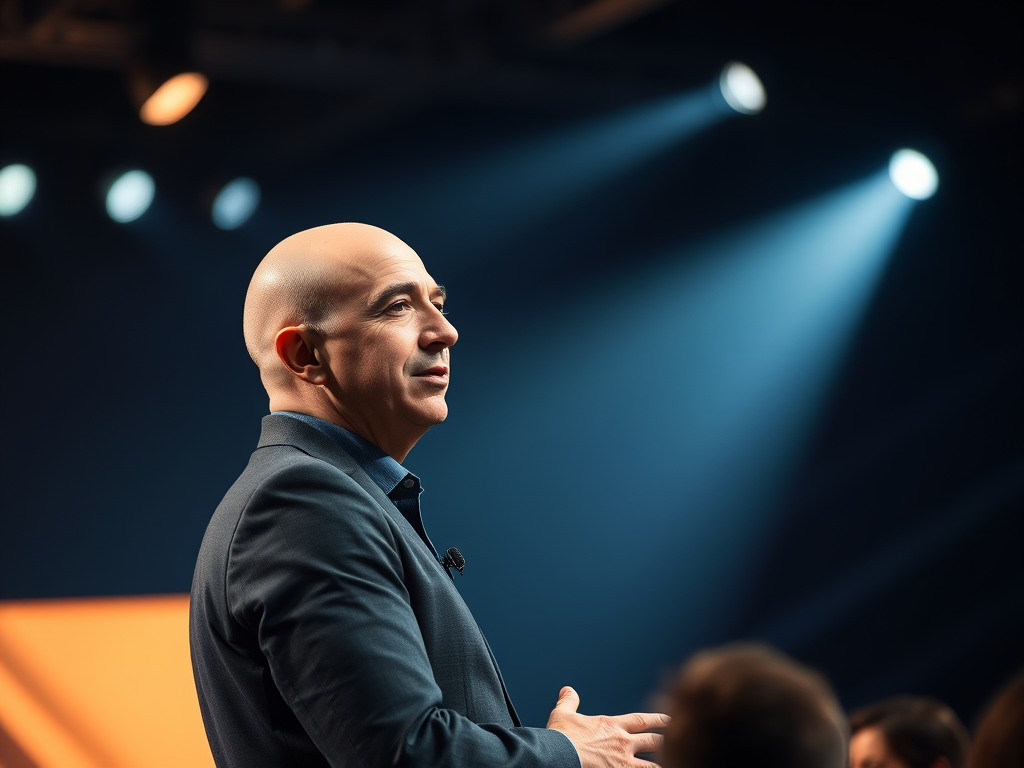
Bezos’s Decision Architecture: A CFO’s Blueprint for Strategic Clarity and Momentum When Jeff Bezos founded Amazon in 1994, he created a decision-making architecture governing who decides, how fast, and with what information. These methods became embedded in Amazon: two-pizza teams limiting coordination overhead, one-way versus two-way door distinctions calibrating review depth to decision reversibility, Day 1 mindset maintaining organizational freshness, and disagree-and-commit protocols accelerating alignment after debate. For Chief Financial Officers, these ideas provide clarity about capital allocation, trust distribution, and agility deployment across the organization. This analysis demonstrates how CFOs can weave Bezos’s decision architecture into finance functions to elevate rigor and speed in capital allocation and risk management. The framework translates into organizing capital budgeting around cross-functional pods, classifying investments by reversibility, building rolling forecasts, establishing delegation authority based on complexity, and formalizing disagree-and-commit protocols. This redefines the CFO role from fiscal sentry to strategic conductor, enabling finance to deploy capital to innovation, manage risk-taking with discipline, and build organizational capacity. byadminFebruary 10, 2026
The Founder Dilemma: Balancing Control and Evolution There comes a moment in the life of every startup when growth begins to strain its original architecture. What was once a tight circle of founders who operated by instinct becomes a larger organism demanding systems, scale, and structure. The shift is both exhilarating and painful. For the founder, it feels like standing on a shoreline where waves of evolution challenge role and identity. Some moments call for asserting leadership. Others demand surrender. Knowing when to push back and when to step back becomes the central emotional and structural test of the journey. The early days are defined by improvisation, with roles being fluid and decisions fast. But success introduces complexity. Product lines expand. Teams double, then triple. Informal systems break. The founder who thrived in ambiguity must now lead through clarity. This tension is not a failure but a sign of growth. However, if not addressed, it becomes corrosive. The skills required to start a company differ from those needed to scale it. Evolution starts with asking the right questions: What does the company need now? Where am I most effective? Where am I in the way? byadminFebruary 10, 2026
OKRs vs KPIs: Driving Purpose and Performance The transition from key performance indicators to objectives and key results represents a fundamental shift from measuring what is easily quantified to pursuing what matters strategically. Drawing from three decades at the intersection of finance, strategy, and systems thinking, this analysis demonstrates how OKRs transform founder-led companies under private equity ownership by connecting daily execution to strategic ambition without draining entrepreneurial agility. Traditional KPI-driven cultures entrench focus on lagging indicators serving as scorecards of past performance rather than compass needles pointing toward future direction. OKRs add the essential “why” by binding outcomes to purpose, with objectives defining destinations while key results quantify progress. Successful implementation requires education distinguishing output from outcome, recalibrating incentive structures to introduce intentional alignment, establishing cadences treating uncertainty as signal rather than noise, and building transparency explaining why objectives matter. The framework matures when embedded into operational cores, when teams craft objectives supporting company directional arc, and when review processes function as Bayesian updates revising beliefs about what works. This evolution transforms accountability from residing in founder memory to becoming institutional capability, democratizing leadership while preserving entrepreneurial speed, creating conditions where private equity sponsors gain execution visibility without micromanagement, and building companies that shape performance rather than merely measure it. byadminFebruary 10, 2026
Systems ThinkingOctober 14, 2025 Mastering Strategic Optionality: CFOs Navigate Uncertainty Plans rarely survive contact with reality. As Eisenhower said, it’s planning, not the plan, that builds resilience. For CFOs, the goal isn’t predicting the future; it’s preparing the organization to navigate it. That preparation comes from exploring strategic options, building adaptable CFO strategies, and strengthening financial planning to ensure the business can adjust no matter what the future holds.
Systems ThinkingOctober 14, 2025 Leading from the Front: How CFOs Use First Principles Thinking to Drive Value In times of change and uncertainty, the most important quality for a CFO isn’t just technical skill. It’s clarity of thought. And the best tool for clear thinking? First principles thinking. First principles problem solving means breaking problems down to their most basic truths and building solutions from scratch, not copying what others do. Instead of asking, “How have others done it?” ask, “What is absolutely true here, and what follows logically?” For CFOs, this approach helps define value creation, clarify trade-offs, navigate uncertainty, and deploy capital wisely. It is a critical component of CFO strategy and underscores the CFO’s role in strategic planning. What is first principles thinking in practice? Here’s how it works:
Systems ThinkingOctober 14, 2025 Why CFOs Should Read Chaos Theory: Finding Hidden Patterns in Business Risk “Chaos is not disorder; it’s order we don’t yet understand.”
Systems ThinkingOctober 14, 2025 Merge or Submerge: Why Complexity Theory Should Guide Post-Merger Strategy “The whole is more than the sum of its parts – unless entropy is your co-pilot.”
Systems ThinkingOctober 14, 2025 The Art of the Deal Starts with Data: M&A in the Age of Machine Intelligence Mergers and acquisitions have always been seen as a mix of instinct, relationships, and financial modeling. In the past, a banker’s pitch and a few well-placed assumptions often carried the day. But today, that playbook is outdated. The most successful deals are now shaped by data, not just persuasion.
Systems ThinkingOctober 14, 2025 Digital CFO 2.0: Architecting the Infrastructure of the Future Enterprise The CFO’s role has gone through one of the biggest transformations in modern business. Once defined by reporting, reconciling, and controlling, the finance office was mostly about compliance and historical accuracy. Decisions were driven by quarterly cycles and backward-looking numbers.
Systems ThinkingOctober 14, 2025 Forecasting with GenAI: Speed and Accuracy for CFOs In the traditional finance playbook, forecasting has long been the heart of strategic planning. It is where the story of the enterprise unfolds in numbers. But as the pace of change accelerates and uncertainty becomes the norm, forecasting has evolved from a quarterly ritual to a real-time strategic capability. Now, with the arrival of generative intelligence, the modern CFO has a new kind of engine, one that is faster, adaptive, contextual, and narrative-ready. This is not simply automation. It is an augmentation. Generative AI does not just speed up CFO prediction cycles. It brings a structural shift in how data, models, and context come together. The promise is compelling: financial modeling forecasting that delivers a stronger financial forecast model, more accurate results, faster insights, and embedded explainability that executives and boards can act on, showcasing the true impact of AI in finance.
Systems ThinkingOctober 14, 2025 Adaptive Leadership in Finance: The Rise of the Agile CFO in Complex Organizations My interest in complexity theory began in earnest after reading Geoffrey West’s Scale, a book that profoundly altered how I view not only biological systems but also the scaling of human enterprises. West’s insights into the mathematical patterns underlying growth, sustainability, and decline resonated with my three decades of finance leadership in Silicon Valley, where organizations are in perpetual states of flux, scaling up or reinventing themselves in cycles that mirror adaptive systems more than static hierarchies. Since then, I have followed the pioneering work at the Santa Fe Institute with great interest, finding in their research a rigorous framework that helps explain why firms that appear dominant one decade may falter in the next if they fail to evolve.
Systems ThinkingOctober 12, 2025 The Hidden ROI in ERP: Smarter Tech Decisions I have been actively involved in implementing systems across different organizations for much of my career, and my experiences range from rewarding successes to sobering disappointments. Over the years, I have worked with platforms such as NetSuite, Sage, extensions to Everest and Warehouse Management Systems, BaaN, Oracle Financials, and JD Edwards. In some cases, the projects came together well, producing the efficiency, visibility, and positive ERP ROI we had envisioned. In other cases, they fell short of expectations, sometimes quite dramatically. I must acknowledge that in certain situations, the fault lay with me.
Systems ThinkingOctober 12, 2025 Machine Learning in FP&A: Signal Detection in a Noisy Business World Financial Planning and Analysis (FP&A), once rooted in static budgets and linear extrapolations, now finds itself operating in a business landscape defined by ambiguity, velocity, and noise. Gone