Aligning CEO Vision with Investor Expectations In the world of venture capital, money is not just a resource. It is a directional signal. When capital comes into a company, it brings expectations about the market, the pace of growth, and the eventual path to liquidity. For the CEO of a venture-backed company, understanding these expectations is not optional. Every venture firm has a thesis, and that thesis shapes everything from hiring cadence to capital deployment. A wise CEO does not assume all capital is alike but works to understand the worldview behind it and adapts priorities accordingly. The CEO brings operational knowledge and customer insight. The investor brings market experience and return pressure. When these perspectives meet with mutual humility, the company steers with purpose. Alignment is not a one-time event. It must be refreshed constantly. The relationship between a CEO and their venture investors is foundational. Dollars are important but direction matters more. byadminFebruary 10, 2026
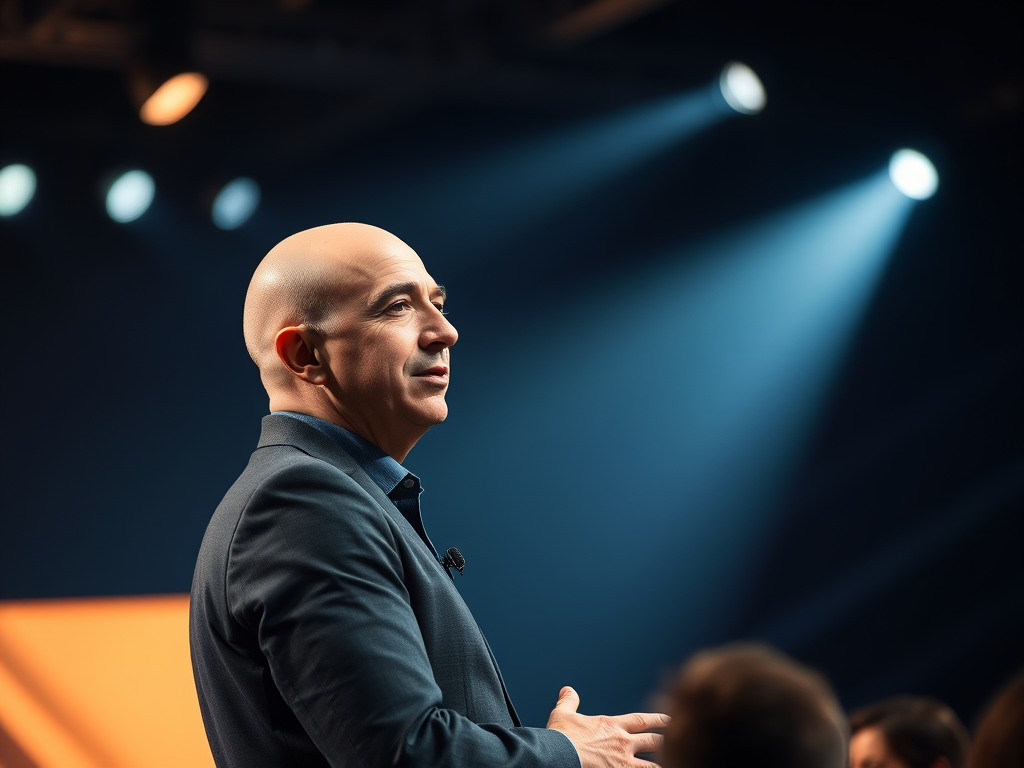
Bezos’s Decision Architecture: A CFO’s Blueprint for Strategic Clarity and Momentum When Jeff Bezos founded Amazon in 1994, he created a decision-making architecture governing who decides, how fast, and with what information. These methods became embedded in Amazon: two-pizza teams limiting coordination overhead, one-way versus two-way door distinctions calibrating review depth to decision reversibility, Day 1 mindset maintaining organizational freshness, and disagree-and-commit protocols accelerating alignment after debate. For Chief Financial Officers, these ideas provide clarity about capital allocation, trust distribution, and agility deployment across the organization. This analysis demonstrates how CFOs can weave Bezos’s decision architecture into finance functions to elevate rigor and speed in capital allocation and risk management. The framework translates into organizing capital budgeting around cross-functional pods, classifying investments by reversibility, building rolling forecasts, establishing delegation authority based on complexity, and formalizing disagree-and-commit protocols. This redefines the CFO role from fiscal sentry to strategic conductor, enabling finance to deploy capital to innovation, manage risk-taking with discipline, and build organizational capacity. byadminFebruary 10, 2026
The Founder Dilemma: Balancing Control and Evolution There comes a moment in the life of every startup when growth begins to strain its original architecture. What was once a tight circle of founders who operated by instinct becomes a larger organism demanding systems, scale, and structure. The shift is both exhilarating and painful. For the founder, it feels like standing on a shoreline where waves of evolution challenge role and identity. Some moments call for asserting leadership. Others demand surrender. Knowing when to push back and when to step back becomes the central emotional and structural test of the journey. The early days are defined by improvisation, with roles being fluid and decisions fast. But success introduces complexity. Product lines expand. Teams double, then triple. Informal systems break. The founder who thrived in ambiguity must now lead through clarity. This tension is not a failure but a sign of growth. However, if not addressed, it becomes corrosive. The skills required to start a company differ from those needed to scale it. Evolution starts with asking the right questions: What does the company need now? Where am I most effective? Where am I in the way? byadminFebruary 10, 2026
OKRs vs KPIs: Driving Purpose and Performance The transition from key performance indicators to objectives and key results represents a fundamental shift from measuring what is easily quantified to pursuing what matters strategically. Drawing from three decades at the intersection of finance, strategy, and systems thinking, this analysis demonstrates how OKRs transform founder-led companies under private equity ownership by connecting daily execution to strategic ambition without draining entrepreneurial agility. Traditional KPI-driven cultures entrench focus on lagging indicators serving as scorecards of past performance rather than compass needles pointing toward future direction. OKRs add the essential “why” by binding outcomes to purpose, with objectives defining destinations while key results quantify progress. Successful implementation requires education distinguishing output from outcome, recalibrating incentive structures to introduce intentional alignment, establishing cadences treating uncertainty as signal rather than noise, and building transparency explaining why objectives matter. The framework matures when embedded into operational cores, when teams craft objectives supporting company directional arc, and when review processes function as Bayesian updates revising beliefs about what works. This evolution transforms accountability from residing in founder memory to becoming institutional capability, democratizing leadership while preserving entrepreneurial speed, creating conditions where private equity sponsors gain execution visibility without micromanagement, and building companies that shape performance rather than merely measure it. byadminFebruary 10, 2026
Leadership & CultureJanuary 12, 2026 The Power of Saying No in Business Growth In today’s hyper-competitive, venture-fueled economy, few things generate boardroom anxiety like the possibility of leaving growth on the table. Revenue is often equated with relevance and market share with inevitability. For executives, the pressure to pursue every opportunity including entering new markets, launching adjacent products, or acquiring new customer segments can be intense. Throughout my twenty-five years leading finance across cybersecurity, SaaS, manufacturing, logistics, and gaming, I have learned that this environment, where fear of missing out masquerades as strategy, makes no the hardest word in the boardroom vocabulary. Yet the most sophisticated companies and the most durable have learned that growth is not always good and more is not always better. Saying no to growth is not a concession. It is a choice to play a longer, more deliberate game. It reflects maturity that recognizes the difference between growth that fuels value creation and growth that masks systemic fatigue.
Leadership & CultureJanuary 9, 2026 The CFO as Risk Architect: Building Financial Controls Before You Need Them In the corporate arena where growth dazzles and valuations captivate, the CFO has often been cast as the financial steward, a pragmatic counterweight to the CEO’s boundless optimism. But in the modern enterprise where velocity is currency and complexity compounds like interest, that traditional framing is not just outdated, it is strategically insufficient. Throughout my twenty-five years leading finance across cybersecurity, SaaS, manufacturing, logistics, and gaming, I have learned that the CFO must now evolve into something far more vital: the architect of risk. This is not simply a semantic shift. It is a philosophical one. Being a risk architect means designing an organization where financial control is not a response to failure but a precondition to success.
Leadership & CultureJanuary 9, 2026 How to Tell a Story Investors Believe: The CFO’s Role in Narrative Shaping The capital markets do not reward imagination. They reward coherence. And yet, every successful capital raise, every expansion round, every acquisition pitch is anchored not in spreadsheets but in stories. Stories that persuade. Stories that resonate. Stories that make risk feel like opportunity. Throughout my twenty-five years leading finance across cybersecurity, SaaS, manufacturing, logistics, and gaming, I have learned that for a CFO, shaping that story is not about spin. It is about truth, rendered with precision, structured with intent, and delivered with conviction. There is a myth that the CEO tells the story and the CFO validates it. In practice, the opposite is often true. Investors believe what the CFO embodies. Because the CFO speaks the language of constraint. When a CFO aligns with the story, it earns gravity. When they hesitate, the entire narrative wobbles. But credibility is not manufactured. It is built. Slowly, and then all at once.
Leadership & CultureJanuary 7, 2026 Designing a Compliance Org that Adds Value, Not Bureaucracy In any well-functioning company, compliance is like the immune system. Done right, you barely notice it, but it protects you from risks that could otherwise bring the enterprise to its knees. Done poorly, it becomes overactive, attacking the very innovation and initiative it was meant to preserve. As companies scale and regulatory complexity grows, the temptation to layer rules atop rules becomes strong. But history has shown, again and again, that bureaucracy is no substitute for judgment. Throughout my twenty-five years leading finance across cybersecurity, SaaS, manufacturing, logistics, and gaming, I have learned that the challenge for modern finance and executive leaders is simple: how do we build a compliance function that defends the business without disabling it? The answer is with design, not reaction. A well-designed compliance organization does not exist to say no. It exists to ask better questions. It operates not as the hall monitor of the company but as a trusted advisor, close enough to the action to understand it and independent enough to safeguard it.
Leadership & CultureJanuary 7, 2026 When to Centralize, When to Fragment: The Shared Services Dilemma In business, scale is a blessing and a burden. On one hand, you gain leverage including more volume, more reach, and more negotiating power. On the other, you invite complexity including more teams, more systems, and more nuance. Throughout my twenty-five years leading finance across cybersecurity, SaaS, manufacturing, logistics, and gaming, I have learned that for CFOs, nowhere is this tension more evident than in the perennial question: should we centralize or decentralize? It is the shared services dilemma. And it is as old as the first back office. Every growing enterprise eventually hits a fork in the road. As functions multiply including finance, procurement, HR, and IT, the temptation grows to consolidate. Consolidation promises efficiency, consistency, and control. But done wrong, it breeds bureaucracy, distance, and bottlenecks. The opposite approach, fragmentation, favors speed, autonomy, and customization. But it can lead to waste, redundancy, and a lack of strategic cohesion. There is no universal answer. But there is a way to think about it.
Leadership & CultureJanuary 1, 2026 Embedded Finance: The CFO’s New Role Explained If you had asked a CFO twenty years ago what they believed about the relationship between their customers and their company’s finances, you would have heard words like invoices, collections, payment terms, maybe credit risk. Their world was a clear boundary, finance was internal, customers were external, and the primary bridge between the two was the accounts receivable line on the balance sheet. Fast-forward to today, and that boundary is dissolving. We now live in a world where finance is not just something you do to support the business. It is something you embed into the business. And it changes not just how CFOs operate but how they compete. Throughout my twenty-five years leading finance across cybersecurity, SaaS, manufacturing, logistics, and gaming, I have learned that what embedded finance really represents is a philosophical inversion. It makes finance a first-class citizen in the product experience, not a downstream process. For the CFO, this is not just a technical upgrade. It is a strategic shift. Because now, finance becomes part of the customer value proposition. And that changes everything.
Leadership & CultureDecember 29, 2025 Building a Bench: Developing Future CFOs Inside Your Org If there is one thing that separates the good companies from the enduring ones, it is not their current valuation, margin structure, or even their access to capital. It is their ability to build leaders from within. And in the finance function, so often seen as the most technical and least teachable of domains, this internal bench-building becomes not just a matter of succession but of strategy. Throughout my twenty-five years leading finance across cybersecurity, SaaS, manufacturing, logistics, and gaming, I have learned that most companies think of finance succession planning as a contingency, a checkbox on the board’s talent agenda or an exercise prompted by a sudden resignation. But in companies that scale intelligently, the building of future CFOs is not reactive. It is deliberate. It is woven into how the finance team is structured, how roles are assigned, and how insight is distributed. Because developing a future CFO is not about exposure to accounting complexity. It is about developing judgment, and judgment takes time.
Leadership & CultureDecember 29, 2025 The CEO-CFO Dynamic: Building Strategic Resilience At the center of every enduring business, beyond the product and the pitch deck, the metrics and the markets, lies a relationship that defines the tempo, tone, and trajectory of the enterprise. It is the relationship between the CEO and the CFO. It is, at once, the axis of decision-making and the ballast of judgment. There was a time when the CFO was the foil to the CEO’s ambition, the sharp pencil in the corner, tasked with keeping the exuberance of strategy in check with the cold steel of numbers. The CEO dreamed, the CFO discounted. The CEO expanded, the CFO conserved. But today’s environment, defined by volatility, velocity, and vanishing moats, demands more. Throughout my twenty-five years leading finance across cybersecurity, SaaS, manufacturing, logistics, and gaming, I have learned that in today’s company, the CFO cannot simply be a sparring partner. They must become a strategic twin.
Leadership & CultureDecember 29, 2025 Narratives That Move: How the Best CFOs Influence Through Numbers It is often said that numbers speak for themselves. But in the hands of a seasoned CFO, numbers do something far more powerful: they persuade. The best CFOs do not simply report the numbers. They shape the understanding of those numbers into a narrative that informs, inspires, and when necessary, redirects the course of a company. In a world overwhelmed by data, it is not enough to be accurate. You must also be clear. And if you want to lead, you must be compelling.
Leadership & CultureDecember 26, 2025 Memo to the Board: How to Communicate Risk, Value and Vision as CFO There are few moments in a CFO’s calendar as consequential as preparing a memo or briefing for the board. It is not a mere update. It is a test of alignment, a presentation of stewardship, and a declaration of what lies ahead. In those few pages or that brief presentation, the board expects not just numbers but understanding, not just performance but direction, and not just statements of risk but interpretations of what those risks mean. A well-constructed board communication is not defensive, nor overly optimistic. It is clear-eyed, analytical, and above all, rooted in judgment. The role of the CFO in board communications is unique. It is to be the translator between operations and oversight, the link between the past and the possible. The CEO paints the vision, but it is the CFO who gives it weight, explaining how it will be funded, how it will return value, and what could go wrong along the way. Throughout my twenty-five years leading finance across cybersecurity, SaaS, manufacturing, logistics, and gaming, I have learned that this burden cannot be outsourced. It is part of the trust we inherit when the title changes to Chief Financial Officer.