Aligning CEO Vision with Investor Expectations In the world of venture capital, money is not just a resource. It is a directional signal. When capital comes into a company, it brings expectations about the market, the pace of growth, and the eventual path to liquidity. For the CEO of a venture-backed company, understanding these expectations is not optional. Every venture firm has a thesis, and that thesis shapes everything from hiring cadence to capital deployment. A wise CEO does not assume all capital is alike but works to understand the worldview behind it and adapts priorities accordingly. The CEO brings operational knowledge and customer insight. The investor brings market experience and return pressure. When these perspectives meet with mutual humility, the company steers with purpose. Alignment is not a one-time event. It must be refreshed constantly. The relationship between a CEO and their venture investors is foundational. Dollars are important but direction matters more. byadminFebruary 10, 2026
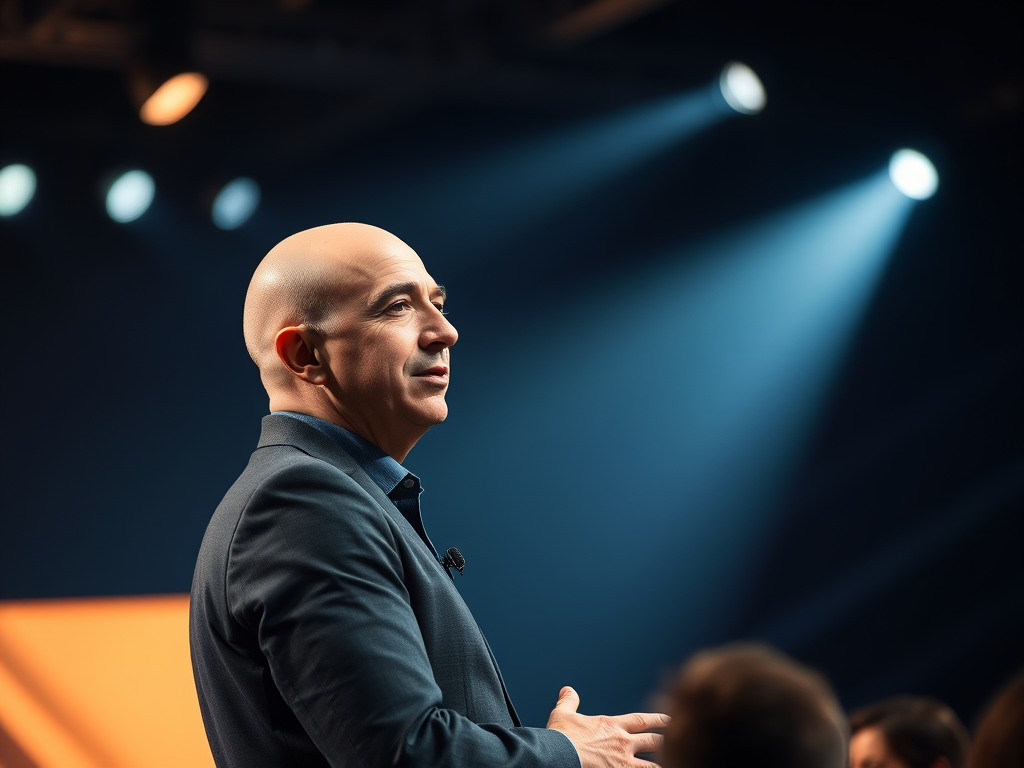
Bezos’s Decision Architecture: A CFO’s Blueprint for Strategic Clarity and Momentum When Jeff Bezos founded Amazon in 1994, he created a decision-making architecture governing who decides, how fast, and with what information. These methods became embedded in Amazon: two-pizza teams limiting coordination overhead, one-way versus two-way door distinctions calibrating review depth to decision reversibility, Day 1 mindset maintaining organizational freshness, and disagree-and-commit protocols accelerating alignment after debate. For Chief Financial Officers, these ideas provide clarity about capital allocation, trust distribution, and agility deployment across the organization. This analysis demonstrates how CFOs can weave Bezos’s decision architecture into finance functions to elevate rigor and speed in capital allocation and risk management. The framework translates into organizing capital budgeting around cross-functional pods, classifying investments by reversibility, building rolling forecasts, establishing delegation authority based on complexity, and formalizing disagree-and-commit protocols. This redefines the CFO role from fiscal sentry to strategic conductor, enabling finance to deploy capital to innovation, manage risk-taking with discipline, and build organizational capacity. byadminFebruary 10, 2026
The Founder Dilemma: Balancing Control and Evolution There comes a moment in the life of every startup when growth begins to strain its original architecture. What was once a tight circle of founders who operated by instinct becomes a larger organism demanding systems, scale, and structure. The shift is both exhilarating and painful. For the founder, it feels like standing on a shoreline where waves of evolution challenge role and identity. Some moments call for asserting leadership. Others demand surrender. Knowing when to push back and when to step back becomes the central emotional and structural test of the journey. The early days are defined by improvisation, with roles being fluid and decisions fast. But success introduces complexity. Product lines expand. Teams double, then triple. Informal systems break. The founder who thrived in ambiguity must now lead through clarity. This tension is not a failure but a sign of growth. However, if not addressed, it becomes corrosive. The skills required to start a company differ from those needed to scale it. Evolution starts with asking the right questions: What does the company need now? Where am I most effective? Where am I in the way? byadminFebruary 10, 2026
OKRs vs KPIs: Driving Purpose and Performance The transition from key performance indicators to objectives and key results represents a fundamental shift from measuring what is easily quantified to pursuing what matters strategically. Drawing from three decades at the intersection of finance, strategy, and systems thinking, this analysis demonstrates how OKRs transform founder-led companies under private equity ownership by connecting daily execution to strategic ambition without draining entrepreneurial agility. Traditional KPI-driven cultures entrench focus on lagging indicators serving as scorecards of past performance rather than compass needles pointing toward future direction. OKRs add the essential “why” by binding outcomes to purpose, with objectives defining destinations while key results quantify progress. Successful implementation requires education distinguishing output from outcome, recalibrating incentive structures to introduce intentional alignment, establishing cadences treating uncertainty as signal rather than noise, and building transparency explaining why objectives matter. The framework matures when embedded into operational cores, when teams craft objectives supporting company directional arc, and when review processes function as Bayesian updates revising beliefs about what works. This evolution transforms accountability from residing in founder memory to becoming institutional capability, democratizing leadership while preserving entrepreneurial speed, creating conditions where private equity sponsors gain execution visibility without micromanagement, and building companies that shape performance rather than merely measure it. byadminFebruary 10, 2026
Leadership & CultureFebruary 10, 2026 The Founder Dilemma: Balancing Control and Evolution There comes a moment in the life of every startup when growth begins to strain its original architecture. What was once a tight circle of founders who operated by instinct becomes a larger organism demanding systems, scale, and structure. The shift is both exhilarating and painful. For the founder, it feels like standing on a shoreline where waves of evolution challenge role and identity. Some moments call for asserting leadership. Others demand surrender. Knowing when to push back and when to step back becomes the central emotional and structural test of the journey. The early days are defined by improvisation, with roles being fluid and decisions fast. But success introduces complexity. Product lines expand. Teams double, then triple. Informal systems break. The founder who thrived in ambiguity must now lead through clarity. This tension is not a failure but a sign of growth. However, if not addressed, it becomes corrosive. The skills required to start a company differ from those needed to scale it. Evolution starts with asking the right questions: What does the company need now? Where am I most effective? Where am I in the way?
Leadership & CultureFebruary 6, 2026 Navigating Board Tensions: Strategies for CEOs The relationship between management teams and boards of directors represents one of the most nuanced and consequential dynamics in corporate governance. What often begins as a collaborative partnership can evolve into a zone of tension as companies scale and stakes rise. These tensions typically manifest around critical decision points such as burn rate management, hiring velocity, strategic pivots, and merger and acquisition opportunities.
Leadership & CultureFebruary 3, 2026 Firefighting vs. Rebuilding: A Boardroom Dilemma Few moments are as pivotal as when a company confronts its own fragility. Whether prompted by economic downturn, mismanagement, or technological obsolescence, the board inevitably finds itself at a strategic fork: should it embrace aggressive firefighting through cost-cutting, asset spin-offs, and emergency directives, or pursue the longer view of rebuilding through reinvesting in competencies, attracting long-term capital, and reshaping culture? The metaphor of firefighting is emotionally appealing, conjuring heroism and urgency, but boards cannot fight fires indefinitely. At some point, water gives way to blueprints and triage gives way to reconstruction. Yet boards, structurally risk-averse and oriented toward quarterly accountability, often conflate action with effectiveness. In times of crisis, doing something now can feel more comforting than waiting to do something better later. This decision is existential, speaking to the very identity of the company and its leadership. The question of firefighting versus rebuilding is ultimately one of timing and temperament: timing because crisis urgency compresses decision windows, and temperament because boards composed of financiers, technologists, or founders bring inherently different reflexes. Cost-cutting creates the illusion of control without addressing root causes and can destroy the very assets that make recovery possible. Rebuilding requires different courage, asking boards to tolerate ambiguity, invest in long-term capabilities even as short-term metrics falter, and think like architects rather than emergency responders.
Leadership & CultureJanuary 28, 2026 Transforming Leadership: CEO and CFO as Co-Architects In the architecture of corporate leadership, the relationship between the Chief Executive Officer and the Chief Financial Officer has often been portrayed as one of tension: a creative mind balanced by a cautious one, ambition met with arithmetic. The CEO dreams; the CFO interrogates. One looks outward to markets and missions; the other inward to margins and mechanics. But such caricatures, while dramatic, are increasingly outdated. In the modern enterprise, where transformation is not a singular initiative but a continuous mandate, the CEO-CFO dynamic is not about friction but about orchestration. And when well-aligned, it can form the most potent alliance in business leadership, a duet of vision and precision, of velocity and discipline. The most compelling transformations do not begin with a slide deck or an executive offsite. They begin when a CEO dares to ask, “What is next?” and a CFO responds, “Let us make it possible.”
Leadership & CultureJanuary 27, 2026 Building Trust When Your Company Is Declining There is a peculiar hush that descends on a company when decline begins. It arrives not with fanfare but in the pause before a meeting, in the halfway smiled “morning” across the open plan floor, in the dashboard’s insistent flattening day after day. Throughout thirty years leading finance and operations across SaaS, digital marketing, gaming, and education nonprofits, I have witnessed that hush settle over organizations. I remember sitting in a senior leadership retreat when we were three months into lagging sales, margins were vaporizing, and the pause in conversation was brittle. In that moment, I realized that leadership messaging during decline is more than public relations. It becomes the lifeline that connects people to purpose. The act of saying the unsaid. Growth stirs hope. Decline stirs doubt. And in times of doubt everyone seeks direction, looking to leadership not for promises but for presence.
Leadership & CultureJanuary 27, 2026 Navigating Business Decline: Sell, Pivot, or Fold? There comes a moment when holding steady no longer suffices. A firm has seen better days. Sales slow. Costs creep. Events that once promised growth begin to feel brittle. The future awaits, but it calls not for more effort but for decisive clarity. Should you sell the business to a stronger steward? Pivot into a new direction that aligns with your strengths? Or fold it altogether, ending the struggle to preserve what is past its time? Throughout thirty years leading finance and operations across SaaS, digital marketing, gaming, logistics, and manufacturing, I have encountered firms facing existential choice. The past has taught me that decline does not always signal failure. Often it signals transition. And AI hastens those transitions further than we imagined.
Leadership & CultureJanuary 19, 2026 CFOs: From Number Crunchers to Strategic Leaders The modern CFO role has undergone a fundamental transformation from guardian of cost discipline to strategic architect of enterprise value. This evolution is not merely an expansion of responsibilities but a comprehensive redefinition of how finance leaders contribute to organizational success. Today’s CFO must navigate constant disruption, from pandemic-induced supply chain volatility to AI-driven workflow automation, while simultaneously managing stakeholder expectations around ESG performance, cybersecurity governance, and digital transformation. Recent data confirms this shift: 78 percent of U.S. CFOs now directly engage in digital transformation initiatives, and over 60 percent oversee analytics functions. The most effective CFOs demonstrate three fundamental transitions: from finance-centric thinking to value architecture, from cost orientation to investment orientation, and from control-focused operations to cross-functional collaboration. These strategic leaders leverage data analytics, artificial intelligence, and cloud-based platforms to transform finance organizations from cost centers into drivers of innovation and competitive advantage. The journey requires mastery of both traditional financial stewardship and forward-looking strategic capabilities, balancing fiscal discipline with long-term capability development.
Leadership & CultureJanuary 14, 2026 Data Governance in Finance: A Necessity for Security The modern finance function, once built on ledgers and guarded by policy, now lives almost entirely in code. Spreadsheets have become databases, vaults have become clouds, and the most sensitive truths of a corporation including earnings, projections, controls, and compensation exist less in file cabinets and more in digital atmospheres. Throughout my twenty-five years leading finance across cybersecurity, SaaS, manufacturing, logistics, and gaming, I have learned that with this transformation has come both immense power and a new kind of vulnerability. Finance, once secure in the idea that security was someone else’s concern, now finds itself at the frontlines of cyber risk. When cyber risk is real, it is financial risk. And when controls are breached, the numbers are not the only thing that shatter. So does institutional confidence.
Leadership & CultureJanuary 13, 2026 Hiring in Hypergrowth: How to Scale Culture Without Losing It Hypergrowth is intoxicating. It brings funding, press coverage, new customers, and the electric sense that a company is winning. But it also brings something far less glamorous: hiring pressure. Teams double in size seemingly overnight. New offices are opened, roles get filled before job descriptions are written, and onboarding becomes a logistical rather than cultural function. Throughout my twenty-five years leading finance across cybersecurity, SaaS, manufacturing, logistics, and gaming, I have learned that in this environment, one of the most elusive goals is preserving what made the company successful in the first place, its culture. Scaling a company without scaling its dysfunction requires more than hiring fast. It demands hiring well and building systems that transmit values as effectively as they transmit workflows. Culture does not scale on its own. It must be actively designed, reinforced, and embedded in every stage of the talent lifecycle.
Leadership & CultureJanuary 12, 2026 The CEO-CFO Dynamic: From Tension to Transformation In the architecture of corporate leadership, the relationship between the Chief Executive Officer and the Chief Financial Officer has often been portrayed as one of tension, a creative mind balanced by a cautious one, ambition met with arithmetic. The CEO dreams, the CFO interrogates. One looks outward to markets and missions, the other inward to margins and mechanics. But such caricatures, while dramatic, are increasingly outdated. Throughout my twenty-five years leading finance across cybersecurity, SaaS, manufacturing, logistics, and gaming, I have learned that in the modern enterprise where transformation is continuous mandate, the CEO-CFO dynamic is not about friction. It is about orchestration. And when well-aligned, it can form the most potent alliance in business leadership, a duet of vision and precision, of velocity and discipline.