Aligning CEO Vision with Investor Expectations In the world of venture capital, money is not just a resource. It is a directional signal. When capital comes into a company, it brings expectations about the market, the pace of growth, and the eventual path to liquidity. For the CEO of a venture-backed company, understanding these expectations is not optional. Every venture firm has a thesis, and that thesis shapes everything from hiring cadence to capital deployment. A wise CEO does not assume all capital is alike but works to understand the worldview behind it and adapts priorities accordingly. The CEO brings operational knowledge and customer insight. The investor brings market experience and return pressure. When these perspectives meet with mutual humility, the company steers with purpose. Alignment is not a one-time event. It must be refreshed constantly. The relationship between a CEO and their venture investors is foundational. Dollars are important but direction matters more. byadminFebruary 10, 2026
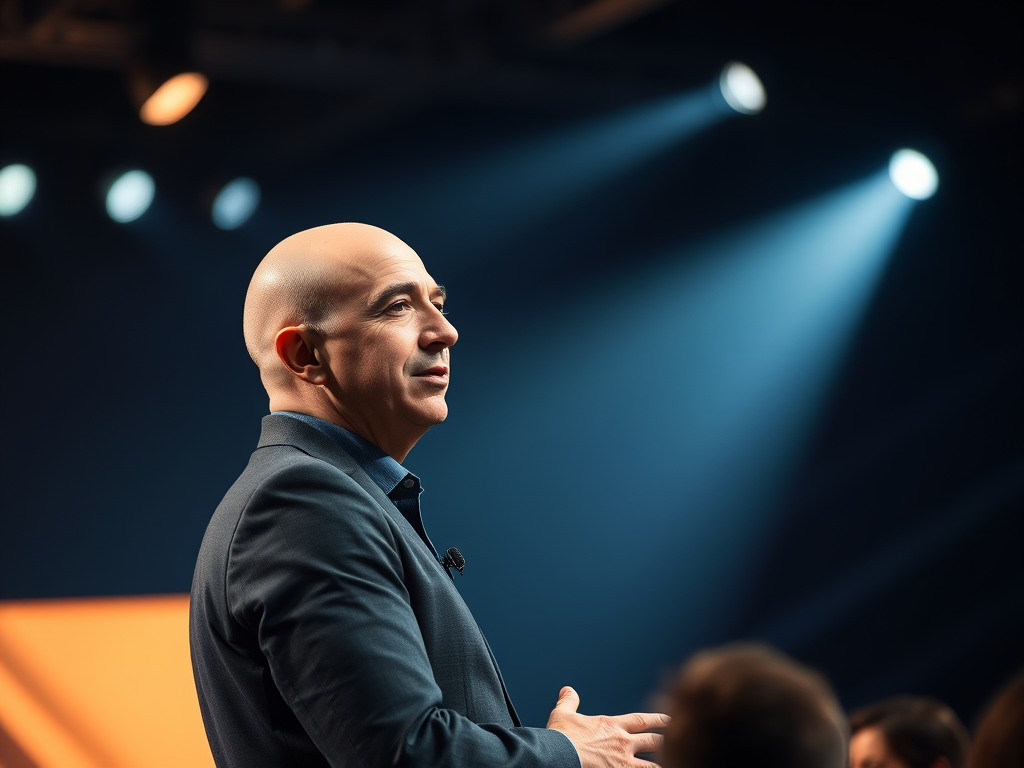
Bezos’s Decision Architecture: A CFO’s Blueprint for Strategic Clarity and Momentum When Jeff Bezos founded Amazon in 1994, he created a decision-making architecture governing who decides, how fast, and with what information. These methods became embedded in Amazon: two-pizza teams limiting coordination overhead, one-way versus two-way door distinctions calibrating review depth to decision reversibility, Day 1 mindset maintaining organizational freshness, and disagree-and-commit protocols accelerating alignment after debate. For Chief Financial Officers, these ideas provide clarity about capital allocation, trust distribution, and agility deployment across the organization. This analysis demonstrates how CFOs can weave Bezos’s decision architecture into finance functions to elevate rigor and speed in capital allocation and risk management. The framework translates into organizing capital budgeting around cross-functional pods, classifying investments by reversibility, building rolling forecasts, establishing delegation authority based on complexity, and formalizing disagree-and-commit protocols. This redefines the CFO role from fiscal sentry to strategic conductor, enabling finance to deploy capital to innovation, manage risk-taking with discipline, and build organizational capacity. byadminFebruary 10, 2026
The Founder Dilemma: Balancing Control and Evolution There comes a moment in the life of every startup when growth begins to strain its original architecture. What was once a tight circle of founders who operated by instinct becomes a larger organism demanding systems, scale, and structure. The shift is both exhilarating and painful. For the founder, it feels like standing on a shoreline where waves of evolution challenge role and identity. Some moments call for asserting leadership. Others demand surrender. Knowing when to push back and when to step back becomes the central emotional and structural test of the journey. The early days are defined by improvisation, with roles being fluid and decisions fast. But success introduces complexity. Product lines expand. Teams double, then triple. Informal systems break. The founder who thrived in ambiguity must now lead through clarity. This tension is not a failure but a sign of growth. However, if not addressed, it becomes corrosive. The skills required to start a company differ from those needed to scale it. Evolution starts with asking the right questions: What does the company need now? Where am I most effective? Where am I in the way? byadminFebruary 10, 2026
OKRs vs KPIs: Driving Purpose and Performance The transition from key performance indicators to objectives and key results represents a fundamental shift from measuring what is easily quantified to pursuing what matters strategically. Drawing from three decades at the intersection of finance, strategy, and systems thinking, this analysis demonstrates how OKRs transform founder-led companies under private equity ownership by connecting daily execution to strategic ambition without draining entrepreneurial agility. Traditional KPI-driven cultures entrench focus on lagging indicators serving as scorecards of past performance rather than compass needles pointing toward future direction. OKRs add the essential “why” by binding outcomes to purpose, with objectives defining destinations while key results quantify progress. Successful implementation requires education distinguishing output from outcome, recalibrating incentive structures to introduce intentional alignment, establishing cadences treating uncertainty as signal rather than noise, and building transparency explaining why objectives matter. The framework matures when embedded into operational cores, when teams craft objectives supporting company directional arc, and when review processes function as Bayesian updates revising beliefs about what works. This evolution transforms accountability from residing in founder memory to becoming institutional capability, democratizing leadership while preserving entrepreneurial speed, creating conditions where private equity sponsors gain execution visibility without micromanagement, and building companies that shape performance rather than merely measure it. byadminFebruary 10, 2026
GovernanceJanuary 9, 2026 Boards Have a Job: CFOs Pay the Price When They Forget It It is a truth that should be self-evident but often is not: boards have a job. They are not ceremonial observers. They are not goodwill ambassadors. They are fiduciaries, bound not only by statute but by consequence. When they fulfill their obligations with rigor, alignment, and discipline, value is protected, risks are contained, and leadership is kept honest. When they do not, the cost is measured in value erosion, strategic drift, and sometimes in irreversible damage to reputation or solvency. Throughout my twenty-five years leading finance across cybersecurity, SaaS, manufacturing, logistics, and gaming, I have learned that fiduciary duty is not an abstraction. It consists of specific obligations that are enforceable, practical, and measurable. Directors must act with care, loyalty, and obedience to the enterprise’s mission and strategic continuity. They must oversee management, scrutinize material risks, ensure regulatory compliance, and serve the long-term interests of shareholders and stakeholders. These are not philosophical suggestions. They are enforceable standards. Yet in too many boardrooms, these duties are reframed as a checklist or worse, reduced to vague references in governance manuals.
GovernanceJanuary 8, 2026 How to Build a Board That Thinks Like Owners, Not Spectators The architecture of a boardroom is often weighed down by convention. Chairs are filled with accomplished individuals whose résumés glimmer with achievement. They bring perspective and prestige. Yet too many sit quietly as if in an audience, nodding politely rather than engaging. The distinction between spectators and owners matters. Boards that think like owners transcend their formal role. They confront complexity with curiosity, stretch assumptions with rigor, and shape outcomes with conviction. Throughout my twenty-five years leading finance across cybersecurity, SaaS, manufacturing, logistics, and gaming, I have learned that to nurture such a board requires intention and design. It begins with a mindset. Spectators view themselves as independent overseers, featuring from the perimeter. They ask questions. They listen. They approve or delay, but they seldom challenge. Owners lean in. They take stakes, mentally and financially. They insist on shared accountability. They make it personal. They carry the fate of the enterprise as if it were their own, aligning long-term prosperity with their own. This posture is not naive optimism. It is disciplined, humble, and unafraid of hard truths.
GovernanceJanuary 6, 2026 The Cap Table Balancing Act: Dilution, Incentives, and Exit Strategy There is a special kind of quiet that fills a room when the cap table goes up on the screen. It is not the silence of confusion but the silence of consequence. Founders lean in. Investors watch closely. And operators, those who helped build the company from zero to now, hold their breath. Because unlike income statements or burn rates or net promoter scores, the cap table does not deal in potential. It deals in outcomes. Throughout my twenty-five years leading finance across cybersecurity, SaaS, manufacturing, logistics, and gaming, I have learned that the capitalization table is not just a record of who owns what. It is the living heartbeat of a company’s financial DNA. It tells you where power resides, how aligned incentives are, and what tomorrow’s headline will say if a term sheet turns into a transaction. Managing a cap table is not about spreadsheets. It is about stewardship. Because every decision that affects dilution, ownership, or incentive design changes the psychology of the people who build, fund, and eventually exit the business. Cap table management, done right, is part arithmetic, part game theory, and part long-range forecasting.
GovernanceJanuary 1, 2026 Modernizing SOX: The CFO’s Blueprint for Trust If you were to assemble a list of the least glamorous aspects of the CFO’s remit, Sarbanes-Oxley compliance would likely rank near the top. It evokes images of checklists, control matrices, quarterly certifications, and audit fatigue. For many finance leaders, it is a necessary burden, an expense to be endured for the privilege of remaining publicly traded. Yet beneath the surface of this regulatory obligation lies a quiet opportunity. Throughout my twenty-five years leading finance across cybersecurity, SaaS, manufacturing, logistics, and gaming, I have learned that when SOX is approached not as a defensive perimeter but as an operational asset, it becomes something far more powerful: a blueprint for trust. The smartest CFOs do not view SOX as a cage. They see it as a chassis. A structure upon which to build durable controls, scale responsibly, and most critically, turn compliance into confidence. And the lever to unlock that potential is technology. Not just automation for the sake of efficiency, but thoughtful integration of tools that raise visibility, reduce risk, and enable faster, smarter decisions.
GovernanceOctober 17, 2025 AI Regulation Strategies: Insights for CFOs and Boards Every wave of technological innovation leaves behind a regulatory undertow. Generative AI, with its power to reason, simulate, and generate human-like outputs at scale, has already triggered a
GovernanceOctober 17, 2025 Stewardship: The Core of Effective Financial Leadership Stewardship often masquerades behind a fog of financial controls, policy manuals, and governance frameworks. To many, it arrives clad in the robes of internal audit, contract compliance, and periodic
GovernanceOctober 17, 2025 Building Trust in Finance: The CFO’s Role Trust Begins Where Transparency Meets Context I did not begin my journey in finance to become a mere compliance steward. Like many in this field, I started with spreadsheets and statements,
GovernanceOctober 17, 2025 Building Accountability in Fast-Paced Companies Part 1: Building a Culture of Accountability in a World Addicted to Speed The Paradox of Modern Growth The modern company faces an increasingly unforgiving tradeoff. The market rewards
GovernanceOctober 17, 2025 The Finance Playbook for Scaling Complexity Without Chaos From Controlled Growth to Operational Grace Somewhere between Series A optimism and Series D pressure sits the very real challenge of scale. Not just growth for its own sake but growth with
GovernanceOctober 14, 2025 Dirty Data, Costly Decisions: Finance and Governance Every CFO knows the cost of a bad decision. Whether it is an overestimated forecast, a missed signal in working capital trends, or a capital allocation bet that fizzles, financial misjudgments rarely stem from a lack of effort. More often, they stem from a lack of trusted data. In a world that runs on automation, predictive models, and instant reporting, data quality has become the new control environment. This is where the benefits of data governance become clear. It is no longer enough for finance to assume that finance data governance is solely IT’s problem or that governance is a compliance checkbox. In data governance for financial services, when the numbers drive the strategy and the models drive the numbers, the source of truth must be trustworthy. That responsibility now sits squarely with the CFO.