Aligning CEO Vision with Investor Expectations In the world of venture capital, money is not just a resource. It is a directional signal. When capital comes into a company, it brings expectations about the market, the pace of growth, and the eventual path to liquidity. For the CEO of a venture-backed company, understanding these expectations is not optional. Every venture firm has a thesis, and that thesis shapes everything from hiring cadence to capital deployment. A wise CEO does not assume all capital is alike but works to understand the worldview behind it and adapts priorities accordingly. The CEO brings operational knowledge and customer insight. The investor brings market experience and return pressure. When these perspectives meet with mutual humility, the company steers with purpose. Alignment is not a one-time event. It must be refreshed constantly. The relationship between a CEO and their venture investors is foundational. Dollars are important but direction matters more. byadminFebruary 10, 2026
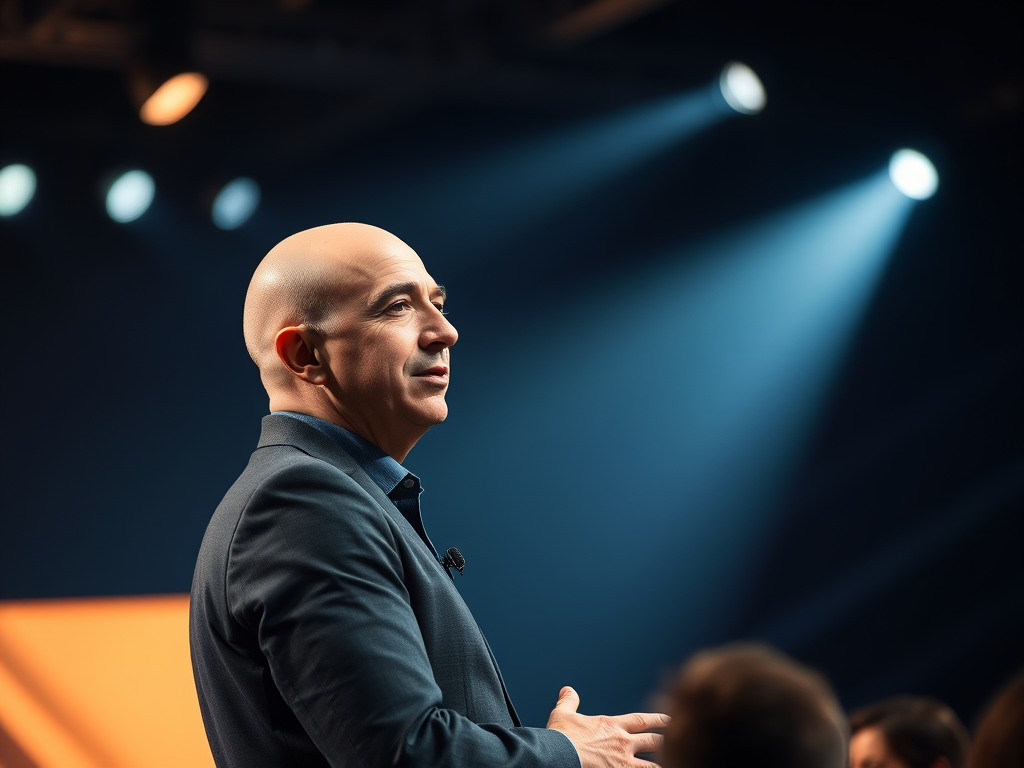
Bezos’s Decision Architecture: A CFO’s Blueprint for Strategic Clarity and Momentum When Jeff Bezos founded Amazon in 1994, he created a decision-making architecture governing who decides, how fast, and with what information. These methods became embedded in Amazon: two-pizza teams limiting coordination overhead, one-way versus two-way door distinctions calibrating review depth to decision reversibility, Day 1 mindset maintaining organizational freshness, and disagree-and-commit protocols accelerating alignment after debate. For Chief Financial Officers, these ideas provide clarity about capital allocation, trust distribution, and agility deployment across the organization. This analysis demonstrates how CFOs can weave Bezos’s decision architecture into finance functions to elevate rigor and speed in capital allocation and risk management. The framework translates into organizing capital budgeting around cross-functional pods, classifying investments by reversibility, building rolling forecasts, establishing delegation authority based on complexity, and formalizing disagree-and-commit protocols. This redefines the CFO role from fiscal sentry to strategic conductor, enabling finance to deploy capital to innovation, manage risk-taking with discipline, and build organizational capacity. byadminFebruary 10, 2026
The Founder Dilemma: Balancing Control and Evolution There comes a moment in the life of every startup when growth begins to strain its original architecture. What was once a tight circle of founders who operated by instinct becomes a larger organism demanding systems, scale, and structure. The shift is both exhilarating and painful. For the founder, it feels like standing on a shoreline where waves of evolution challenge role and identity. Some moments call for asserting leadership. Others demand surrender. Knowing when to push back and when to step back becomes the central emotional and structural test of the journey. The early days are defined by improvisation, with roles being fluid and decisions fast. But success introduces complexity. Product lines expand. Teams double, then triple. Informal systems break. The founder who thrived in ambiguity must now lead through clarity. This tension is not a failure but a sign of growth. However, if not addressed, it becomes corrosive. The skills required to start a company differ from those needed to scale it. Evolution starts with asking the right questions: What does the company need now? Where am I most effective? Where am I in the way? byadminFebruary 10, 2026
OKRs vs KPIs: Driving Purpose and Performance The transition from key performance indicators to objectives and key results represents a fundamental shift from measuring what is easily quantified to pursuing what matters strategically. Drawing from three decades at the intersection of finance, strategy, and systems thinking, this analysis demonstrates how OKRs transform founder-led companies under private equity ownership by connecting daily execution to strategic ambition without draining entrepreneurial agility. Traditional KPI-driven cultures entrench focus on lagging indicators serving as scorecards of past performance rather than compass needles pointing toward future direction. OKRs add the essential “why” by binding outcomes to purpose, with objectives defining destinations while key results quantify progress. Successful implementation requires education distinguishing output from outcome, recalibrating incentive structures to introduce intentional alignment, establishing cadences treating uncertainty as signal rather than noise, and building transparency explaining why objectives matter. The framework matures when embedded into operational cores, when teams craft objectives supporting company directional arc, and when review processes function as Bayesian updates revising beliefs about what works. This evolution transforms accountability from residing in founder memory to becoming institutional capability, democratizing leadership while preserving entrepreneurial speed, creating conditions where private equity sponsors gain execution visibility without micromanagement, and building companies that shape performance rather than merely measure it. byadminFebruary 10, 2026
Corporate Financial PlanningNovember 19, 2025 Dead Stock, Live Money: Using Analytics to Fix Inventory Bloat Every CFO knows that the income statement can lie momentarily. Earnings can be massaged, costs delayed, and timing can play tricks. But the balance sheet tells the real story. Few areas on it reveal more operational inefficiency, cash leakage, and strategic drag than bloated inventory. For modern finance leaders, inventory management consulting services and inventory optimization consulting are not optional; they are essential tools to turn dead stock into live money and unlock working capital.
Corporate Financial PlanningNovember 10, 2025 Transforming M&A with AI: A CFO’s Guide to Winning Mergers and acquisitions are often called the proving ground for capital allocation. For CFOs, the real work starts long before the ink dries. Due diligence is where the foundation is laid, and integration planning is where success or failure is truly determined. Every experienced CFO knows that you don’t win in the boardroom. You win in the data room and again in the first hundred days after close.
Corporate Financial PlanningOctober 17, 2025 Navigating Generative AI Risks in High-Stakes Finance The Promise is Real, so are the Risks Generative AI has become the great amplifier of our time. It promises scale, speed, and superhuman synthesis. In every Series A through D
Corporate Financial PlanningOctober 14, 2025 What Taleb Would Tell a CFO: Managing Tail Risks Without Overreacting Nassim Taleb isn’t just a philosopher; he’s a guide for CFOs navigating uncertainty. His lessons on Black Swans, Fat Tails, and Antifragility are practical: risk is often what your models don’t see, and resilience matters more than precision. In finance, this is closely tied to tail risk, those rare but extreme events that traditional models underestimate. Understanding what tail risk is helps leaders build stronger safeguards and adopt better financial risk management solutions. For CFOs, investing in the right financial risk services can mean the difference between fragility and antifragility in today’s volatile world. Key Lessons for CFOs.
Corporate Financial PlanningOctober 14, 2025 Capital Is Scarce, Not Dumb: Rethinking Capital Planning in Volatile Markets There’s a saying in finance: “Capital is cheap and dumb; judgment is expensive and rare.” That might have been true when zero interest rates made every balance sheet a playground. But today? Capital
Corporate Financial PlanningOctober 14, 2025 Beyond EBITDA: Using Predictive Models in Modern Deal Screening EBITDA tells you where the company has been. Predictive intelligence, supported by expert financial modeling consulting services, financial modelling services, and guidance from a financial modeling consultant, tells you where it is going.
Corporate Financial PlanningOctober 12, 2025 Finance Automation: Where to Start and Scale The allure of finance automation is powerful. From faster closes and financial reporting automation to streamlined approvals and real-time insights, automation promises to free up resources, improve accuracy, and increase agility. Yet for all the excitement and the growing pressure to “digitize or die,” many CFOs are still left asking a more practical question: where exactly should we begin with finance process automation, where should we scale, and just as importantly, where should we stop? For leaders exploring how to improve finance processes, or even considering external expertise through fractional CFO services, the challenge lies in striking the right balance between efficiency and control.
Corporate Financial PlanningOctober 10, 2025 The Modern CFO: Beyond Earnings Calls In today’s market, earnings calls are no longer sufficient to tell the full story. Financial results still matter, but they increasingly represent just one chapter in a broader narrative that investors, analysts, and stakeholders want to understand. That narrative is about strategy, competitive advantage, risk posture, capital allocation philosophy, and how decisions made today will compound or erode enterprise value over time. For the modern CFO, who not only oversees company finances but also shapes long-term strategy, this shift demands new fluency: the ability to communicate value, not just report it. It redefines the strategic CFO job description, emphasizing vision, adaptability, and communication as much as financial acumen.
Corporate Financial PlanningOctober 9, 2025 Key ESG KPIs for CFOs: Driving Value and Strategy The concept of ESG, short for Environmental, Social, and Governance, represents one of the most significant shifts in modern finance. At its core, ESG is a framework for evaluating how organizations create long-term value beyond traditional financial metrics by factoring in environmental stewardship, social responsibility, and governance practices. This is where ESG metrics and ESG performance metrics become crucial, as they provide measurable ways to assess how well companies are embedding sustainability and accountability into their operations. While the language of ESG has become mainstream only in the past two decades, the origins of the thinking trace back much further. Socially responsible investing began gaining traction in the 1960s and 1970s, as investors sought to avoid companies linked to controversial industries such as tobacco or weapons.
Corporate Financial PlanningOctober 9, 2025 Mastering Deal Structuring in 2025 In 2025, deal structuring has evolved into a far more intricate exercise than it was even a decade ago, shaped by the convergence of regulatory scrutiny, geopolitical uncertainty, technology-driven