Aligning CEO Vision with Investor Expectations In the world of venture capital, money is not just a resource. It is a directional signal. When capital comes into a company, it brings expectations about the market, the pace of growth, and the eventual path to liquidity. For the CEO of a venture-backed company, understanding these expectations is not optional. Every venture firm has a thesis, and that thesis shapes everything from hiring cadence to capital deployment. A wise CEO does not assume all capital is alike but works to understand the worldview behind it and adapts priorities accordingly. The CEO brings operational knowledge and customer insight. The investor brings market experience and return pressure. When these perspectives meet with mutual humility, the company steers with purpose. Alignment is not a one-time event. It must be refreshed constantly. The relationship between a CEO and their venture investors is foundational. Dollars are important but direction matters more. byadminFebruary 10, 2026
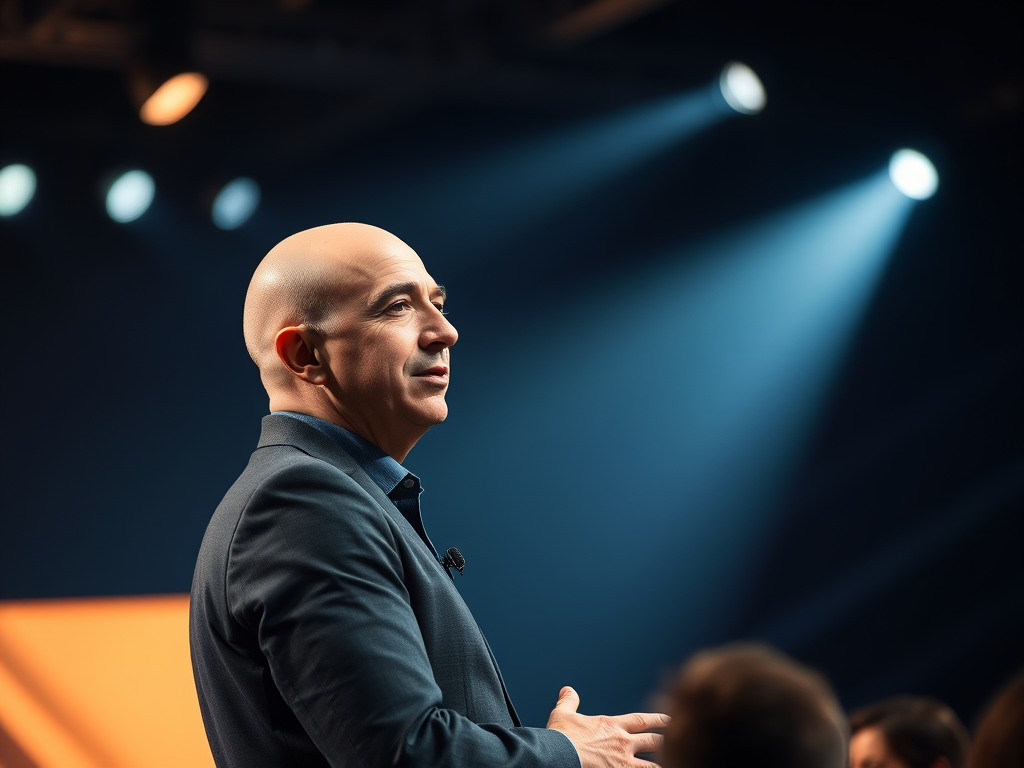
Bezos’s Decision Architecture: A CFO’s Blueprint for Strategic Clarity and Momentum When Jeff Bezos founded Amazon in 1994, he created a decision-making architecture governing who decides, how fast, and with what information. These methods became embedded in Amazon: two-pizza teams limiting coordination overhead, one-way versus two-way door distinctions calibrating review depth to decision reversibility, Day 1 mindset maintaining organizational freshness, and disagree-and-commit protocols accelerating alignment after debate. For Chief Financial Officers, these ideas provide clarity about capital allocation, trust distribution, and agility deployment across the organization. This analysis demonstrates how CFOs can weave Bezos’s decision architecture into finance functions to elevate rigor and speed in capital allocation and risk management. The framework translates into organizing capital budgeting around cross-functional pods, classifying investments by reversibility, building rolling forecasts, establishing delegation authority based on complexity, and formalizing disagree-and-commit protocols. This redefines the CFO role from fiscal sentry to strategic conductor, enabling finance to deploy capital to innovation, manage risk-taking with discipline, and build organizational capacity. byadminFebruary 10, 2026
The Founder Dilemma: Balancing Control and Evolution There comes a moment in the life of every startup when growth begins to strain its original architecture. What was once a tight circle of founders who operated by instinct becomes a larger organism demanding systems, scale, and structure. The shift is both exhilarating and painful. For the founder, it feels like standing on a shoreline where waves of evolution challenge role and identity. Some moments call for asserting leadership. Others demand surrender. Knowing when to push back and when to step back becomes the central emotional and structural test of the journey. The early days are defined by improvisation, with roles being fluid and decisions fast. But success introduces complexity. Product lines expand. Teams double, then triple. Informal systems break. The founder who thrived in ambiguity must now lead through clarity. This tension is not a failure but a sign of growth. However, if not addressed, it becomes corrosive. The skills required to start a company differ from those needed to scale it. Evolution starts with asking the right questions: What does the company need now? Where am I most effective? Where am I in the way? byadminFebruary 10, 2026
OKRs vs KPIs: Driving Purpose and Performance The transition from key performance indicators to objectives and key results represents a fundamental shift from measuring what is easily quantified to pursuing what matters strategically. Drawing from three decades at the intersection of finance, strategy, and systems thinking, this analysis demonstrates how OKRs transform founder-led companies under private equity ownership by connecting daily execution to strategic ambition without draining entrepreneurial agility. Traditional KPI-driven cultures entrench focus on lagging indicators serving as scorecards of past performance rather than compass needles pointing toward future direction. OKRs add the essential “why” by binding outcomes to purpose, with objectives defining destinations while key results quantify progress. Successful implementation requires education distinguishing output from outcome, recalibrating incentive structures to introduce intentional alignment, establishing cadences treating uncertainty as signal rather than noise, and building transparency explaining why objectives matter. The framework matures when embedded into operational cores, when teams craft objectives supporting company directional arc, and when review processes function as Bayesian updates revising beliefs about what works. This evolution transforms accountability from residing in founder memory to becoming institutional capability, democratizing leadership while preserving entrepreneurial speed, creating conditions where private equity sponsors gain execution visibility without micromanagement, and building companies that shape performance rather than merely measure it. byadminFebruary 10, 2026
GovernanceJanuary 19, 2026 When Founders and Boards Disagree: A CFO’s Guide to Reframing the Argument In the space where founders and boards intersect, tension is inevitable. Founders breathe purpose, urgency, and risk appetite. Boards offer perspective, prudence, and process. The CFO stands at the pivot, responsible for translating ambition into disciplined execution. Throughout my twenty-five years leading finance across cybersecurity, SaaS, manufacturing, logistics, and gaming, I have learned that when differences surface, the CFO must reframe the discussion in a way that respects conviction without sacrificing accountability. The challenge is not to take sides. It is to transform disagreement into structured dialogue, anchored in shared mission, supported by transparent evidence, and delivered with credibility. This begins with recognizing the types of disagreement that arise. Some are philosophical, a founder prioritizing moonshot ahead of margins. Others are operational but fueled by strategic misalignment: prioritizing breakthrough product versus scaling profitable channels. Cure follows diagnosis. And the first task for any CFO is to name the disagreement clearly. Without this clarity, debate drifts to defensiveness. Stakeholders talk past each other. Trust frays. Vision becomes fuzzy.
Leadership & CultureJanuary 14, 2026 Data Governance in Finance: A Necessity for Security The modern finance function, once built on ledgers and guarded by policy, now lives almost entirely in code. Spreadsheets have become databases, vaults have become clouds, and the most sensitive truths of a corporation including earnings, projections, controls, and compensation exist less in file cabinets and more in digital atmospheres. Throughout my twenty-five years leading finance across cybersecurity, SaaS, manufacturing, logistics, and gaming, I have learned that with this transformation has come both immense power and a new kind of vulnerability. Finance, once secure in the idea that security was someone else’s concern, now finds itself at the frontlines of cyber risk. When cyber risk is real, it is financial risk. And when controls are breached, the numbers are not the only thing that shatter. So does institutional confidence.
Performance ManagementJanuary 14, 2026 From Startup to Scaleup: Why Operating Models Must Evolve Every 12 Months The beginning of every startup feels like a lightning strike. There is urgency in the air, a kinetic energy that transcends business plans and pitch decks. The founding team sits elbow-to-elbow, answering customer support emails between investor calls and writing code while rewriting the pricing page. Every conversation is a decision. Every decision is a pivot. Throughout my twenty-five years leading finance across cybersecurity, SaaS, manufacturing, logistics, and gaming, I have learned that this fluidity feels like product-market fit in motion. And for a brief moment, it is. But what masquerades as momentum is often chaos tamed by proximity. Startups, especially in their first year, operate not with process but with presence. The co-founders have perfect visibility because they are in the room. And that works until it does not.
Corporate Financial PlanningJanuary 14, 2026 Every Dollar Should Have a Job: Strategic Investment Discipline for CFOs Every dollar has a cost. Not just the explicit cost of capital but the opportunity cost of deployment. Every dollar spent on one project is a dollar not spent elsewhere. Throughout my twenty-five years leading finance across cybersecurity, SaaS, manufacturing, logistics, and gaming, I have learned that this constraint is not a limit. It is a lens. It clarifies. It sharpens. And in the hands of a disciplined CFO, it becomes a strategic advantage.
GovernanceJanuary 14, 2026 You Don’t Exit a Business—You Exit Into One: Designing an Exit Investors Respect Most exits are framed as endings. Press releases speak of transitions, liquidity, and new chapters. But the best CFOs know better. Exits are not conclusions. They are entry points into the next capital structure, the next governance model, the next rhythm of accountability. Throughout my twenty-five years leading finance across cybersecurity, SaaS, manufacturing, logistics, and gaming, I have learned that to exit well is to architect that next structure with precision. To exit poorly is to be folded, not evolved. Investors do not respect exits that feel like escape. They respect exits that feel like culmination. The distinction is subtle but critical. In one, the company is leaving a problem behind. In the other, it is stepping into a design.
Corporate Financial PlanningJanuary 14, 2026 Capital Is No Longer Cheap: The CFO’s Guide to Doing More with Less There was a time when capital was a growth strategy. Cash was cheap, investors were patient, and the mandate was expansion. Every new market, new hire, new tool felt like acceleration. The CFO’s job was to fuel the fire without losing the map. But that era has ended. Throughout my twenty-five years leading finance across cybersecurity, SaaS, manufacturing, logistics, and gaming, I have learned that in its place is a different economy, one defined not by abundance but by friction. Today capital is costly. Time, talent, and investor goodwill are constrained. And the CFO is no longer the funder of dreams. They are the architect of discipline.
GovernanceJanuary 14, 2026 Time to Refresh: How to Recruit (and Retire) Board Members with Grace and Grit Every board faces an inflection point: the moment when renewal becomes not only advisable but essential. Boards mature, strategies evolve, and external landscapes shift. What once was an advantage including long-standing knowledge, industry tenure, and institutional memory can calcify into inertia. Throughout my twenty-five years leading finance across cybersecurity, SaaS, manufacturing, logistics, and gaming, I have learned that the hardest work in governance is not building the board but refreshing it: with discernment, fairness, and resilience. It is where strategy meets people. Board renewal requires both hard discipline and soft touch. Recruitment brings rigor: creating purpose-driven role descriptions, defining capability gaps, and executing a search process that balances immediate need with long-term vision. Retirement demands courage: recognizing when service diminishes value, managing transitions with respect, and communicating change in ways that preserve relationships and reputation. Both are acts of stewardship.
GovernanceJanuary 13, 2026 From Vision to Value: Aligning Board Perspectives with Operational Strategy A board’s vision without operational alignment is aspiration without outcome. A management team’s execution without board perspective is momentum without meaning. The alignment between vision and value is not merely a communication issue. It is a structural necessity. Throughout my twenty-five years leading finance across cybersecurity, SaaS, manufacturing, logistics, and gaming, I have learned that when the boardroom’s intent fails to translate into day-to-day decisions, enterprises underperform not because of bad ideas but because of missed handoffs. Strategy becomes symbolic. Tactics become reactive. Accountability diffuses. What should be symphonic becomes fragmented. The board is charged with setting strategic direction, shaping fiduciary expectations, and holding leadership accountable for long-term enterprise value. But vision statements and investor narratives, unless translated into operational terms, remain rhetorical. The management team, in turn, is tasked with mobilizing people, processes, and capital to deliver. But without clear signal from the board on strategic priorities, they default to execution logic: meet the quarter, grow the line, protect the core. The distance grows. The board thinks long-term. The operators live short-cycle. And the gap between vision and value widens.
Corporate Financial PlanningJanuary 13, 2026 How to Turn Investor Due Diligence into a Showcase of Strategic Maturity Most companies enter due diligence thinking of it as a test. A checklist. A gatekeeping ritual to get through so the deal can close and the real work can begin. But to a CFO with perspective, due diligence is not a hurdle. It is a mirror. It reflects how a company thinks, operates, and governs. Throughout my twenty-five years leading finance across cybersecurity, SaaS, manufacturing, logistics, and gaming, I have learned that for those who understand its power, due diligence becomes a stage. A quiet performance in which the company signals not just what it knows but how it leads. There is a reason investors ask the same questions. It is not laziness. It is psychology. Diligence is not just about confirming numbers. It is about confirming behavior. When investors ask for financials, they want to see more than revenue and cost. They want to see reconciliation. Forecast accuracy. Board-readiness. A company that treats the budget as a living tool, not a reporting artifact.
Leadership & CultureJanuary 13, 2026 Hiring in Hypergrowth: How to Scale Culture Without Losing It Hypergrowth is intoxicating. It brings funding, press coverage, new customers, and the electric sense that a company is winning. But it also brings something far less glamorous: hiring pressure. Teams double in size seemingly overnight. New offices are opened, roles get filled before job descriptions are written, and onboarding becomes a logistical rather than cultural function. Throughout my twenty-five years leading finance across cybersecurity, SaaS, manufacturing, logistics, and gaming, I have learned that in this environment, one of the most elusive goals is preserving what made the company successful in the first place, its culture. Scaling a company without scaling its dysfunction requires more than hiring fast. It demands hiring well and building systems that transmit values as effectively as they transmit workflows. Culture does not scale on its own. It must be actively designed, reinforced, and embedded in every stage of the talent lifecycle.