Aligning CEO Vision with Investor Expectations In the world of venture capital, money is not just a resource. It is a directional signal. When capital comes into a company, it brings expectations about the market, the pace of growth, and the eventual path to liquidity. For the CEO of a venture-backed company, understanding these expectations is not optional. Every venture firm has a thesis, and that thesis shapes everything from hiring cadence to capital deployment. A wise CEO does not assume all capital is alike but works to understand the worldview behind it and adapts priorities accordingly. The CEO brings operational knowledge and customer insight. The investor brings market experience and return pressure. When these perspectives meet with mutual humility, the company steers with purpose. Alignment is not a one-time event. It must be refreshed constantly. The relationship between a CEO and their venture investors is foundational. Dollars are important but direction matters more. byadminFebruary 10, 2026
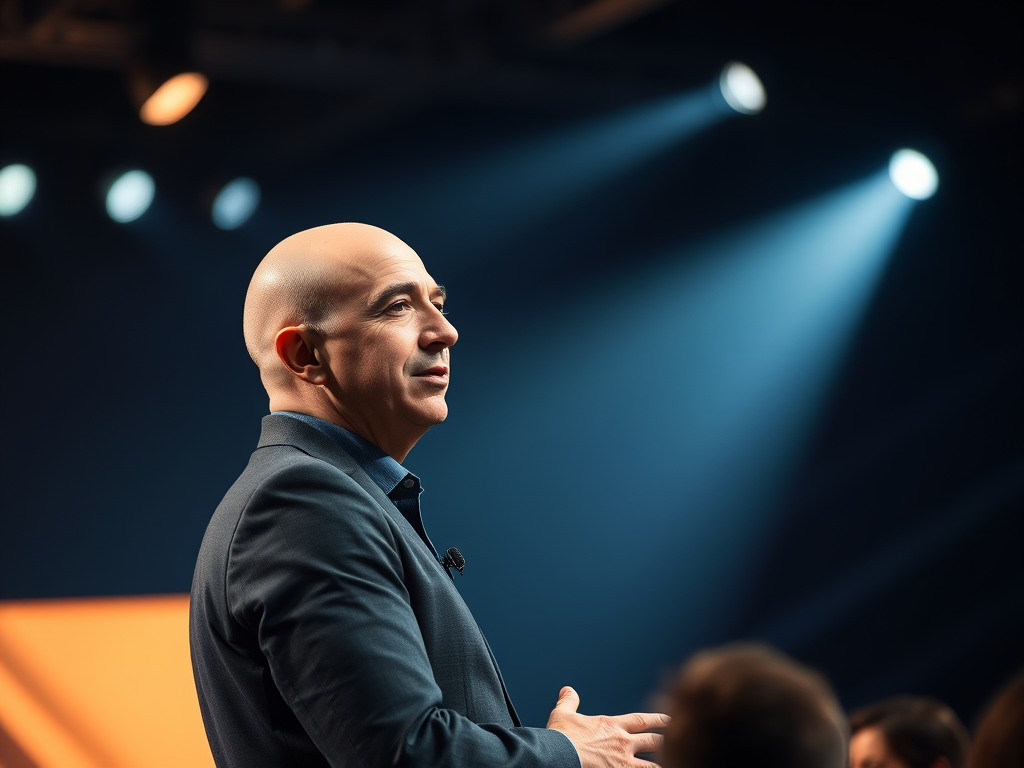
Bezos’s Decision Architecture: A CFO’s Blueprint for Strategic Clarity and Momentum When Jeff Bezos founded Amazon in 1994, he created a decision-making architecture governing who decides, how fast, and with what information. These methods became embedded in Amazon: two-pizza teams limiting coordination overhead, one-way versus two-way door distinctions calibrating review depth to decision reversibility, Day 1 mindset maintaining organizational freshness, and disagree-and-commit protocols accelerating alignment after debate. For Chief Financial Officers, these ideas provide clarity about capital allocation, trust distribution, and agility deployment across the organization. This analysis demonstrates how CFOs can weave Bezos’s decision architecture into finance functions to elevate rigor and speed in capital allocation and risk management. The framework translates into organizing capital budgeting around cross-functional pods, classifying investments by reversibility, building rolling forecasts, establishing delegation authority based on complexity, and formalizing disagree-and-commit protocols. This redefines the CFO role from fiscal sentry to strategic conductor, enabling finance to deploy capital to innovation, manage risk-taking with discipline, and build organizational capacity. byadminFebruary 10, 2026
The Founder Dilemma: Balancing Control and Evolution There comes a moment in the life of every startup when growth begins to strain its original architecture. What was once a tight circle of founders who operated by instinct becomes a larger organism demanding systems, scale, and structure. The shift is both exhilarating and painful. For the founder, it feels like standing on a shoreline where waves of evolution challenge role and identity. Some moments call for asserting leadership. Others demand surrender. Knowing when to push back and when to step back becomes the central emotional and structural test of the journey. The early days are defined by improvisation, with roles being fluid and decisions fast. But success introduces complexity. Product lines expand. Teams double, then triple. Informal systems break. The founder who thrived in ambiguity must now lead through clarity. This tension is not a failure but a sign of growth. However, if not addressed, it becomes corrosive. The skills required to start a company differ from those needed to scale it. Evolution starts with asking the right questions: What does the company need now? Where am I most effective? Where am I in the way? byadminFebruary 10, 2026
OKRs vs KPIs: Driving Purpose and Performance The transition from key performance indicators to objectives and key results represents a fundamental shift from measuring what is easily quantified to pursuing what matters strategically. Drawing from three decades at the intersection of finance, strategy, and systems thinking, this analysis demonstrates how OKRs transform founder-led companies under private equity ownership by connecting daily execution to strategic ambition without draining entrepreneurial agility. Traditional KPI-driven cultures entrench focus on lagging indicators serving as scorecards of past performance rather than compass needles pointing toward future direction. OKRs add the essential “why” by binding outcomes to purpose, with objectives defining destinations while key results quantify progress. Successful implementation requires education distinguishing output from outcome, recalibrating incentive structures to introduce intentional alignment, establishing cadences treating uncertainty as signal rather than noise, and building transparency explaining why objectives matter. The framework matures when embedded into operational cores, when teams craft objectives supporting company directional arc, and when review processes function as Bayesian updates revising beliefs about what works. This evolution transforms accountability from residing in founder memory to becoming institutional capability, democratizing leadership while preserving entrepreneurial speed, creating conditions where private equity sponsors gain execution visibility without micromanagement, and building companies that shape performance rather than merely measure it. byadminFebruary 10, 2026
Leadership & CultureDecember 29, 2025 Building a Bench: Developing Future CFOs Inside Your Org If there is one thing that separates the good companies from the enduring ones, it is not their current valuation, margin structure, or even their access to capital. It is their ability to build leaders from within. And in the finance function, so often seen as the most technical and least teachable of domains, this internal bench-building becomes not just a matter of succession but of strategy. Throughout my twenty-five years leading finance across cybersecurity, SaaS, manufacturing, logistics, and gaming, I have learned that most companies think of finance succession planning as a contingency, a checkbox on the board’s talent agenda or an exercise prompted by a sudden resignation. But in companies that scale intelligently, the building of future CFOs is not reactive. It is deliberate. It is woven into how the finance team is structured, how roles are assigned, and how insight is distributed. Because developing a future CFO is not about exposure to accounting complexity. It is about developing judgment, and judgment takes time.
Leadership & CultureDecember 29, 2025 The CEO-CFO Dynamic: Building Strategic Resilience At the center of every enduring business, beyond the product and the pitch deck, the metrics and the markets, lies a relationship that defines the tempo, tone, and trajectory of the enterprise. It is the relationship between the CEO and the CFO. It is, at once, the axis of decision-making and the ballast of judgment. There was a time when the CFO was the foil to the CEO’s ambition, the sharp pencil in the corner, tasked with keeping the exuberance of strategy in check with the cold steel of numbers. The CEO dreamed, the CFO discounted. The CEO expanded, the CFO conserved. But today’s environment, defined by volatility, velocity, and vanishing moats, demands more. Throughout my twenty-five years leading finance across cybersecurity, SaaS, manufacturing, logistics, and gaming, I have learned that in today’s company, the CFO cannot simply be a sparring partner. They must become a strategic twin.
Leadership & CultureDecember 29, 2025 Narratives That Move: How the Best CFOs Influence Through Numbers It is often said that numbers speak for themselves. But in the hands of a seasoned CFO, numbers do something far more powerful: they persuade. The best CFOs do not simply report the numbers. They shape the understanding of those numbers into a narrative that informs, inspires, and when necessary, redirects the course of a company. In a world overwhelmed by data, it is not enough to be accurate. You must also be clear. And if you want to lead, you must be compelling.
Leadership & CultureDecember 26, 2025 Memo to the Board: How to Communicate Risk, Value and Vision as CFO There are few moments in a CFO’s calendar as consequential as preparing a memo or briefing for the board. It is not a mere update. It is a test of alignment, a presentation of stewardship, and a declaration of what lies ahead. In those few pages or that brief presentation, the board expects not just numbers but understanding, not just performance but direction, and not just statements of risk but interpretations of what those risks mean. A well-constructed board communication is not defensive, nor overly optimistic. It is clear-eyed, analytical, and above all, rooted in judgment. The role of the CFO in board communications is unique. It is to be the translator between operations and oversight, the link between the past and the possible. The CEO paints the vision, but it is the CFO who gives it weight, explaining how it will be funded, how it will return value, and what could go wrong along the way. Throughout my twenty-five years leading finance across cybersecurity, SaaS, manufacturing, logistics, and gaming, I have learned that this burden cannot be outsourced. It is part of the trust we inherit when the title changes to Chief Financial Officer.
Corporate Financial PlanningDecember 26, 2025 From Controller to CFO: Embrace Your Strategic Leap There comes a point in every finance professional’s journey when mastery of the ledger, precision in close cycles, and fluency in GAAP is no longer the final destination. It is the threshold. For controllers who have spent years building the architecture of compliance and reliability, the question arises not out of dissatisfaction but from momentum. Where do I go from here? The answer, increasingly, lies not in sharpening debits and credits but in broadening vision, transforming from a steward of the past to an architect of the future. The leap from controller to CFO is not just a promotion. It is a paradigm shift. It is moving from precision to perception, from policy to possibility, from correctness to consequence. Throughout my twenty-five years leading finance across cybersecurity, SaaS, manufacturing, logistics, and gaming, I have learned that this transformation begins not with a title change but with a mindset shift. A great controller ensures the books close on time. A future CFO asks what story the numbers are telling.
Corporate Financial PlanningDecember 26, 2025 Why Startups Need a Fractional CFO Today It used to be that the only way to get world-class financial leadership was to hire it full-time. A seasoned CFO, complete with years of operational scars and capital market experience, would sit at the head of the finance function and help a company grow, navigate capital events, manage risk, and speak to investors. That model made sense in a world where companies scaled linearly, where finance complexity matched headcount growth, and where hiring full-time was the default for every strategic role. But the world has changed. Growth is no longer linear. Markets are faster, capital cycles are shorter, and volatility is higher. Companies today scale in fits and starts. They go from seed to Series A with a few key hires. They reach profitability before reaching 100 employees. They move across borders with just a software subscription. Yet finance complexity has exploded. Between revenue recognition, international tax, equity compensation, fundraising strategy, burn rate forecasting, and internal controls, the needs of a startup often exceed what even a mid-sized company faced a decade ago. Throughout my twenty-five years leading finance across cybersecurity, SaaS, manufacturing, logistics, and gaming, I have learned that a new model of financial leadership is asserting itself, not as a lesser option but as the smarter one. Enter the fractional CFO.
Corporate Financial PlanningDecember 26, 2025 Effective Scenario Planning for Regulatory Shocks When regulators appear at your doorstep, whether in the form of a surprise inquiry, a new mandate, or whispers of impending investigation, they do not come as friends. They arrive as forces that challenge assumptions, disrupt rhythms, and publicly illuminate vulnerabilities. At that moment, your organization stands at a crossroads: will it respond reactively, hoping that nothing critical emerges, or will it lean into the uncertainty, using scenario planning not just to defend but to fortify its operating model and reputation? Finance leaders must treat regulatory shocks as more than compliance exercises. They must treat them as strategic inflection points. Because regulatory scrutiny is not random. It often signals misaligned incentives, fragile controls, emerging material risks, or inconsistencies between narrative and record. Throughout my twenty-five years leading finance across cybersecurity, SaaS, manufacturing, logistics, and gaming, I have learned that scenario planning for regulatory events is not optional. It must be embedded actively, rigorously, continuously in finance leadership. This essay explores how to map exposure, quantify consequences, build organizational muscle, and transform regulatory preparedness from compliance burden into strategic capability.
Leadership & CultureDecember 26, 2025 Building Financial Resilience in Uncertain Times When the world breaks, it does not send a calendar invite. It does not whisper warnings in the boardroom or give your spreadsheet the courtesy of a gentle correction. It shatters assumptions. Quietly, then all at once. The patterns stop behaving. Cash stops flowing like it used to. Models that seemed so carefully constructed begin to falter under the weight of newly introduced unknowns. And just like that, resilience stops being a corporate buzzword and becomes the difference between breathing and bleeding. Finance, by its nature, is a discipline of foresight. But the kind of foresight that matters most is not about predicting the exact timing of a downturn or the specific domino that will fall next. It is about preparing so thoroughly, so structurally, that when the domino tips, whether it is a pandemic, a war, a banking seizure, or a once-in-a-century interest rate shock, the organization does not collapse inwards. Instead, it absorbs the blow, rights its balance, and sometimes even finds the hidden path forward faster than its competitors. Throughout my twenty-five years leading finance across cybersecurity, SaaS, manufacturing, logistics, and gaming, I have learned that resilience is not built in a single quarter’s earnings. It is built quietly over years, in the choices most do not notice until the headlines arrive. The way working capital is managed when times are flush. The discipline to preserve liquidity even when capital is cheap and abundant. The wisdom to avoid excess leverage, even when equity markets are forgiving.
Corporate Financial PlanningDecember 26, 2025 Cyber Meets Ledger: Why Finance Needs a Seat at the Security Table There was a time when the CFO’s world began and ended with numbers. Balance sheets, forecasts, liquidity positions, clean, measurable, and internally controlled. But that world is gone. In an era where intellectual property is stored in the cloud, where transactional integrity depends on software code, and where a single breach can vaporize trust, cyber risk is not just an information technology problem. It is a financial problem. And the CFO cannot afford to sit on the sidelines. Cybersecurity has crossed the threshold from a technical discipline to an existential business risk. Boards understand this. Regulators understand this. But in many organizations, finance is still catching up, viewing cybersecurity as a cost center, a black box of acronyms and tools rather than a critical layer of business resilience. That thinking must change. Throughout my twenty-five years leading finance across cybersecurity, SaaS, manufacturing, logistics, and gaming, I have learned that when dollars, data, and decisions converge digitally, finance leaders must be at the table where digital risk is governed. Finance is not a passive observer. It is a steward of value, and value now lives not only in cash and assets but in the continuity of data, the integrity of systems, and the confidence of customers. The modern CFO is not just a numbers executive. They are a risk officer. And cybersecurity is now core to the risk portfolio.
Leadership & CultureDecember 24, 2025 Balancing Culture and Cost: A Leader’s Guide In difficult times, it is easy for a company to react by slashing costs indiscriminately, raising eyebrows among employees, unsettling investors, and dimming the light of innovation. Decisions born from panic rarely result in sustainable improvements. True leadership demands something rarer: the wisdom to balance prudence and principle, to remove excess without damaging the spirit, to honor the human side of business even as we strengthen its financial spine. Cost reduction is a necessary tool for long-term value creation. It is not an admission of defeat but a commitment to discipline. Yet when wielded carelessly, cost cuts can fracture trust, erode morale, and stunt growth. The fundamental challenge for any CFO or CEO is to distinguish between costs that are dilutive drains and those that are strategic investments, then remove the former while preserving the latter. This is not just a finance exercise. It is a values exercise. Throughout my twenty-five years leading finance across cybersecurity, SaaS, manufacturing, logistics, and gaming, I have learned that intelligent cost reduction is neither simplistic nor cruel. It requires clarity of purpose, rigor in process, and above all, respect for the people who bring the strategy to life.