Aligning CEO Vision with Investor Expectations In the world of venture capital, money is not just a resource. It is a directional signal. When capital comes into a company, it brings expectations about the market, the pace of growth, and the eventual path to liquidity. For the CEO of a venture-backed company, understanding these expectations is not optional. Every venture firm has a thesis, and that thesis shapes everything from hiring cadence to capital deployment. A wise CEO does not assume all capital is alike but works to understand the worldview behind it and adapts priorities accordingly. The CEO brings operational knowledge and customer insight. The investor brings market experience and return pressure. When these perspectives meet with mutual humility, the company steers with purpose. Alignment is not a one-time event. It must be refreshed constantly. The relationship between a CEO and their venture investors is foundational. Dollars are important but direction matters more. byadminFebruary 10, 2026
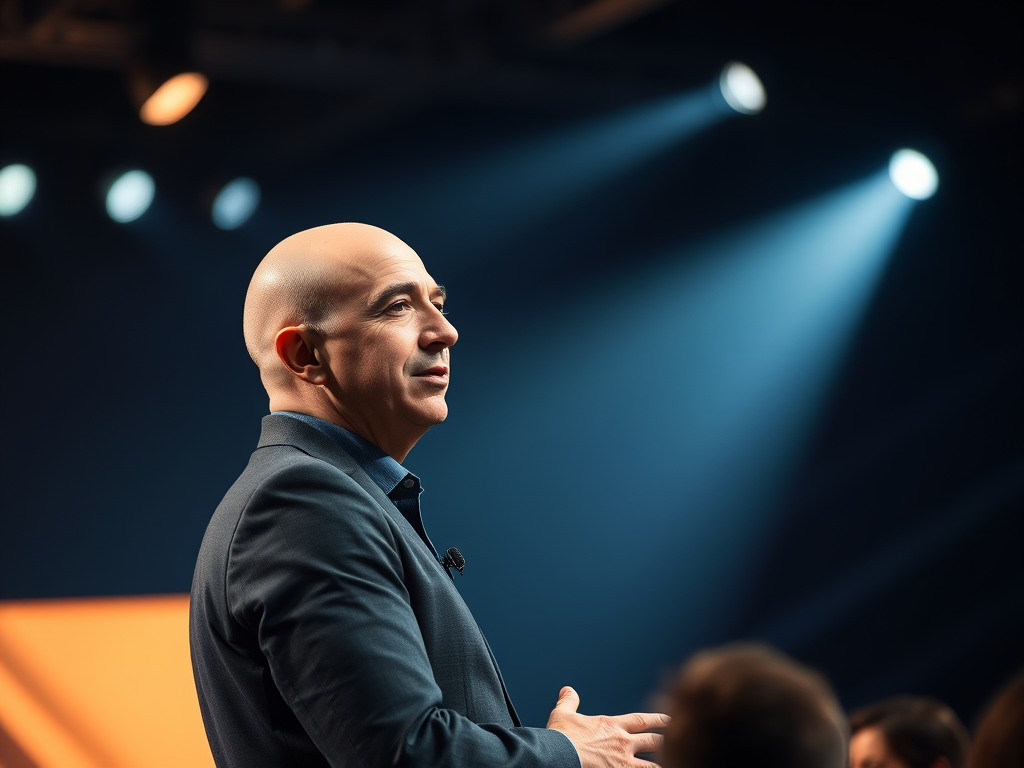
Bezos’s Decision Architecture: A CFO’s Blueprint for Strategic Clarity and Momentum When Jeff Bezos founded Amazon in 1994, he created a decision-making architecture governing who decides, how fast, and with what information. These methods became embedded in Amazon: two-pizza teams limiting coordination overhead, one-way versus two-way door distinctions calibrating review depth to decision reversibility, Day 1 mindset maintaining organizational freshness, and disagree-and-commit protocols accelerating alignment after debate. For Chief Financial Officers, these ideas provide clarity about capital allocation, trust distribution, and agility deployment across the organization. This analysis demonstrates how CFOs can weave Bezos’s decision architecture into finance functions to elevate rigor and speed in capital allocation and risk management. The framework translates into organizing capital budgeting around cross-functional pods, classifying investments by reversibility, building rolling forecasts, establishing delegation authority based on complexity, and formalizing disagree-and-commit protocols. This redefines the CFO role from fiscal sentry to strategic conductor, enabling finance to deploy capital to innovation, manage risk-taking with discipline, and build organizational capacity. byadminFebruary 10, 2026
The Founder Dilemma: Balancing Control and Evolution There comes a moment in the life of every startup when growth begins to strain its original architecture. What was once a tight circle of founders who operated by instinct becomes a larger organism demanding systems, scale, and structure. The shift is both exhilarating and painful. For the founder, it feels like standing on a shoreline where waves of evolution challenge role and identity. Some moments call for asserting leadership. Others demand surrender. Knowing when to push back and when to step back becomes the central emotional and structural test of the journey. The early days are defined by improvisation, with roles being fluid and decisions fast. But success introduces complexity. Product lines expand. Teams double, then triple. Informal systems break. The founder who thrived in ambiguity must now lead through clarity. This tension is not a failure but a sign of growth. However, if not addressed, it becomes corrosive. The skills required to start a company differ from those needed to scale it. Evolution starts with asking the right questions: What does the company need now? Where am I most effective? Where am I in the way? byadminFebruary 10, 2026
OKRs vs KPIs: Driving Purpose and Performance The transition from key performance indicators to objectives and key results represents a fundamental shift from measuring what is easily quantified to pursuing what matters strategically. Drawing from three decades at the intersection of finance, strategy, and systems thinking, this analysis demonstrates how OKRs transform founder-led companies under private equity ownership by connecting daily execution to strategic ambition without draining entrepreneurial agility. Traditional KPI-driven cultures entrench focus on lagging indicators serving as scorecards of past performance rather than compass needles pointing toward future direction. OKRs add the essential “why” by binding outcomes to purpose, with objectives defining destinations while key results quantify progress. Successful implementation requires education distinguishing output from outcome, recalibrating incentive structures to introduce intentional alignment, establishing cadences treating uncertainty as signal rather than noise, and building transparency explaining why objectives matter. The framework matures when embedded into operational cores, when teams craft objectives supporting company directional arc, and when review processes function as Bayesian updates revising beliefs about what works. This evolution transforms accountability from residing in founder memory to becoming institutional capability, democratizing leadership while preserving entrepreneurial speed, creating conditions where private equity sponsors gain execution visibility without micromanagement, and building companies that shape performance rather than merely measure it. byadminFebruary 10, 2026
Corporate Financial PlanningJanuary 8, 2026 Debt, Equity, or Hybrid? Designing the Right Capital Stack In the life of every growing business, a pivotal question arises with unrelenting clarity: how do we fund what comes next? That question may be phrased as should we borrow or should we sell equity or should we do a mix. But the real issue behind those questions is strategic and existential. It demands a serious examination of purpose, time horizon, risk appetite, control, and financial discipline. And it starts by recognizing that capital is never neutral. It shapes how a company grows, evolves, and ultimately succeeds. Throughout my twenty-five years leading finance across cybersecurity, SaaS, manufacturing, logistics, and gaming, I have learned that at the heart of this issue is a trade-off between ownership and obligation. Issuing equity allows you to buy flexibility with dilution. Borrowing imposes discipline and fixed obligations. Hybrids attempt to blend the best of both worlds but often combine complexity, uncertainty, and expectations that may not align with the business plan. The CFO’s responsibility is to understand how each instrument shapes incentives, stress-tests resilience, and enables strategic optionality.
Leadership & CultureJanuary 7, 2026 Designing a Compliance Org that Adds Value, Not Bureaucracy In any well-functioning company, compliance is like the immune system. Done right, you barely notice it, but it protects you from risks that could otherwise bring the enterprise to its knees. Done poorly, it becomes overactive, attacking the very innovation and initiative it was meant to preserve. As companies scale and regulatory complexity grows, the temptation to layer rules atop rules becomes strong. But history has shown, again and again, that bureaucracy is no substitute for judgment. Throughout my twenty-five years leading finance across cybersecurity, SaaS, manufacturing, logistics, and gaming, I have learned that the challenge for modern finance and executive leaders is simple: how do we build a compliance function that defends the business without disabling it? The answer is with design, not reaction. A well-designed compliance organization does not exist to say no. It exists to ask better questions. It operates not as the hall monitor of the company but as a trusted advisor, close enough to the action to understand it and independent enough to safeguard it.
Corporate Financial PlanningJanuary 7, 2026 Revenue is Not Cash: Solving the SaaS RevRec Puzzle There is a kind of magic trick in SaaS accounting. One that makes a business look like it is sprinting toward the horizon, throwing off healthy top-line growth and long-term customer value. Investors cheer, boards nod approvingly, and founders high-five each other over celebratory forecasts. But beneath the surface of that hockey stick, a quieter and more stubborn reality lives, a reality shaped not by promises or bookings or even cash, but by something far more arcane: how revenue is actually recognized. Throughout my twenty-five years leading finance across cybersecurity, SaaS, manufacturing, logistics, and gaming, I have learned that for anyone operating, leading, or investing in a software company, the distinction between booked revenue, cash collected, and revenue recognized is not just semantics. It is the foundation upon which decisions are made, bonuses are paid, covenants are met, and valuations are set. In SaaS, more than in perhaps any other industry, revenue is a mirage until it is properly tamed. And that taming, governed by ASC 606 and the five-step framework it mandates, is anything but trivial.
Corporate Financial PlanningJanuary 7, 2026 Not Just NPV: Why CFOs Need to Love the Payback Period Again In finance, certain tools become so canonized that questioning them feels almost heretical. Net Present Value is one of those tools.
Corporate Financial PlanningJanuary 7, 2026 Smart CapEx in Tight Times: How to Prioritize Infrastructure Bets One of the oldest maxims in business is this: capital is never free, and it is rarely patient. Especially in tight times, when markets wobble, interest rates bite, and cash burn becomes a four-letter word, every dollar spent carries weight and every dollar invested must sing. Capital expenditures, or CapEx, is where strategy meets commitment. You do not spend millions on infrastructure, systems, or equipment unless you believe in the long-term return. But in volatile or constrained markets, the margin for error shrinks. Throughout my twenty-five years leading finance across cybersecurity, SaaS, manufacturing, logistics, and gaming, I have learned that in difficult markets, CapEx discipline is not just a financial principle. It is a competitive advantage. For CFOs and operators alike, this moment demands a sharper pencil and a longer lens. Because operating expenses are the daily rent of doing business, variable, adjustable, and often reversible. But CapEx is different. When you commit to building a data center, purchasing equipment, or rolling out enterprise software, you place a bet. You lock in assumptions. You hard-code the future into today’s balance sheet.
Leadership & CultureJanuary 7, 2026 When to Centralize, When to Fragment: The Shared Services Dilemma In business, scale is a blessing and a burden. On one hand, you gain leverage including more volume, more reach, and more negotiating power. On the other, you invite complexity including more teams, more systems, and more nuance. Throughout my twenty-five years leading finance across cybersecurity, SaaS, manufacturing, logistics, and gaming, I have learned that for CFOs, nowhere is this tension more evident than in the perennial question: should we centralize or decentralize? It is the shared services dilemma. And it is as old as the first back office. Every growing enterprise eventually hits a fork in the road. As functions multiply including finance, procurement, HR, and IT, the temptation grows to consolidate. Consolidation promises efficiency, consistency, and control. But done wrong, it breeds bureaucracy, distance, and bottlenecks. The opposite approach, fragmentation, favors speed, autonomy, and customization. But it can lead to waste, redundancy, and a lack of strategic cohesion. There is no universal answer. But there is a way to think about it.
Performance ManagementJanuary 7, 2026 The Hardest Hire: Why Finance Talent Is in Short Supply In most businesses, the hardest problem is not capital, competition, or even regulation. It is people. Specifically, the right people. And within that narrow band of scarcity, there is perhaps no role more chronically underserved and more vital than finance leadership. Finding good finance talent today is like looking for a compass in a sandstorm. There is no shortage of resumes. But sift through them, and you quickly find that depth is rare, precision is rarer, and judgment, well, judgment is almost priceless. Throughout my twenty-five years leading finance across cybersecurity, SaaS, manufacturing, logistics, and gaming, I have learned that for a role that sits at the intersection of numbers and narrative, controls and creativity, it is no surprise that the best finance professionals are in short supply. But the shortage is getting worse. And if companies do not take this seriously, they will find themselves making strategic decisions without a reliable dashboard, a co-pilot, or even a seatbelt.
Performance ManagementJanuary 6, 2026 Every Day is Exit Day: CFO Strategy for Constant Exit Readiness One of the more peculiar quirks of business is that most companies only start preparing for an exit when it is already at their doorstep. A call from an investment banker, a knock from a potential acquirer, or a whisper from the board about exploring strategic alternatives, these tend to be the tripwires that unleash a mad dash to organize data rooms, polish decks, and plug financial leaks that should never have sprung in the first place. That kind of reactive posture might have been tolerated a generation ago. But not today. Not when capital moves faster, markets swing wider, and private companies are scrutinized almost as intensely as public ones. Throughout my twenty-five years leading finance across cybersecurity, SaaS, manufacturing, logistics, and gaming, I have learned that in this world, the wise CFO knows that every day is exit day. Not because you are eager to sell. But because a company that is always ready to exit is a company that is always in control. Constant exit readiness is not about selling the business. It is about running it so well that you could sell it, or IPO it, or partner it, at a moment’s notice. And doing so on your terms.
Tax and LegalJanuary 6, 2026 SPAC-tacular or SPAC-trap? Navigating Alternate Paths to Liquidity A SPAC, or Special Purpose Acquisition Company, is a publicly traded shell corporation created for the sole purpose of acquiring a private company, thereby taking it public without going through the traditional IPO process. Think of it as a financial blank check company: it raises capital from public investors with no existing business operations, just the intent to merge with or acquire a private company within a set period, usually 18 to 24 months. Throughout my twenty-five years leading finance across cybersecurity, SaaS, manufacturing, logistics, and gaming, I have learned that liquidity events in business, like milestones in life, tend to come with equal parts promise and peril. And few financial instruments have surged and soured as dramatically in recent memory as the SPAC. Once heralded as a fast lane to public markets, the Special Purpose Acquisition Company has become, in the minds of many, both a shortcut and a cautionary tale. The basic concept is straightforward. A SPAC is a shell company that goes public with no operations, just capital and a management team. Its only purpose is to acquire a private company and take it public in the process. But as with most things in finance, the devil hides in the details.
Corporate Financial PlanningJanuary 6, 2026 Preparing for Public: A CFO Checklist for IPO Success An initial public offering is often described as a capital event. In reality, it is something far more consequential. It is a structural transformation. A company that was once accountable primarily to founders and private investors becomes accountable to markets, regulators, analysts, and an unforgiving public record.