Aligning CEO Vision with Investor Expectations In the world of venture capital, money is not just a resource. It is a directional signal. When capital comes into a company, it brings expectations about the market, the pace of growth, and the eventual path to liquidity. For the CEO of a venture-backed company, understanding these expectations is not optional. Every venture firm has a thesis, and that thesis shapes everything from hiring cadence to capital deployment. A wise CEO does not assume all capital is alike but works to understand the worldview behind it and adapts priorities accordingly. The CEO brings operational knowledge and customer insight. The investor brings market experience and return pressure. When these perspectives meet with mutual humility, the company steers with purpose. Alignment is not a one-time event. It must be refreshed constantly. The relationship between a CEO and their venture investors is foundational. Dollars are important but direction matters more. byadminFebruary 10, 2026
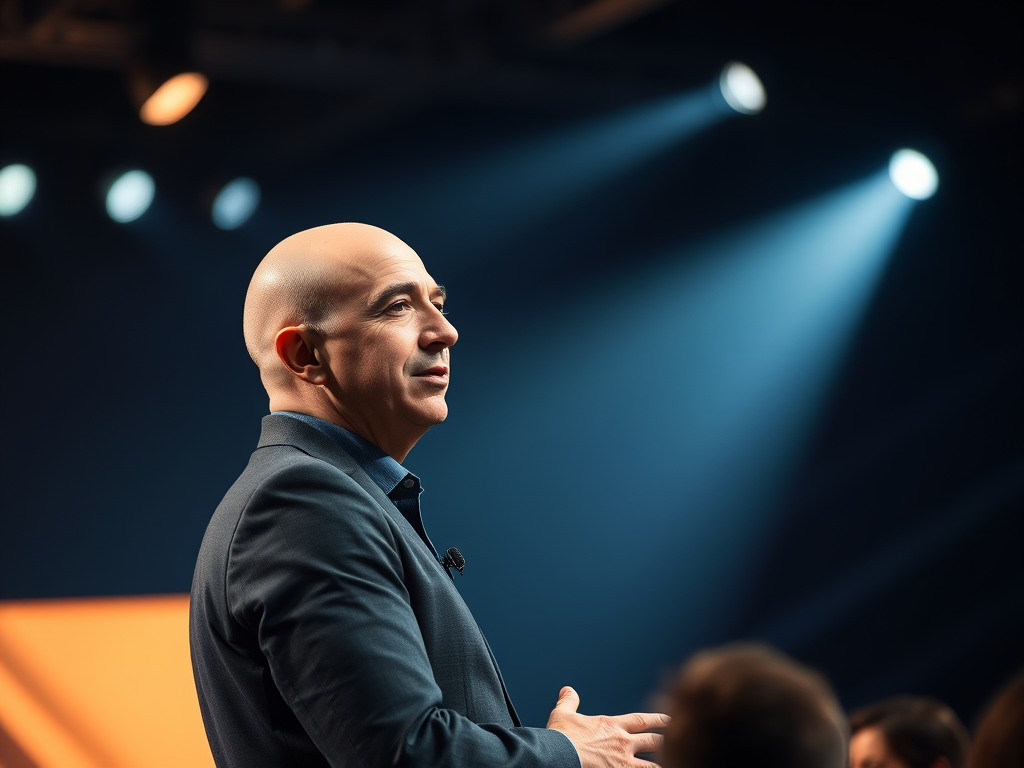
Bezos’s Decision Architecture: A CFO’s Blueprint for Strategic Clarity and Momentum When Jeff Bezos founded Amazon in 1994, he created a decision-making architecture governing who decides, how fast, and with what information. These methods became embedded in Amazon: two-pizza teams limiting coordination overhead, one-way versus two-way door distinctions calibrating review depth to decision reversibility, Day 1 mindset maintaining organizational freshness, and disagree-and-commit protocols accelerating alignment after debate. For Chief Financial Officers, these ideas provide clarity about capital allocation, trust distribution, and agility deployment across the organization. This analysis demonstrates how CFOs can weave Bezos’s decision architecture into finance functions to elevate rigor and speed in capital allocation and risk management. The framework translates into organizing capital budgeting around cross-functional pods, classifying investments by reversibility, building rolling forecasts, establishing delegation authority based on complexity, and formalizing disagree-and-commit protocols. This redefines the CFO role from fiscal sentry to strategic conductor, enabling finance to deploy capital to innovation, manage risk-taking with discipline, and build organizational capacity. byadminFebruary 10, 2026
The Founder Dilemma: Balancing Control and Evolution There comes a moment in the life of every startup when growth begins to strain its original architecture. What was once a tight circle of founders who operated by instinct becomes a larger organism demanding systems, scale, and structure. The shift is both exhilarating and painful. For the founder, it feels like standing on a shoreline where waves of evolution challenge role and identity. Some moments call for asserting leadership. Others demand surrender. Knowing when to push back and when to step back becomes the central emotional and structural test of the journey. The early days are defined by improvisation, with roles being fluid and decisions fast. But success introduces complexity. Product lines expand. Teams double, then triple. Informal systems break. The founder who thrived in ambiguity must now lead through clarity. This tension is not a failure but a sign of growth. However, if not addressed, it becomes corrosive. The skills required to start a company differ from those needed to scale it. Evolution starts with asking the right questions: What does the company need now? Where am I most effective? Where am I in the way? byadminFebruary 10, 2026
OKRs vs KPIs: Driving Purpose and Performance The transition from key performance indicators to objectives and key results represents a fundamental shift from measuring what is easily quantified to pursuing what matters strategically. Drawing from three decades at the intersection of finance, strategy, and systems thinking, this analysis demonstrates how OKRs transform founder-led companies under private equity ownership by connecting daily execution to strategic ambition without draining entrepreneurial agility. Traditional KPI-driven cultures entrench focus on lagging indicators serving as scorecards of past performance rather than compass needles pointing toward future direction. OKRs add the essential “why” by binding outcomes to purpose, with objectives defining destinations while key results quantify progress. Successful implementation requires education distinguishing output from outcome, recalibrating incentive structures to introduce intentional alignment, establishing cadences treating uncertainty as signal rather than noise, and building transparency explaining why objectives matter. The framework matures when embedded into operational cores, when teams craft objectives supporting company directional arc, and when review processes function as Bayesian updates revising beliefs about what works. This evolution transforms accountability from residing in founder memory to becoming institutional capability, democratizing leadership while preserving entrepreneurial speed, creating conditions where private equity sponsors gain execution visibility without micromanagement, and building companies that shape performance rather than merely measure it. byadminFebruary 10, 2026
Leadership & CultureJanuary 9, 2026 The CFO as Risk Architect: Building Financial Controls Before You Need Them In the corporate arena where growth dazzles and valuations captivate, the CFO has often been cast as the financial steward, a pragmatic counterweight to the CEO’s boundless optimism. But in the modern enterprise where velocity is currency and complexity compounds like interest, that traditional framing is not just outdated, it is strategically insufficient. Throughout my twenty-five years leading finance across cybersecurity, SaaS, manufacturing, logistics, and gaming, I have learned that the CFO must now evolve into something far more vital: the architect of risk. This is not simply a semantic shift. It is a philosophical one. Being a risk architect means designing an organization where financial control is not a response to failure but a precondition to success.
Tax and LegalJanuary 9, 2026 Different type of Options, Tax Issues, Impact of 409A, Tax rates Equity compensation has become a cornerstone of modern talent strategy, especially within startups and high-growth firms. At its essence, it transforms employees from wage earners to co-owners, aligning incentives between contributors and the long-term trajectory of the business. Throughout my twenty-five years leading finance across cybersecurity, SaaS, manufacturing, logistics, and gaming, I have learned that for CFOs and compensation committees, understanding the various types of options and their strategic use is essential. Equity compensation can take multiple forms including stock options, restricted stock units, stock appreciation rights, and performance shares. Among these, stock options remain the most versatile and complex, offering a blend of motivational upside and administrative nuance. Stock options grant employees the right, but not the obligation, to purchase company stock at a predetermined price known as the strike or exercise price. The value of the option lies in its future potential. If the company’s valuation increases, the holder can purchase stock at a discount to market, realizing financial gain.
GovernanceJanuary 9, 2026 Boards Have a Job: CFOs Pay the Price When They Forget It It is a truth that should be self-evident but often is not: boards have a job. They are not ceremonial observers. They are not goodwill ambassadors. They are fiduciaries, bound not only by statute but by consequence. When they fulfill their obligations with rigor, alignment, and discipline, value is protected, risks are contained, and leadership is kept honest. When they do not, the cost is measured in value erosion, strategic drift, and sometimes in irreversible damage to reputation or solvency. Throughout my twenty-five years leading finance across cybersecurity, SaaS, manufacturing, logistics, and gaming, I have learned that fiduciary duty is not an abstraction. It consists of specific obligations that are enforceable, practical, and measurable. Directors must act with care, loyalty, and obedience to the enterprise’s mission and strategic continuity. They must oversee management, scrutinize material risks, ensure regulatory compliance, and serve the long-term interests of shareholders and stakeholders. These are not philosophical suggestions. They are enforceable standards. Yet in too many boardrooms, these duties are reframed as a checklist or worse, reduced to vague references in governance manuals.
Leadership & CultureJanuary 9, 2026 How to Tell a Story Investors Believe: The CFO’s Role in Narrative Shaping The capital markets do not reward imagination. They reward coherence. And yet, every successful capital raise, every expansion round, every acquisition pitch is anchored not in spreadsheets but in stories. Stories that persuade. Stories that resonate. Stories that make risk feel like opportunity. Throughout my twenty-five years leading finance across cybersecurity, SaaS, manufacturing, logistics, and gaming, I have learned that for a CFO, shaping that story is not about spin. It is about truth, rendered with precision, structured with intent, and delivered with conviction. There is a myth that the CEO tells the story and the CFO validates it. In practice, the opposite is often true. Investors believe what the CFO embodies. Because the CFO speaks the language of constraint. When a CFO aligns with the story, it earns gravity. When they hesitate, the entire narrative wobbles. But credibility is not manufactured. It is built. Slowly, and then all at once.
BankingJanuary 9, 2026 What PE Really Looks For: 10 Metrics You Must Own Before They Walk In Private equity does not guess. It models. It deconstructs. It prices every risk, calibrates every return. When PE firms walk into a room, they do not look for charisma. They look for clarity. Throughout my twenty-five years leading finance across cybersecurity, SaaS, manufacturing, logistics, and gaming, I have learned that their thesis is built on control, precision, and replicability. And their questions, though direct, are never random. Every inquiry maps to a fundamental truth: how much risk are we buying and how fast can we compound it? For CFOs, this means one thing: control your metrics before PE controls the narrative. In the world of institutional capital, data is not detail. It is destiny.
GovernanceJanuary 8, 2026 How to Build a Board That Thinks Like Owners, Not Spectators The architecture of a boardroom is often weighed down by convention. Chairs are filled with accomplished individuals whose résumés glimmer with achievement. They bring perspective and prestige. Yet too many sit quietly as if in an audience, nodding politely rather than engaging. The distinction between spectators and owners matters. Boards that think like owners transcend their formal role. They confront complexity with curiosity, stretch assumptions with rigor, and shape outcomes with conviction. Throughout my twenty-five years leading finance across cybersecurity, SaaS, manufacturing, logistics, and gaming, I have learned that to nurture such a board requires intention and design. It begins with a mindset. Spectators view themselves as independent overseers, featuring from the perimeter. They ask questions. They listen. They approve or delay, but they seldom challenge. Owners lean in. They take stakes, mentally and financially. They insist on shared accountability. They make it personal. They carry the fate of the enterprise as if it were their own, aligning long-term prosperity with their own. This posture is not naive optimism. It is disciplined, humble, and unafraid of hard truths.
Tax and LegalJanuary 8, 2026 Free Money? Maximizing R&D Credits Without Getting Audited The best kind of money is the kind you already earned and just forgot to claim. There is a strange kind of tension in the world of tax incentives: the Research and Development tax credit is one of the most generous rewards governments offer to businesses, and yet it remains one of the most underutilized and misunderstood. It is like a savings bond that has been sitting in your desk drawer for years, collecting value, but never getting cashed. Companies either leave it unclaimed, claim it incorrectly, or worse, rush into it recklessly and trigger audits that cost more than the benefit. Throughout my twenty-five years leading finance across cybersecurity, SaaS, manufacturing, logistics, and gaming, I have learned that the R&D credit is not just for labs, scientists, or people in white coats mixing chemicals. It is for manufacturers building prototypes, for software developers debugging code, for engineers iterating on designs. And yes, for startups and mid-market firms pushing the edge of product, process, or platform. If you are solving technical challenges with uncertainty in outcome and applying a process of experimentation, there is a good chance you qualify. But like all things in finance, the devil sits patiently in the details.
Corporate Financial PlanningJanuary 8, 2026 Currency Risk Is Back: CFO Strategies for FX Volatility Foreign exchange risk, or FX risk, is one of those financial topics that is both omnipresent and often underestimated. It sits quietly in the background of global commerce, invisible to most casual observers but profoundly influential in shaping corporate financial performance. Throughout my twenty-five years leading finance across cybersecurity, SaaS, manufacturing, logistics, and gaming, I have learned that for companies that operate across borders, FX risk is not just a technical concept for treasury to handle. It is a strategic factor that touches revenue, costs, margins, cash flow, and even stock price. The moment a company earns revenue in euros but reports in dollars, or buys raw materials in yen but sells in pounds, it is exposed. The movements of currencies are not just academic. They can be swift, sharp, and difficult to predict. A 5 percent drop in the euro against the dollar can wipe out millions in revenue when converted back to a U.S. company’s income statement. Despite its importance, many companies still treat FX risk as a back-office concern. This disconnect creates risk and missed opportunity. When managed proactively, FX strategy can be a source of competitive advantage.
Corporate Financial PlanningJanuary 8, 2026 The Hidden Mess: Fixing Broken Intercompany Processes In large, multi-entity organizations, there exists a quiet madness living just beneath the surface, an ecosystem of intercompany transactions so convoluted that nobody dare admit its depth. It is not fraud. It is not malfeasance. It is more insidious, the product of disconnected intent, misaligned processes, and a gradual erosion of clarity over time. The operating philosophy is simple: we will settle that later, they will figure it out, or it is only a small adjustment. Yet this benign neglect piles up into something far heavier, far more dangerous. Throughout my twenty-five years leading finance across cybersecurity, SaaS, manufacturing, logistics, and gaming, I have learned that most global finance executives will tell you our intercompany reconciliation is a two-week annual exercise ahead of the board meeting. Finance waves a magic wand and quietly posts a journal to clean it up. No one asks questions because the reconciliation process assumes it is always broken. That is the moment when the hidden mess becomes visible and frighteningly expensive. Adjustments skyrocket. Restatements become necessary. Cash flow forecasts are misaligned with operational reality.
Corporate Financial PlanningJanuary 8, 2026 ASC 842 Without Tears: Making Lease Accounting Strategic Accounting is the language of business. That famous Buffett quote does not just apply to earnings per share or free cash flow. It applies equally to the fine print most executives do not like to read. One of those chapters in the modern business dialect is lease accounting, and in the post-ASC 842 world, it is no longer just a footnote. It is front and center. What used to be buried in the back of the 10-K is now lighting up the balance sheet. Throughout my twenty-five years leading finance across cybersecurity, SaaS, manufacturing, logistics, and gaming, I have learned that how we treat lease accounting says more about our financial discipline and strategy than most realize. ASC 842, the updated lease accounting standard, may sound like a problem for the back office. But that would be a mistake. It is actually an opportunity for CFOs to think about how they allocate capital, manage risk, negotiate contracts, and communicate with stakeholders. And like all worthwhile opportunities in business, it is wrapped in complexity.