Aligning CEO Vision with Investor Expectations In the world of venture capital, money is not just a resource. It is a directional signal. When capital comes into a company, it brings expectations about the market, the pace of growth, and the eventual path to liquidity. For the CEO of a venture-backed company, understanding these expectations is not optional. Every venture firm has a thesis, and that thesis shapes everything from hiring cadence to capital deployment. A wise CEO does not assume all capital is alike but works to understand the worldview behind it and adapts priorities accordingly. The CEO brings operational knowledge and customer insight. The investor brings market experience and return pressure. When these perspectives meet with mutual humility, the company steers with purpose. Alignment is not a one-time event. It must be refreshed constantly. The relationship between a CEO and their venture investors is foundational. Dollars are important but direction matters more. byadminFebruary 10, 2026
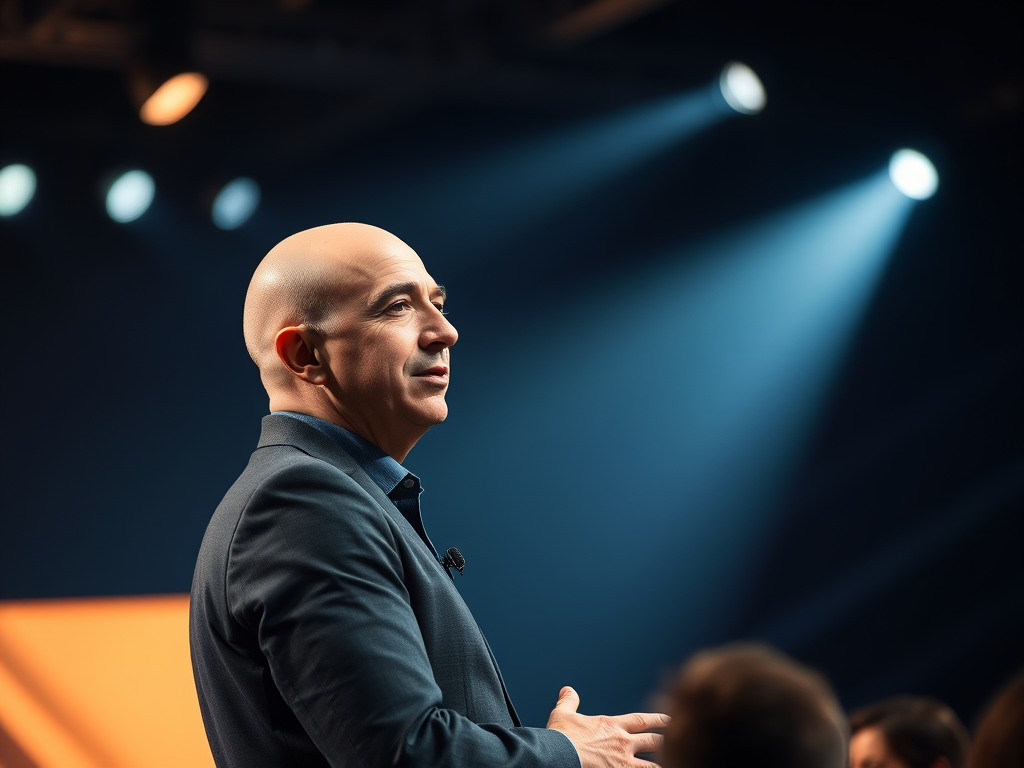
Bezos’s Decision Architecture: A CFO’s Blueprint for Strategic Clarity and Momentum When Jeff Bezos founded Amazon in 1994, he created a decision-making architecture governing who decides, how fast, and with what information. These methods became embedded in Amazon: two-pizza teams limiting coordination overhead, one-way versus two-way door distinctions calibrating review depth to decision reversibility, Day 1 mindset maintaining organizational freshness, and disagree-and-commit protocols accelerating alignment after debate. For Chief Financial Officers, these ideas provide clarity about capital allocation, trust distribution, and agility deployment across the organization. This analysis demonstrates how CFOs can weave Bezos’s decision architecture into finance functions to elevate rigor and speed in capital allocation and risk management. The framework translates into organizing capital budgeting around cross-functional pods, classifying investments by reversibility, building rolling forecasts, establishing delegation authority based on complexity, and formalizing disagree-and-commit protocols. This redefines the CFO role from fiscal sentry to strategic conductor, enabling finance to deploy capital to innovation, manage risk-taking with discipline, and build organizational capacity. byadminFebruary 10, 2026
The Founder Dilemma: Balancing Control and Evolution There comes a moment in the life of every startup when growth begins to strain its original architecture. What was once a tight circle of founders who operated by instinct becomes a larger organism demanding systems, scale, and structure. The shift is both exhilarating and painful. For the founder, it feels like standing on a shoreline where waves of evolution challenge role and identity. Some moments call for asserting leadership. Others demand surrender. Knowing when to push back and when to step back becomes the central emotional and structural test of the journey. The early days are defined by improvisation, with roles being fluid and decisions fast. But success introduces complexity. Product lines expand. Teams double, then triple. Informal systems break. The founder who thrived in ambiguity must now lead through clarity. This tension is not a failure but a sign of growth. However, if not addressed, it becomes corrosive. The skills required to start a company differ from those needed to scale it. Evolution starts with asking the right questions: What does the company need now? Where am I most effective? Where am I in the way? byadminFebruary 10, 2026
OKRs vs KPIs: Driving Purpose and Performance The transition from key performance indicators to objectives and key results represents a fundamental shift from measuring what is easily quantified to pursuing what matters strategically. Drawing from three decades at the intersection of finance, strategy, and systems thinking, this analysis demonstrates how OKRs transform founder-led companies under private equity ownership by connecting daily execution to strategic ambition without draining entrepreneurial agility. Traditional KPI-driven cultures entrench focus on lagging indicators serving as scorecards of past performance rather than compass needles pointing toward future direction. OKRs add the essential “why” by binding outcomes to purpose, with objectives defining destinations while key results quantify progress. Successful implementation requires education distinguishing output from outcome, recalibrating incentive structures to introduce intentional alignment, establishing cadences treating uncertainty as signal rather than noise, and building transparency explaining why objectives matter. The framework matures when embedded into operational cores, when teams craft objectives supporting company directional arc, and when review processes function as Bayesian updates revising beliefs about what works. This evolution transforms accountability from residing in founder memory to becoming institutional capability, democratizing leadership while preserving entrepreneurial speed, creating conditions where private equity sponsors gain execution visibility without micromanagement, and building companies that shape performance rather than merely measure it. byadminFebruary 10, 2026
GovernanceJanuary 13, 2026 When Tensions Rise: 5 Methods for Resolving Boardroom Conflict Without Collateral Damage Tension in the boardroom is inevitable. Directors bring strong perspectives, guiding convictions, and stakes in the outcome. Yet how conflict is managed defines whether it fuels exploration or fractures trust, stalls strategy, and leaves collateral damage in its wake. Throughout my twenty-five years leading finance across cybersecurity, SaaS, manufacturing, logistics, and gaming, I have learned that when handled well, tension can surface hidden risks, strengthen decisions, and build collective resilience. When mishandled, it can cripple a board with hostility, reinforce silos, or allow dysfunction to fester. Resolution is not about minimizing conflict. It is about channeling it. The best boards harness tension for value. They do not avoid the hard conversations. They resolve them in ways that preserve relationships and accelerate outcomes.
Performance ManagementJanuary 13, 2026 Growth at the Speed of Judgment: Scaling Without Breaking the Business Growth is intoxicating. It validates product-market fit, attracts capital, and electrifies teams. It is the scoreboard by which high-growth companies are judged, the metric every founder, board member, and investor wants to see up and to the right. But behind the acceleration lies a truth often obscured in the rush: growth can break a business as fast as it builds one. Throughout my twenty-five years leading finance across cybersecurity, SaaS, manufacturing, logistics, and gaming, I have learned that unchecked growth introduces systemic fragility. Sales outpace delivery. Hiring dilutes culture. Operations buckle under demand. In this environment, growth ceases to be value-creating and becomes entropy. The core problem is one of misaligned cadence. Organizations scale inputs without refining the systems, behaviors, and mental models needed to absorb those inputs. Judgment is the throttle. It is the capacity of leadership to distinguish between additive growth and performative velocity.
Corporate Financial PlanningJanuary 13, 2026 Designing the Cap Table Like an Architect, Not a Historian The cap table is not a spreadsheet. It is a blueprint. A quiet architecture of power, intention, and consequence. In the early days of a company, it is treated like a ledger, a record of who put in what and when. But as the company grows, that ledger begins to shape decision rights, strategic flexibility, and the lived experience of every stakeholder around the table. Throughout my twenty-five years leading finance across cybersecurity, SaaS, manufacturing, logistics, and gaming, I have learned that the mistake most companies make is managing the cap table like historians. Good CFOs treat it like architects. Architecture begins with vision. Not of what has happened but of what must be possible. A cap table must be designed backward from ambition. What kind of company are we building? How much capital will it require? How many rounds of financing are likely? What exit path do we anticipate including acquisition, IPO, or permanent private? These questions are not abstract. They are structural. They determine how much equity must be reserved, how much dilution is acceptable, and what kind of ownership shape must survive.
Corporate Financial PlanningJanuary 12, 2026 Venture, Debt, Revenue-Based? Picking the Right Funding Mechanism for Your Model Every business wants to grow. Few pause to ask how their personality grows best. There is a rhythm to growth and there is a temperament to capital. Yet in the early throes of ambition, many companies grab whatever cash is closest including venture capital, a bank line, or a revenue-based facility. Throughout my twenty-five years leading finance across cybersecurity, SaaS, manufacturing, logistics, and gaming, I have learned that companies look at cost, not compatibility. And then they pay for it later in decision friction, board tension, or misaligned growth expectations. There is a reason capital comes in so many forms. It is not just about stage. It is about structure. Venture capital funds possibility. Debt funds predictability. Revenue-based financing funds repeatability. Each has its own temperament. Each asks something different of the company.
GovernanceJanuary 12, 2026 Behind Closed Doors: How Great CFOs Manage Up to Powerful Boards Reporting into the boardroom is both a privilege and a test. The greatest CFOs do more than present numbers. They shape perspective, build trust, and serve as the board’s most indispensable partner. Behind closed doors, with powerful directors watching, the CFO’s role is not only to inform but to persuade, to anticipate, and to align. Throughout my twenty-five years leading finance across cybersecurity, SaaS, manufacturing, logistics, and gaming, I have learned that this is the crucible in which board-CFO relationships are forged, and in which financial stewardship meets strategic partnership. At its core, managing up is about credibility. Directors expect financial truth told frankly and consistently. Great CFOs earn credibility through precision, transparency, and rigor. They present not only audited results but the story behind the story. They highlight why trends matter, what drivers are moving margins, where risk lies in capital allocation. They do not merely reassure. They illuminate. They recognize that numbers without context are noise, and context without accountability is empty rhetoric. Boardrooms are built on confidence. CFOs provide it.
Leadership & CultureJanuary 12, 2026 The CEO-CFO Dynamic: From Tension to Transformation In the architecture of corporate leadership, the relationship between the Chief Executive Officer and the Chief Financial Officer has often been portrayed as one of tension, a creative mind balanced by a cautious one, ambition met with arithmetic. The CEO dreams, the CFO interrogates. One looks outward to markets and missions, the other inward to margins and mechanics. But such caricatures, while dramatic, are increasingly outdated. Throughout my twenty-five years leading finance across cybersecurity, SaaS, manufacturing, logistics, and gaming, I have learned that in the modern enterprise where transformation is continuous mandate, the CEO-CFO dynamic is not about friction. It is about orchestration. And when well-aligned, it can form the most potent alliance in business leadership, a duet of vision and precision, of velocity and discipline.
Leadership & CultureJanuary 12, 2026 The Power of Saying No in Business Growth In today’s hyper-competitive, venture-fueled economy, few things generate boardroom anxiety like the possibility of leaving growth on the table. Revenue is often equated with relevance and market share with inevitability. For executives, the pressure to pursue every opportunity including entering new markets, launching adjacent products, or acquiring new customer segments can be intense. Throughout my twenty-five years leading finance across cybersecurity, SaaS, manufacturing, logistics, and gaming, I have learned that this environment, where fear of missing out masquerades as strategy, makes no the hardest word in the boardroom vocabulary. Yet the most sophisticated companies and the most durable have learned that growth is not always good and more is not always better. Saying no to growth is not a concession. It is a choice to play a longer, more deliberate game. It reflects maturity that recognizes the difference between growth that fuels value creation and growth that masks systemic fatigue.
Corporate Financial PlanningJanuary 12, 2026 Timing the Raise: CFO Strategies for Not Running Out or Diluting Out The hardest call a CFO makes is not when to cut costs. It is when to raise capital. Because timing a raise is not a math problem. It is a narrative problem. It asks whether the story the company tells aligns with the appetite of the market, the conviction of the board, and the rhythm of the business. Throughout my twenty-five years leading finance across cybersecurity, SaaS, manufacturing, logistics, and gaming, I have learned that too early and you sell your future at a discount, too late and you sell your credibility. The difference is often measured not in quarters but in days. Cash does not run out overnight. It erodes. Slowly at first, then fast. But erosion is deceptive. A company can feel financially strong while structurally fragile. This is especially true in growth companies where headline revenue masks burn rate. The mistake many CFOs make is equating runway with time. But runway is not time. It is options. And once options narrow, leverage disappears.
GovernanceJanuary 12, 2026 The Two Hats of the Boardroom: When to Govern, When to Get Out of the Way The modern boardroom is not a single room with a singular role. It is a dynamic space where directors wear two fundamentally different hats. One is the hat of governance including compliance, oversight, and protection. The other is the hat of enablement including support, strategy, and acceleration. The strongest boards do not choose one or the other. They master the ability to shift between the two with timing, clarity, and conviction. Throughout my twenty-five years leading finance across cybersecurity, SaaS, manufacturing, logistics, and gaming, I have learned that the failure to do so is not academic. It is consequential. Boards that govern when they should support suffocate initiative. Boards that support when they should govern compromise accountability. In both cases, the enterprise suffers. Understanding this duality begins with recognizing that the role of the board is not fixed. It is situational. It evolves with the cycle of the business, the confidence in management, the level of uncertainty, and the magnitude of decisions at hand. Directors must be fluent not only in the responsibilities of governance but in the judgment of when to exercise them.
GovernanceJanuary 9, 2026 Designing a Principle-Based Board: Clarity, Courage, and Collective Intelligence The modern board faces not only complexity but velocity. Strategic decisions are made amid incomplete information, accelerating disruption, and rising stakeholder pressure. The most dangerous response to this complexity is proceduralism, relying on checklists, timelines, and mechanical approvals to navigate judgment terrain. Throughout my twenty-five years leading finance across cybersecurity, SaaS, manufacturing, logistics, and gaming, I have learned that the antidote is not more process. It is principle. Boards that operate on shared, articulated principles rather than ad hoc reactions make faster, better, and more coherent decisions. They become consistent without becoming rigid. They become decisive without becoming dogmatic. They govern not by precedent but by purpose.