Aligning CEO Vision with Investor Expectations In the world of venture capital, money is not just a resource. It is a directional signal. When capital comes into a company, it brings expectations about the market, the pace of growth, and the eventual path to liquidity. For the CEO of a venture-backed company, understanding these expectations is not optional. Every venture firm has a thesis, and that thesis shapes everything from hiring cadence to capital deployment. A wise CEO does not assume all capital is alike but works to understand the worldview behind it and adapts priorities accordingly. The CEO brings operational knowledge and customer insight. The investor brings market experience and return pressure. When these perspectives meet with mutual humility, the company steers with purpose. Alignment is not a one-time event. It must be refreshed constantly. The relationship between a CEO and their venture investors is foundational. Dollars are important but direction matters more. byadminFebruary 10, 2026
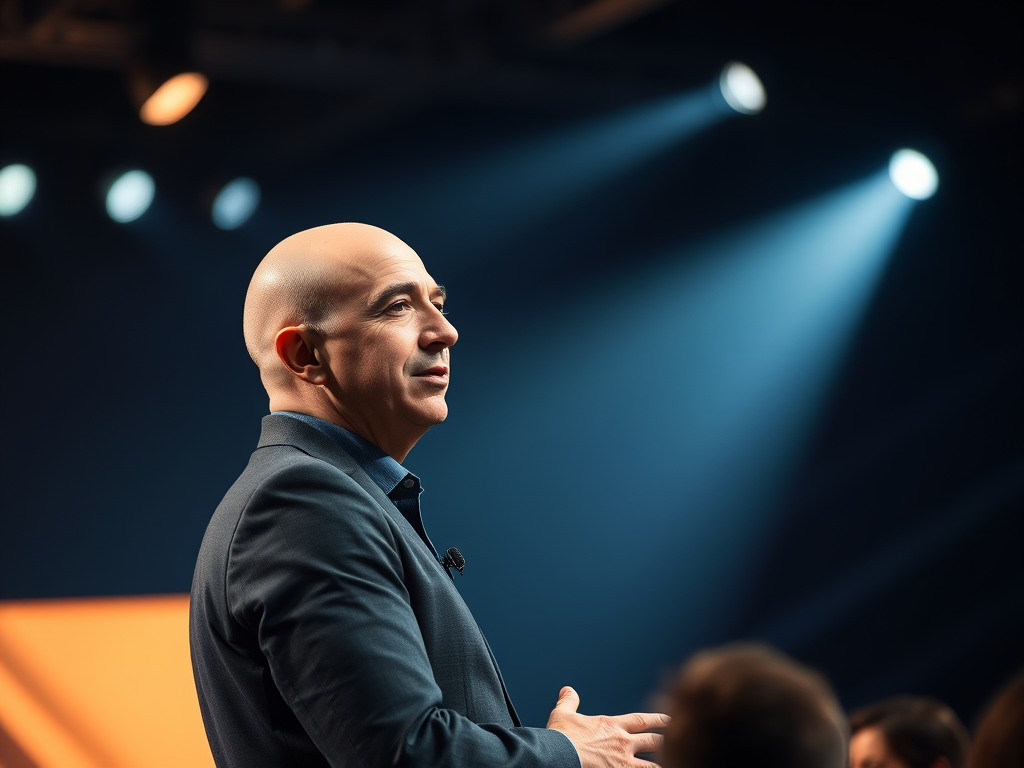
Bezos’s Decision Architecture: A CFO’s Blueprint for Strategic Clarity and Momentum When Jeff Bezos founded Amazon in 1994, he created a decision-making architecture governing who decides, how fast, and with what information. These methods became embedded in Amazon: two-pizza teams limiting coordination overhead, one-way versus two-way door distinctions calibrating review depth to decision reversibility, Day 1 mindset maintaining organizational freshness, and disagree-and-commit protocols accelerating alignment after debate. For Chief Financial Officers, these ideas provide clarity about capital allocation, trust distribution, and agility deployment across the organization. This analysis demonstrates how CFOs can weave Bezos’s decision architecture into finance functions to elevate rigor and speed in capital allocation and risk management. The framework translates into organizing capital budgeting around cross-functional pods, classifying investments by reversibility, building rolling forecasts, establishing delegation authority based on complexity, and formalizing disagree-and-commit protocols. This redefines the CFO role from fiscal sentry to strategic conductor, enabling finance to deploy capital to innovation, manage risk-taking with discipline, and build organizational capacity. byadminFebruary 10, 2026
The Founder Dilemma: Balancing Control and Evolution There comes a moment in the life of every startup when growth begins to strain its original architecture. What was once a tight circle of founders who operated by instinct becomes a larger organism demanding systems, scale, and structure. The shift is both exhilarating and painful. For the founder, it feels like standing on a shoreline where waves of evolution challenge role and identity. Some moments call for asserting leadership. Others demand surrender. Knowing when to push back and when to step back becomes the central emotional and structural test of the journey. The early days are defined by improvisation, with roles being fluid and decisions fast. But success introduces complexity. Product lines expand. Teams double, then triple. Informal systems break. The founder who thrived in ambiguity must now lead through clarity. This tension is not a failure but a sign of growth. However, if not addressed, it becomes corrosive. The skills required to start a company differ from those needed to scale it. Evolution starts with asking the right questions: What does the company need now? Where am I most effective? Where am I in the way? byadminFebruary 10, 2026
OKRs vs KPIs: Driving Purpose and Performance The transition from key performance indicators to objectives and key results represents a fundamental shift from measuring what is easily quantified to pursuing what matters strategically. Drawing from three decades at the intersection of finance, strategy, and systems thinking, this analysis demonstrates how OKRs transform founder-led companies under private equity ownership by connecting daily execution to strategic ambition without draining entrepreneurial agility. Traditional KPI-driven cultures entrench focus on lagging indicators serving as scorecards of past performance rather than compass needles pointing toward future direction. OKRs add the essential “why” by binding outcomes to purpose, with objectives defining destinations while key results quantify progress. Successful implementation requires education distinguishing output from outcome, recalibrating incentive structures to introduce intentional alignment, establishing cadences treating uncertainty as signal rather than noise, and building transparency explaining why objectives matter. The framework matures when embedded into operational cores, when teams craft objectives supporting company directional arc, and when review processes function as Bayesian updates revising beliefs about what works. This evolution transforms accountability from residing in founder memory to becoming institutional capability, democratizing leadership while preserving entrepreneurial speed, creating conditions where private equity sponsors gain execution visibility without micromanagement, and building companies that shape performance rather than merely measure it. byadminFebruary 10, 2026
BankingFebruary 10, 2026 Aligning CEO Vision with Investor Expectations In the world of venture capital, money is not just a resource. It is a directional signal. When capital comes into a company, it brings expectations about the market, the pace of growth, and the eventual path to liquidity. For the CEO of a venture-backed company, understanding these expectations is not optional. Every venture firm has a thesis, and that thesis shapes everything from hiring cadence to capital deployment. A wise CEO does not assume all capital is alike but works to understand the worldview behind it and adapts priorities accordingly. The CEO brings operational knowledge and customer insight. The investor brings market experience and return pressure. When these perspectives meet with mutual humility, the company steers with purpose. Alignment is not a one-time event. It must be refreshed constantly. The relationship between a CEO and their venture investors is foundational. Dollars are important but direction matters more.
Systems ThinkingFebruary 10, 2026 Bezos’s Decision Architecture: A CFO’s Blueprint for Strategic Clarity and Momentum When Jeff Bezos founded Amazon in 1994, he created a decision-making architecture governing who decides, how fast, and with what information. These methods became embedded in Amazon: two-pizza teams limiting coordination overhead, one-way versus two-way door distinctions calibrating review depth to decision reversibility, Day 1 mindset maintaining organizational freshness, and disagree-and-commit protocols accelerating alignment after debate. For Chief Financial Officers, these ideas provide clarity about capital allocation, trust distribution, and agility deployment across the organization. This analysis demonstrates how CFOs can weave Bezos’s decision architecture into finance functions to elevate rigor and speed in capital allocation and risk management. The framework translates into organizing capital budgeting around cross-functional pods, classifying investments by reversibility, building rolling forecasts, establishing delegation authority based on complexity, and formalizing disagree-and-commit protocols. This redefines the CFO role from fiscal sentry to strategic conductor, enabling finance to deploy capital to innovation, manage risk-taking with discipline, and build organizational capacity.
Leadership & CultureFebruary 10, 2026 The Founder Dilemma: Balancing Control and Evolution There comes a moment in the life of every startup when growth begins to strain its original architecture. What was once a tight circle of founders who operated by instinct becomes a larger organism demanding systems, scale, and structure. The shift is both exhilarating and painful. For the founder, it feels like standing on a shoreline where waves of evolution challenge role and identity. Some moments call for asserting leadership. Others demand surrender. Knowing when to push back and when to step back becomes the central emotional and structural test of the journey. The early days are defined by improvisation, with roles being fluid and decisions fast. But success introduces complexity. Product lines expand. Teams double, then triple. Informal systems break. The founder who thrived in ambiguity must now lead through clarity. This tension is not a failure but a sign of growth. However, if not addressed, it becomes corrosive. The skills required to start a company differ from those needed to scale it. Evolution starts with asking the right questions: What does the company need now? Where am I most effective? Where am I in the way?
Performance ManagementFebruary 10, 2026 OKRs vs KPIs: Driving Purpose and Performance The transition from key performance indicators to objectives and key results represents a fundamental shift from measuring what is easily quantified to pursuing what matters strategically. Drawing from three decades at the intersection of finance, strategy, and systems thinking, this analysis demonstrates how OKRs transform founder-led companies under private equity ownership by connecting daily execution to strategic ambition without draining entrepreneurial agility. Traditional KPI-driven cultures entrench focus on lagging indicators serving as scorecards of past performance rather than compass needles pointing toward future direction. OKRs add the essential “why” by binding outcomes to purpose, with objectives defining destinations while key results quantify progress. Successful implementation requires education distinguishing output from outcome, recalibrating incentive structures to introduce intentional alignment, establishing cadences treating uncertainty as signal rather than noise, and building transparency explaining why objectives matter. The framework matures when embedded into operational cores, when teams craft objectives supporting company directional arc, and when review processes function as Bayesian updates revising beliefs about what works. This evolution transforms accountability from residing in founder memory to becoming institutional capability, democratizing leadership while preserving entrepreneurial speed, creating conditions where private equity sponsors gain execution visibility without micromanagement, and building companies that shape performance rather than merely measure it.
Digital TransformationFebruary 10, 2026 Building Digital Maturity Through Strategic Partnerships Digital partnerships represent far more than tactical solutions to immediate technical challenges. They function as strategic instruments that shape organizational identity, operational coherence, and long-term competitive positioning. Drawing from three decades of financial leadership across global enterprises, this analysis demonstrates how Chief Financial Officers must evolve from technology approvers to custodians of strategic coherence. The fundamental challenge lies in distinguishing between partnerships that merely solve today’s problems versus those that architect tomorrow’s capabilities. When enterprise tempo accelerates and quarterly pressures intensify, the temptation to select digital partners based on immediate needs becomes overwhelming. Yet such decisions, made without anchoring in strategic identity, mortgage organizational elegance for operational relief. True digital maturity emerges not from accumulating technologies but from choreographing them in service of purpose. Success requires establishing narrative clarity around strategic horizons, implementing governance frameworks that protect intellectual property and cultural alignment, developing multidimensional evaluation methodologies that measure impact across functional domains, and institutionalizing review rhythms that determine when partnerships should scale, restructure, or sunset. The CFO’s role transcends financial oversight to become curatorial stewardship, ensuring companies grow not merely in capability but in character, building systems that reveal corporate values while enabling sustainable transformation.
Corporate Financial PlanningFebruary 9, 2026 Navigating Cost Shocks: Effective Pricing Protection Strategies In margin management, few adversaries are as insidious as sudden cost shocks. Inflation, foreign exchange volatility, and quantum shifts in input pricing can dismantle even the most elegant P&Ls. For CFOs, the challenge is not to predict shocks with precision but to embed guardrails allowing organizations to respond without panic. Pricing protection mechanisms including CPI-linked adjustments, FX pass-throughs, and cost reset triggers form a second defense when market dynamics veer off-course. Companies cannot rely on hope as hedging strategy but need intelligent design where contracts evolve with the economy. Pricing is not static but a dynamic function of inputs, market forces, and negotiated boundaries. The era of fixed-price dogma is giving way to intelligent equilibrium where price reflects both value and volatility. Embedding pricing protection requires balance: too aggressive erodes client trust, too passive endangers profitability.
Revenue OperationsFebruary 9, 2026 Optimize Quote-to-Cash for Better Customer Experience The Quote-to-Cash process functions as the organizational nervous system, transmitting either friction or flow throughout the enterprise. Drawing from three decades of global finance leadership, this analysis reframes QTC not as a linear pathway but as strategic infrastructure that shapes customer experience and reveals organizational maturity. Friction in QTC stems from misaligned time horizons: sales optimizes for quarterly results, finance for audit compliance, legal for risk mitigation. Without shared orchestration, these priorities create entropy that erodes trust. The solution requires systemic thinking, treating QTC as a learning system that interprets signals and adapts continuously. When designed with flow ownership, metadata intelligence, and cross-functional transparency, QTC becomes the front line of trust where brand promise meets operational integrity. This is where financial leadership transcends managing numbers to orchestrating systems that generate sustainable value.
GovernanceFebruary 9, 2026 Aligning Founder Incentives for Post-Deal Success Every founder knows the thrill of bootstrapping, the terror of missed payrolls, and the quiet pride of customer validation. What is less commonly addressed is the strange, disorienting moment when a liquidity event reshapes all of it. For founders who sell a stake to private equity, the deal is never the end. It is the beginning of a complex new chapter that blends performance, psychology, and contract mechanics. Having worked across transformations and buyouts, I have seen how well-designed post-deal incentives not only retain founder engagement but deepen strategic alignment. When incentives align with purpose, founders do not just stay. They lead again. The structure of post-deal compensation has evolved to reflect the maturing relationship between capital and capability. No longer can sponsors assume that a simple cash-out followed by a management reshuffle delivers alpha. Most private equity firms today recognize that founder DNA remains critical long after Day Zero. The question becomes how to retain that DNA without letting legacy distort the path to scale. This is where mechanisms like equity rollover, earnouts, and vesting cliffs become not just terms but tools. Used well, they act as bridges between belief and performance. Used poorly, they erode trust and dilute intent.
Tax and LegalFebruary 9, 2026 Master Services Agreements: Governance and Clarity The Master Services Agreement is often dismissed as boilerplate but is in fact the legal chassis upon which long-term customer relationships are built. Having managed engagements from $300,000 pilots to programs exceeding $20 million, the MSA is not formality but infrastructure. An effective MSA serves as governance framework, risk allocation mechanism, and roadmap for operational clarity. It anticipates friction and provides language to resolve it before escalation. A scalable MSA creates rhythm through governance structures, steering committees, escalation paths, and communication protocols. Dispute resolution clauses are behavioral nudges minimizing commercial shock. Deliverables clarity distinguishes obligations from intentions, preventing scope ambiguity. The MSA must anticipate change and adapt as services scale. A static MSA becomes a silent liability. Operationalization requires version control, renewal discipline, and embedding MSA intelligence into systems. The MSA must be viewed as strategic protocol enabling speed without recklessness and growth without fragmentation.