
Executive Summary
In most businesses, the hardest problem is not capital, competition, or even regulation. It is people. Specifically, the right people. And within that narrow band of scarcity, there is perhaps no role more chronically underserved and more vital than finance leadership. Finding good finance talent today is like looking for a compass in a sandstorm. There is no shortage of resumes. But sift through them, and you quickly find that depth is rare, precision is rarer, and judgment, well, judgment is almost priceless. Throughout my twenty-five years leading finance across cybersecurity, SaaS, manufacturing, logistics, and gaming, I have learned that for a role that sits at the intersection of numbers and narrative, controls and creativity, it is no surprise that the best finance professionals are in short supply. But the shortage is getting worse. And if companies do not take this seriously, they will find themselves making strategic decisions without a reliable dashboard, a co-pilot, or even a seatbelt.
The Evolution of Finance Leadership
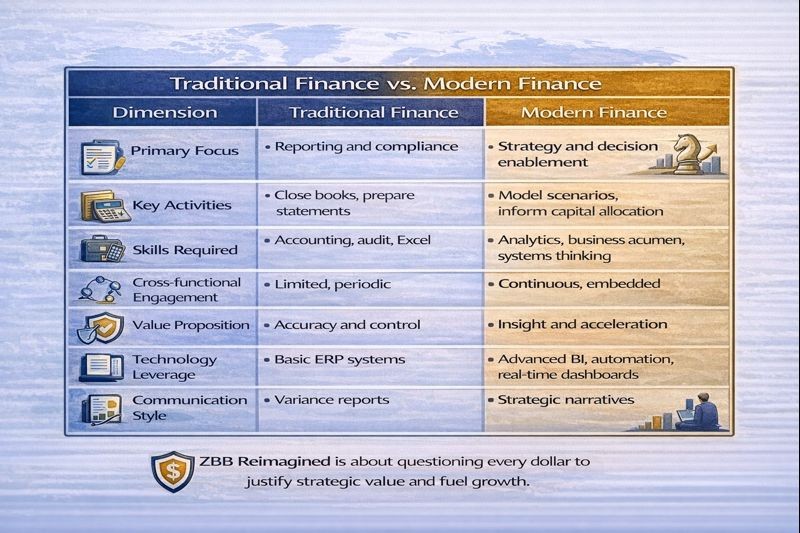
A generation ago, a finance leader was the person who closed the books, made sure payroll got out, and showed up at the board meeting with a three-color Excel file. The job was, in large part, about reporting. But that is no longer enough. Not even close. Today’s best CFOs are strategic operators. They speak in cohorts, not columns. They shape business models, not just balance sheets. They model pricing elasticity, customer acquisition, working capital efficiency, and capital allocation, all before lunch.
In other words, the finance leader is not just the back-office guardian. They are the nerve center. The translator between growth and sustainability. And that means the talent pool must be deeper, more cross-functional, and far more analytical than it used to be. Unfortunately, most of the market is still catching up.
When I improved month-end close from 17 days to under six days at a cybersecurity firm, the value was not just in faster reporting but in enabling real-time strategic decisions. When I built enterprise KPI frameworks using MicroStrategy, Domo, and Power BI tracking bookings, utilization, backlog, annual recurring revenue, pipeline health, customer margin, and retention, the role was not to report numbers but to translate them into actionable insights. This is the modern finance mandate.
Three Forces Driving the Talent Shortage
Traditional Finance Role versus Modern Finance Role
Exploding Demand from High-Growth Companies: Startups and scale-ups used to hire a controller or VP Finance once they crossed $25 million in revenue. Now they want a seasoned finance head at Series A. Why? Because boards are more sophisticated, metrics are more visible, and investors demand real-time insight, not just quarterly retrospectives. That means thousands of companies are all chasing the same pool of truly ready finance leaders.
Increased Complexity of the Role: Finance today is a blend of economics, data science, operations, compliance, and communication. Few professionals are trained across that entire stack. Some come up through public accounting, others through financial planning and analysis, still others through banking or consulting. But very few combine the hard skills including GAAP, audit readiness, and systems thinking with the soft ones including strategy, storytelling, and cross-functional leadership.
Retirement and Attrition: The seasoned finance leaders who cut their teeth in the 1990s and early 2000s are retiring or pivoting to fractional roles. Meanwhile, younger professionals are being asked to lead with less apprenticeship, thinner training, and greater responsibility. The result is a bench that is shallow and stressed.
Beyond Credentials: Hiring for Systems Thinking
A major part of the challenge is that many hiring managers still hire for resume rather than mindset. They want Big Four backgrounds, elite MBAs, 10 plus years in SaaS or e-commerce. But the best finance hires often share a different trait: systems thinking. They do not just ask what the number is. They ask why it is moving, what drives it, who owns it, and how it connects to customer behavior. They are not afraid of spreadsheets, but they do not hide in them either. They engage with product, sales, marketing, and HR, not to control but to inform. They see finance as the connective tissue of the business.
When I managed global finance for a $120 million logistics organization and overhauled freight, warehouse management, and last-mile logistics processes, the finance team needed to understand operational drivers, customer behavior patterns, and market dynamics, not just accounting entries. When I reduced monthly burn from $800,000 to $200,000 at an email marketing SaaS company, success required cross-functional collaboration with product, marketing, and engineering to identify high-impact versus low-return activities.
What Companies Can Do
If you are building a company today, here is the simple truth: your finance function is either your multiplier or your bottleneck. And unless you start treating finance as a product, not just a function, you will never recruit the kind of talent that changes outcomes. Great companies hire for horsepower, not just tenure. Look for people who ask second and third-order questions, who build models that reflect real-world decisions, not just theoretical assumptions.
Invest in tools and automation early. Top finance talent wants to add strategic value, not close books manually or patch together spreadsheets. Offer flexibility and autonomy. Many finance leaders are burned out from old-school environments. Show them a culture where they can lead, not just report. Partner them with business, not against it. Finance should not be the no department. When you embed them into strategic planning, they become accelerators.
Grow your own pipeline. Start grooming your finance stars internally. Rotate them through roles. Let analysts own forecasts. Invest in training that spans beyond accounting. Consider fractional leadership. For companies not ready for a full-time CFO, fractional models offer expertise without the overhead. But treat them like executives, not temps.
My certifications as a CPA, CMA, and CIA provide technical credibility. But what makes finance leaders valuable today is not credentials alone. It is the ability to translate financial data into strategic insight, to communicate complexity simply, to build systems that enable rather than constrain, and to partner across functions to drive outcomes.
Conclusion
In any business, finance is the mirror and the compass. The mirror tells you what you have done. The compass tells you where to go. That dual role requires clarity, integrity, and insight. And those qualities do not show up because you posted a job. They show up when you build a culture that values them. The finance talent shortage is real. But it is not unsolvable. It just requires a deeper understanding of what the role demands and a more thoughtful approach to how you attract, grow, and retain the people who make it possible. Because in the end, the best hires are not just keeping the books. They are writing the next chapter.
Disclaimer: This blog is intended for informational purposes only and does not constitute legal, tax, or accounting advice. You should consult your own tax advisor or counsel for advice tailored to your specific situation.
Hindol Datta is a seasoned finance executive with over 25 years of leadership experience across SaaS, cybersecurity, logistics, and digital marketing industries. He has served as CFO and VP of Finance in both public and private companies, leading $120M+ in fundraising and $150M+ in M&A transactions while driving predictive analytics and ERP transformations. Known for blending strategic foresight with operational discipline, he builds high-performing global finance organizations that enable scalable growth and data-driven decision-making.
AI-assisted insights, supplemented by 25 years of finance leadership experience.