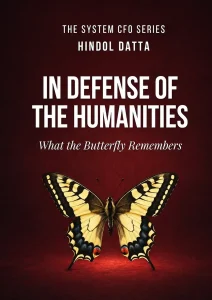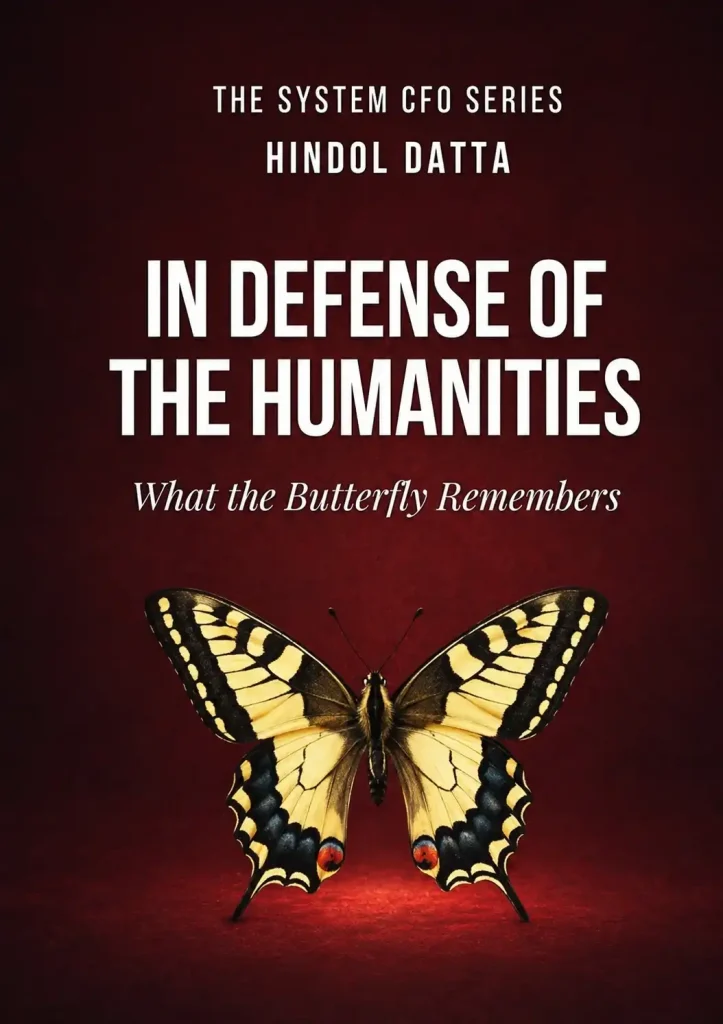
In Defense of the Humanities
Numbers are the language. Meaning is what the language is trying to say. No amount of fluency in the language produces the capacity to hear it.Every financial model, every forecast, every capital allocation decision rests on a human judgment that no spreadsheet was designed to capture. The analysis tells you what happened. It does not tell you what it meant, what it cost the people inside it, or what it is trying to show you about something larger. That gap between precision and understanding is the central problem of the profession, and it is growing wider in the age of artificial intelligence, not narrower.
Through experiences at a gaming company, a digital marketing firm, and multiple acquisitions, the author discovers that the most important business information often lives outside the financial model, in human stories the spreadsheet was never built to capture.
Drawing on Tolstoy, Tagore, and boardroom experience at Atari, the author distinguishes intelligence, which trusts the model, from wisdom, which asks what the model trusts, arguing that unlearning analytical habits is essential for sound judgment.
Through Mann, Morrison, Camus, and Premchand, the author shows how serious fiction trains a sharpened perception of others, transforming how a finance leader reads people, markets, and cross-cultural situations before making consequential decisions.
Rooted in his father's work with Satyajit Ray, the author uses Kurosawa, Lumet, Ray, and Bergman to demonstrate how cinema teaches leaders to see the whole picture, question their own narratives, and remain present with uncomfortable truths.
From a Bombay flat where legends gathered to factory floors and boardrooms, the author argues that musical training teaches leaders to detect tempo mismatches, false acceleration, and silent pauses in organizations before financial statements confirm them.
Using Kandinsky, Tufte, and his father's storyboarding practice, the author demonstrates how visual intelligence, including reading negative space and composing data relationally, reveals patterns that fragmented dashboards and averages systematically obscure.
From Marcus Aurelius and Hayek to Rawls, the author shows how philosophical formation equips leaders to navigate moments when analysis runs out, two defensible principles collide, and the moral question cannot be delegated to a procedure.
The 2008 subprime collapse, experienced firsthand, illustrates how Gibbon, Toynbee, and Buffett provide three essential questions about invisible dependencies, the nemesis of past success, and whether you are watching the basket or merely holding it.
From a gopuram in Chennai to Hagia Sophia and the Sagrada Familia, the author argues that great systems design demands structural honesty, invisible servant spaces, organic adaptability, and the integration of technical logic with human purpose from the start.
Through Brando, Stanislavski, Steve Jobs, and lived boardroom moments, the author defines presence as full attention, emotional calibration, and situational awareness, arguing it determines whether organizations trust their leaders in consequential moments.
From bedtime tales to a global ERP data dictionary and a chance encounter on a plane, the author demonstrates that narrative transforms numbers into meaning, builds organizational alignment, and preserves the institutional memory that documentation alone cannot hold.
Using Kuhn, Popper, Feynman, and Geoffrey West, the author argues that treating forecasts as hypotheses with falsifiable conditions, rather than statements of certainty, is the discipline that separates leaders who learn from those who merely react.
Confronting algorithmic bias, emergent system failures, and Gardner's five minds framework, the author makes the case that the humanities produce the ethical, creative, and respectful capacities that AI governance most urgently requires and technical training cannot provide.
Anchored by a boy's butterfly experiment proving memories survive metamorphosis, the author synthesizes the entire book into a vision of the CFO as whole human, shaped by humanities formation that persists through professional transformation and passes forward to future leaders.
Key Frameworks You'll Learn
Practical tools you can apply immediately
Human Story Audit
A practice for surfacing the business information that lives outside the financial model — in the human stories spreadsheets were never built to capture.
Chapter 1Wisdom vs. Intelligence
A decision lens that distinguishes intelligence, which trusts the model, from wisdom, which asks what the model trusts.
Chapter 2Empathy Lens
A framework for reading people, markets, and cross-cultural situations with the sharpened perception serious fiction trains.
Chapter 3Organizational Tempo Map
Tools to detect tempo mismatches, false acceleration, and silent pauses in organizations before financial statements confirm them.
Chapter 5Negative Space Reading
Visual intelligence for composing data relationally and revealing patterns that fragmented dashboards and averages systematically obscure.
Chapter 6Corporate Narrative Memory
A storytelling approach that transforms numbers into meaning, builds alignment, and preserves institutional memory documentation alone cannot hold.
Chapter 11About the Author

The System CFO Series
Volumes of insight. One framework. A new language for finance leadership.